

What are the Applications of Geomembranes?
Geomembrane plays a very important role in today’s engineering construction. It is a high molecular polymer with good anti-seepage, tensile resistance, tear resistance, isolation and protection properties, and is widely used in various engineering fields. This article will introduce in detail the role of geomembrane liner and its application in different fields.
Geomembrane liner is a material used in civil engineering and environmental protection. Its main functions are as follows:
- Anti-seepage effect: Geomembrane liner can effectively prevent moisture, chemicals, etc. from penetrating into groundwater or surface water, and plays a waterproof and anti-seepage role. This is of great significance for underground engineering, water conservancy projects, etc., and can protect engineering structures from moisture erosion.
- Enhance soil stability: Geomembrane liner can be used as a reinforcement material for soil to enhance the stability and load-bearing capacity of soil. It can be used to reinforce soil structures such as roadbeds, slopes, and dams, reduce soil deformation and settlement, and improve the safety and stability of projects.
- Isolation effect: Geomembrane liner can isolate impurities and pollutants in different soil layers or different geological environments, prevent them from interpenetrating and cross-contaminating, and play a role in environmental protection. This is of great significance for pollution prevention and control in landfills, chemical plants and other places.
- Protection: Geomembrane liner can protect surface and underground structures from erosion and damage by the external environment, extending the service life of the project. For example, it can be used for waterproofing protection of roads, bridges, tunnels and other projects to reduce structural damage caused by water erosion.
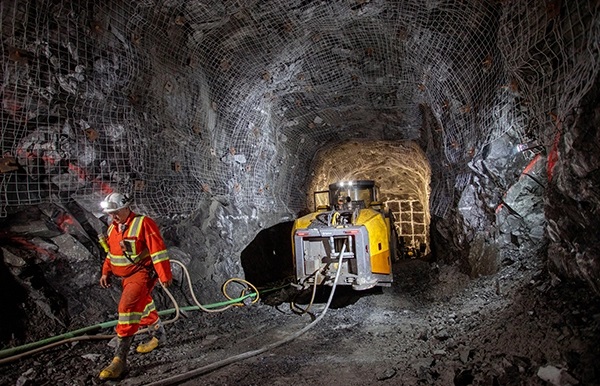
1. Mining
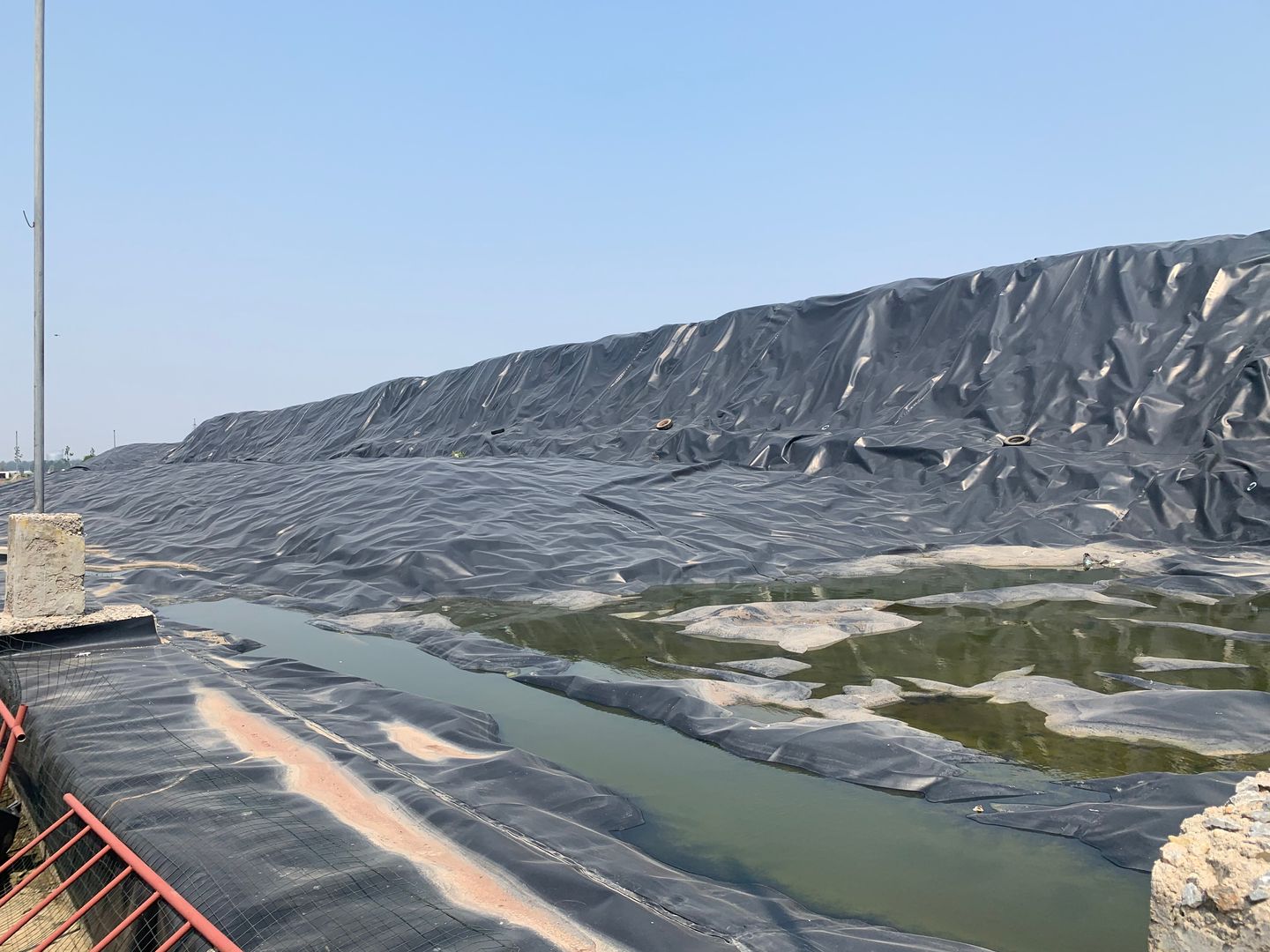
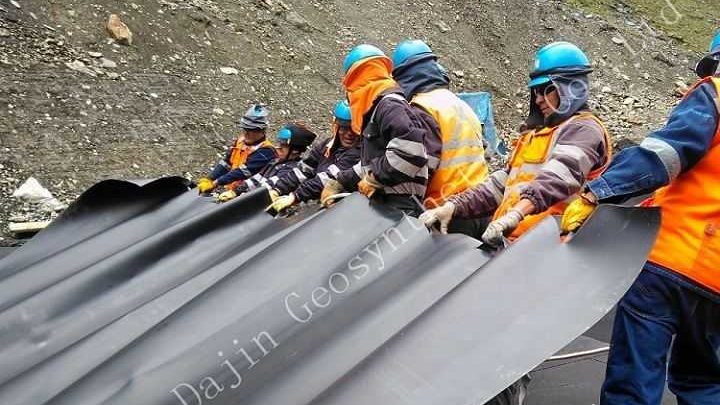
The application of geomembrane in mining involves anti-seepage, covering, groundwater control, soil stability enhancement, and environmental protection. It plays an important role in ensuring the safety of mining and reducing environmental pollution.
- Anti-seepage of tailings ponds: During the mining process, a large amount of tailings will be produced. In order to prevent harmful substances in the tailings from seeping into groundwater or surface water, a tailings pond needs to be built. Geomembrane can be used as the anti-seepage layer of tailings ponds, effectively preventing tailings from penetrating and protecting the surrounding environment from pollution.
- Yard coverage: Ore needs to be piled after being mined in open-pit mines. Geomembranes can be used as a covering layer in the yard to prevent the stacked ore from contacting the atmosphere and moisture, and reduce chemical reactions and pollutant spillage.
- Anti-seepage of leachate: During some metal smelting and extraction processes, leachate will be produced, containing various harmful substances. Geomembrane can be used as the anti-seepage layer of leachate pools to prevent leachate from penetrating into groundwater or surface water and causing environmental pollution.
- Control of groundwater level: During the mining process, it may be necessary to control the groundwater level to prevent groundwater from influxing into the mine or affecting mining operations. Geomembrane can be used as a groundwater isolation layer to effectively control groundwater levels.
- Enhanced soil stability: In some mining areas, the soil may lose stability due to mining activities and is prone to collapse or landslides. Geomembranes can be used as reinforcement materials to enhance soil stability and reduce the occurrence of geological disasters.
- Environmental protection: Mining will cause a certain degree of damage to the surrounding environment. The application of geomembrane can reduce the impact of mining activities on the environment and protect the integrity and stability of the natural ecosystem.
2. Landfills
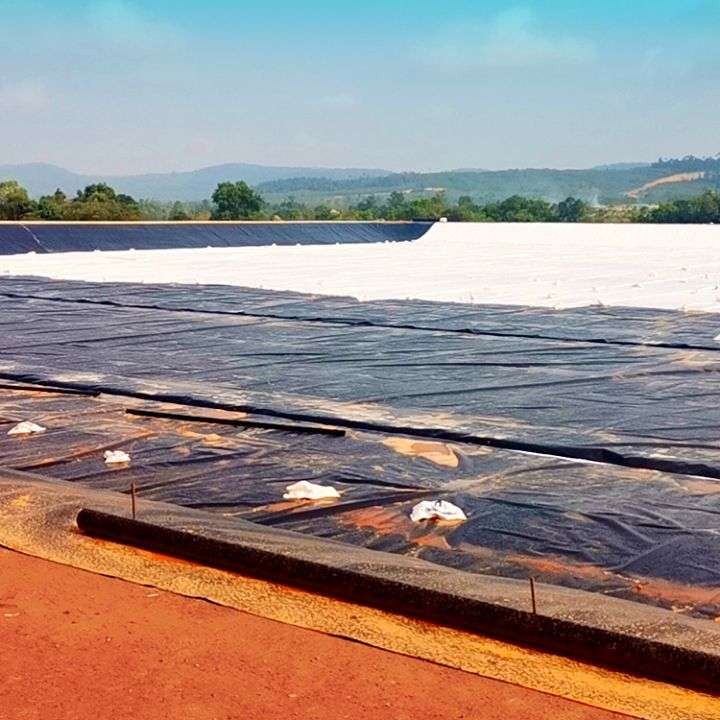
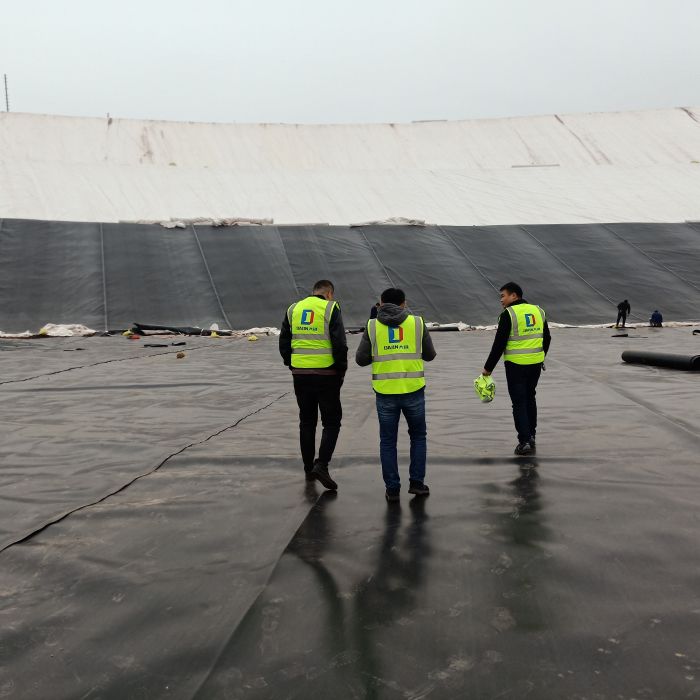
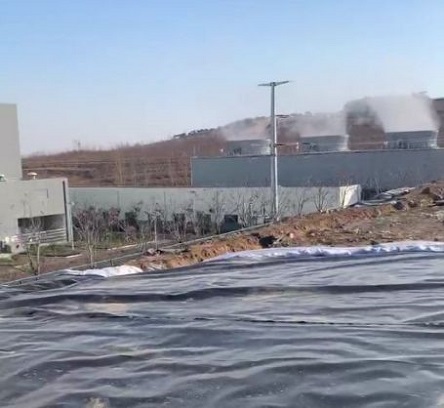
The application of geomembrane in landfills involves anti-seepage, bottom covering, leachate and gas collection systems, slopes and surface coverings, etc. It plays an important role in the environmental protection and pollution prevention of landfills.
- Anti-seepage layer: The landfill needs an effective anti-seepage layer to prevent pollutants in the garbage from seeping into the groundwater. Geomembrane is often used as one of the main materials for the anti-seepage layer. By laying geomembranes on the bottom and sides of the landfill, it can effectively prevent the underground and surrounding groundwater from being polluted by the penetration of harmful substances in the garbage.
- Bottom covering layer: During the landfill process, garbage will continue to accumulate. In order to reduce odor, prevent pollution and protect groundwater, the landfill needs to cover the garbage regularly. Geomembranes can be used as part of the bottom cover layer to cover the surface of newly landfilled waste to prevent moisture penetration, odor diffusion and pollutant leakage.
- Landfill leachate collection system: In landfills, garbage will produce leachate, which is a liquid formed by mixing water in the garbage with dissolved substances in the waste. Geomembranes can be used to construct leachate collection systems to prevent leachate from seeping into groundwater. By setting up geomembranes and drainage pipes between the garbage layer and the anti-seepage layer, the leachate can be collected and treated.
- Gas collection system: Landfill garbage will produce a large amount of biogas and harmful gases, which need to be collected and processed to reduce environmental pollution and safety hazards. Geomembranes can be used as the covering layer of gas collection systems to prevent gas leakage and at the same time guide the collected gases through exhaust pipes to treatment facilities for processing.
- Slope and surface covering: In order to protect the landfill slope from erosion and erosion, and reduce the spread of odor, the landfill slope and surface can be covered with geomembrane. This helps reduce soil erosion and exposed waste, while also reducing environmental pollution and odor spread.
3. Aquaculture
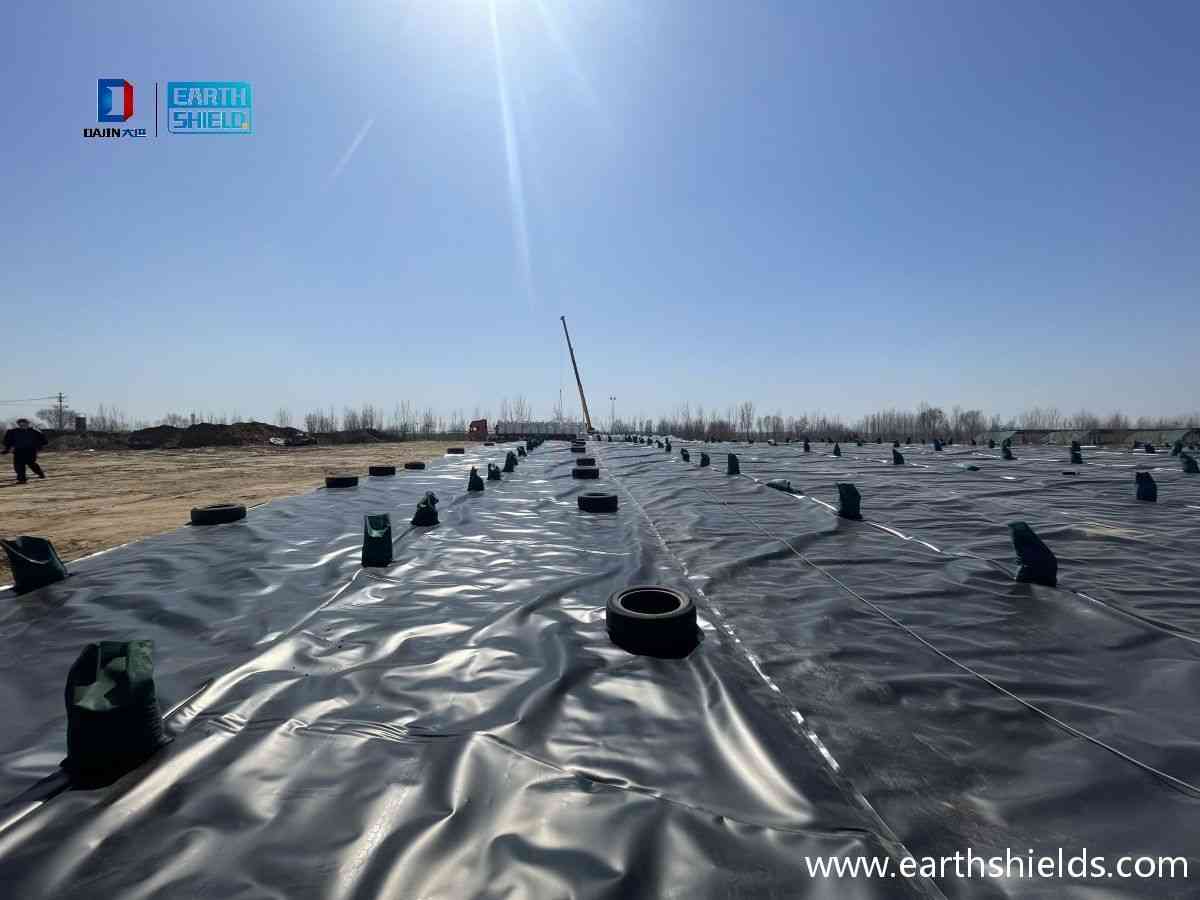
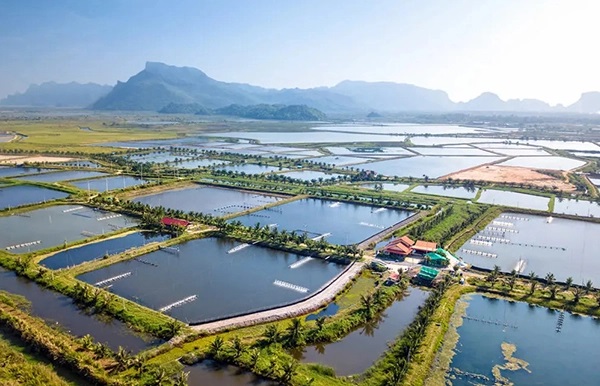
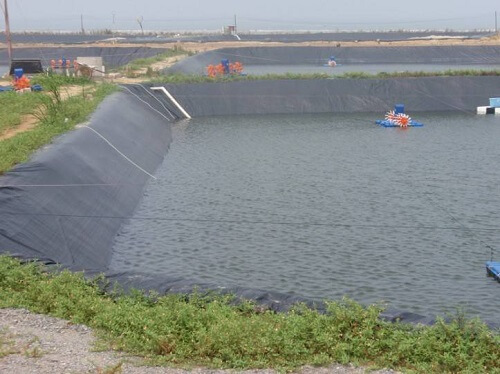
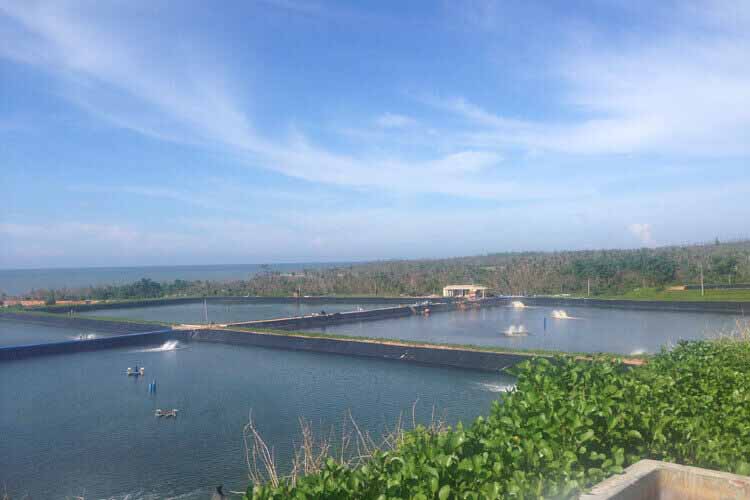
The application of geomembranes in aquaculture involves pond anti-seepage, sewage treatment systems, water body coverage, bottom coverage, and water body isolation and separation. It plays an important role in maintaining the stability of the aquaculture environment, good water quality, and wastewater treatment.
- Pond anti-seepage: Aquaculture ponds need to maintain the stability and adequacy of water bodies while preventing water from leaking into groundwater. Geomembrane can be used as the anti-seepage layer of the pond to prevent water penetration and ensure the stability of the water body and good water quality.
- Sewage treatment system: A large amount of wastewater and sludge will be produced during the aquaculture process, which needs to be treated to avoid environmental pollution. Geomembranes can be used to build an anti-seepage layer in sewage treatment systems to ensure that wastewater does not leak into groundwater or soil. At the same time, the collected wastewater can be guided through drainage pipes to treatment facilities for treatment.
- Aquaculture pond covering: In some specific aquaculture scenarios, such as shrimp or fish ponds, in order to maintain water temperature, reduce evaporation and reduce the impact of the external environment, the surface of the pond can be covered with a geomembrane. This can help improve the temperature stability of the water body, reduce evaporation loss of water, and protect the cultured organisms from the impact of the external environment.
- Bottom covering: In some aquaculture systems, in order to protect the bottom soil or sediment from pollution and keep the water body clean, the bottom of the breeding pond can be covered with a geomembrane. This helps reduce the penetration of contaminants and sediment accumulation, while making it easier to clean and maintain the breeding environment.
- Isolation and separation of water bodies: In some special cases, it may be necessary to isolate and separate water bodies in aquaculture systems in order to manage and control the breeding environment. Geomembranes can be used to construct water body isolation walls or separation layers to help divide the water body into different areas for the management and control of different farming environments.
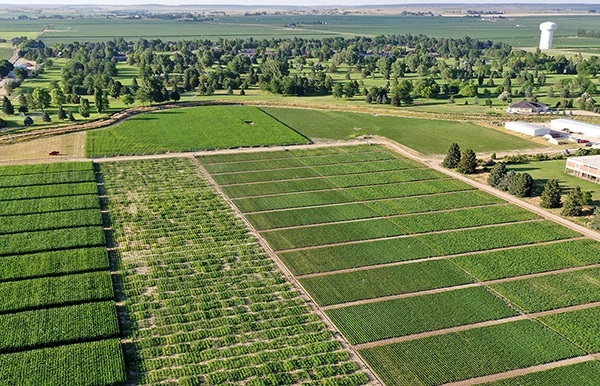
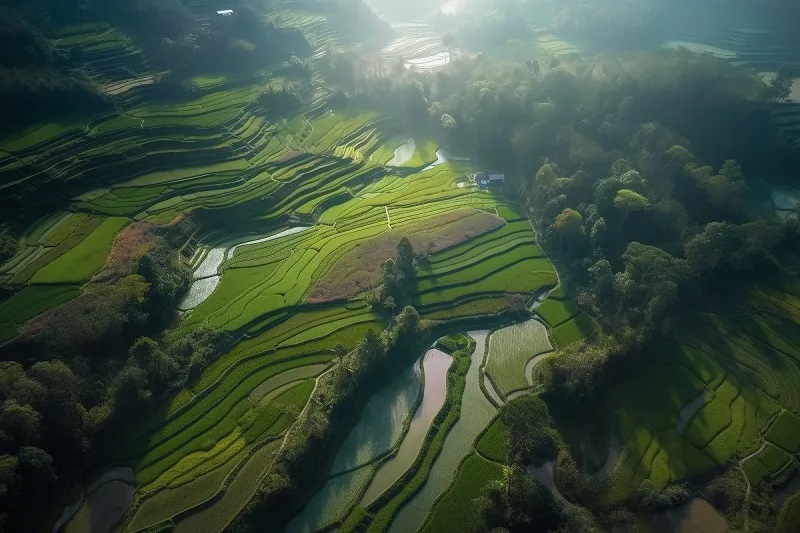
4. Agriculture
The application of geomembranes in agriculture involves water resources management, soil protection, plant growth promotion, and wastewater treatment. It plays an important role in improving agricultural production efficiency, protecting the environment, and utilizing resources.
- Irrigation system anti-seepage: Irrigation is one of the common ways of utilizing water resources in agriculture. Geomembrane can be used as the anti-seepage layer of the irrigation system. By laying geomembranes at the contact points between water bodies and soil such as irrigation ditches, reservoirs, and ponds, water leakage and waste can be reduced and irrigation efficiency improved.
- Anti-seepage of reservoirs and reservoirs: In agricultural irrigation, it is often necessary to build reservoirs or reservoirs to store rainwater or irrigation water. Geomembranes can be used as the anti-seepage layer of reservoirs or reservoirs to prevent water from leaking into groundwater and ensure the stability and adequacy of water sources.
- Mulching: In agricultural production, mulching is a common farming method, which can be used for heat preservation, moisture retention, increasing soil temperature, inhibiting the growth of weeds, etc. Geomembrane can be used as one of the materials of mulch film to cover the soil surface, which plays the role of heat preservation, moisture retention and increasing soil temperature to promote plant growth.
- Greenhouse coverage: Greenhouse is a common facility in agricultural production, which can provide a good growing environment and extend the plant growing season. Geomembrane can be used as a greenhouse covering material to provide an effective isolation layer to prevent changes in temperature and humidity inside and outside the greenhouse and maintain a good growing environment.
- Covering for fruit and vegetable planting: In fruit and vegetable planting, geomembrane can be used as a mulch layer to cover the planting rows to moisturize, inhibit weed growth and increase soil temperature, promoting crop growth and increasing yields. .
- Sewage treatment system: A large amount of wastewater and sludge will be produced during agricultural production, which needs to be treated to avoid environmental pollution. Geomembranes can be used to build an anti-seepage layer in sewage treatment systems to ensure that wastewater does not leak into groundwater or soil. At the same time, the collected wastewater can be guided through drainage pipes to treatment facilities for treatment.
5. Pond Liners
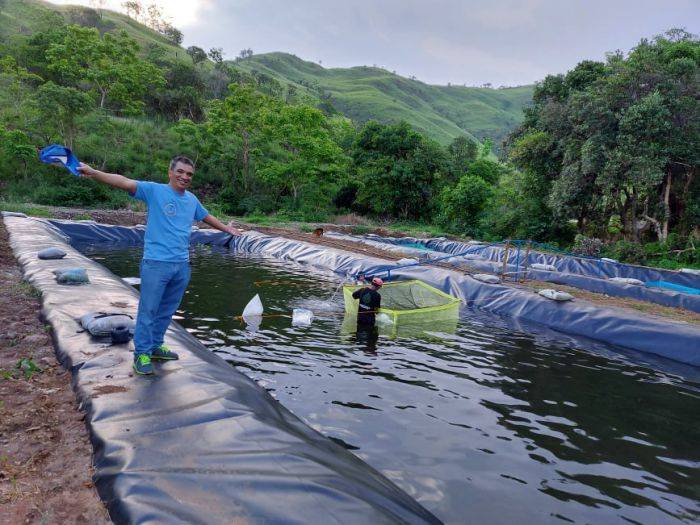
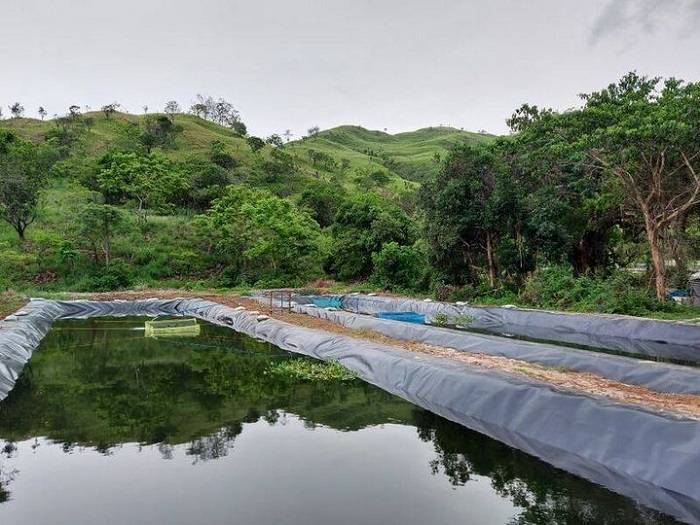
The application of geomembrane in pond lining involves anti-seepage, sewage treatment, fish pond culture, artificial lake construction and irrigation water sources, etc. It plays an important role in protecting the water body and environment, maintaining water body stability and good water quality.
- Anti-seepage layer: The pond lining needs to have good anti-seepage properties to prevent water from leaking into the ground or the surrounding environment. Geomembrane pond liner are often used as the anti-seepage layer of pond linings, which can effectively prevent water penetration and keep the water level in the pond stable.
- Sewage treatment ponds: Some ponds are used for sewage treatment to collect and treat agricultural wastewater, industrial wastewater or urban sewage, etc. Geomembrane pond liner can be used as the anti-seepage layer of sewage treatment tanks to prevent sewage from leaking into groundwater or soil and ensure that sewage is effectively treated.
- Fish ponds: In fish pond farming, pond lining is very important to maintain water stability, reduce water loss and prevent water source pollution. Geomembrane pond liner can be used as lining materials for fish ponds to protect the water quality in fish ponds and ensure a good environment for fish growth.
- Artificial lake: Artificial lakes will be built in some landscape designs to beautify the environment and provide leisure places. Geomembrane pond liner can be used as the anti-seepage layer of artificial lakes to prevent lake water from leaking into groundwater and ensure the stability of the water level and water quality of artificial lakes.
- Irrigation water source: In agricultural production, some ponds are used as irrigation water sources to supply irrigation water for crops. Geomembrane pond liner can be used as lining materials for irrigation water sources to prevent water leakage and ensure sufficient and stable irrigation water.
6. Dams
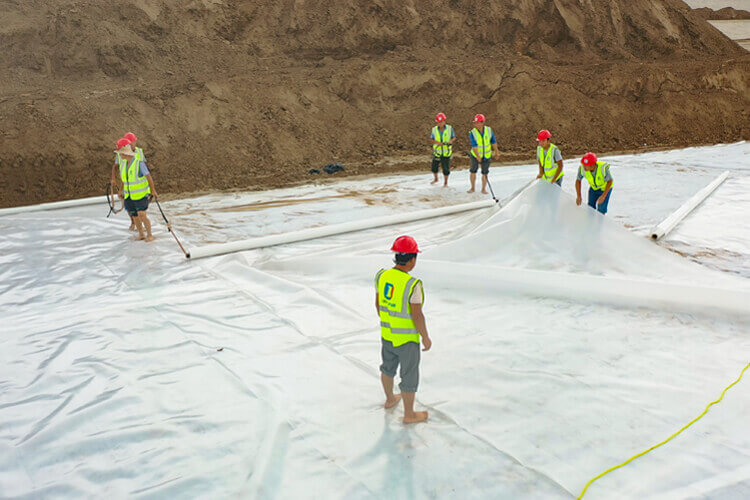
The application of geomembrane in dam projects involves anti-seepage, prevention of water and soil erosion, water seepage control, prevention of osmotic compression, and prevention of corrosion. It plays an important role in ensuring the safety, stability and durability of dam projects.
- Anti-seepage layer: Dams need to have good anti-seepage properties to prevent water from penetrating into the interior of the dam or surrounding areas, causing foundation settlement or damage to the dam structure. Geomembranes are usually used as the anti-seepage layer of dams and are laid on the dam foundation or embankment body to effectively prevent water penetration and maintain the stability of the dam structure.
- Prevent water and soil erosion: The upstream of the dam is often eroded by water flow, and water and soil erosion is prone to occur. Geomembrane can be laid on the slope or side slope upstream of the dam as a protective layer to prevent water flow erosion, reduce soil erosion, and protect the soil and ecological environment around the dam.
- Water seepage control: In dam projects, water seepage needs to be effectively controlled to reduce leakage and water seepage inside the dam. Geomembrane can be used as a seepage control layer and laid near the seepage channels or seepage holes of the dam to prevent water leakage and improve the seepage control effect of the dam.
- Osmotic compression: In dam projects, the soil may undergo osmotic compression due to long-term water pressure, resulting in settlement or deformation of the dam. Geomembrane can be used as an isolation layer between the dam soil and the water body to prevent osmotic compression and maintain the stability and integrity of the dam.
- Prevent corrosion: Dam structures are often soaked and corroded by water, affecting their service life and safety. Geomembrane can be used as a protective layer for the dam structure, covering the surface of the dam to prevent water immersion and corrosion and extend the service life of the dam.
7. Mine tailings ponds
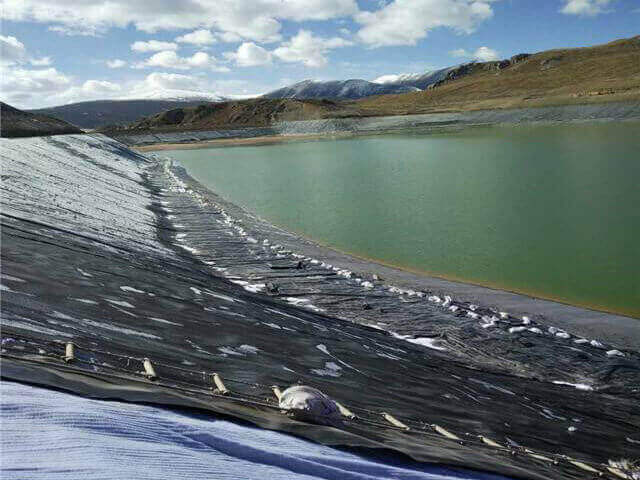
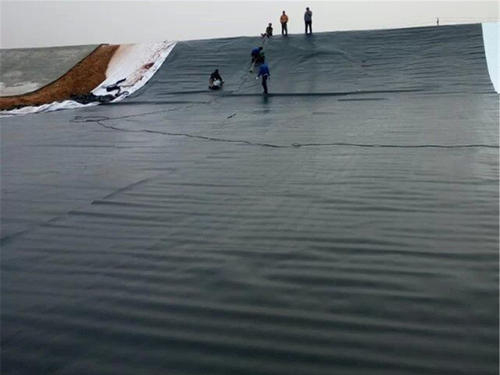
The application of geomembrane in slag ponds involves anti-seepage, sewage treatment, bottom covering, leachate collection systems, and prevention of soil erosion. It plays an important role in ensuring the safety, environmental friendliness and sustainability of the operation of slag ponds.
- Anti-seepage layer: The slag pool is an important facility used to store slag (waste after ore processing). Since slag may contain various harmful substances, in order to prevent it from seeping into groundwater or soil, geomembranes are widely used as the anti-seepage layer of slag ponds. The laying of geomembrane can effectively prevent the penetration of pollutants and protect the water quality of the surrounding environment.
- Sewage treatment: Sewage containing harmful substances may be produced in the slag pool and needs to be treated to reduce the impact on the surrounding environment. Geomembranes can be used as the anti-seepage layer of sewage treatment systems to ensure that sewage does not leak into groundwater or soil, and at the same time guide the collected sewage through drainage pipes to treatment facilities for treatment.
- Bottom covering: In order to reduce odor, prevent pollution and protect groundwater, slag pools need to be covered regularly. Geomembranes can be used as part of the bottom cover layer to cover the surface of newly filled slag to prevent moisture penetration, odor diffusion and contaminant spillage.
- Leachate collection system: In the slag pool, the slag may produce leachate, which contains various harmful substances. Geomembranes can be used to construct the anti-seepage layer of the leachate collection system to prevent leachate from seeping into groundwater, and at the same time guide the collected leachate through drainage pipes to treatment facilities for treatment.
- Prevent soil erosion: The surface around the slag pool is often exposed and is easily eroded by water flow and wind erosion. Geomembrane can be used as a surface covering layer to cover the surface around the pond to prevent soil erosion and maintain the stability of the ecological environment in the surrounding area.
8. Oil and gas
The application of geomembrane in the oil and gas industry involves sewage treatment, waste treatment, anti-corrosion protection, storage tank anti-seepage and sewage treatment equipment. It plays an important role in ensuring the safety of production facilities, environmental protection and resource utilization.
- Oilfield wastewater treatment: During the oil extraction process, a large amount of wastewater will be produced, which contains oil, heavy metals and other harmful substances. Geomembranes can be used as the anti-seepage layer of sewage treatment systems to prevent sewage from seeping into groundwater or soil, and at the same time guide the collected sewage through drainage pipes to treatment facilities for treatment.
- Oilfield waste treatment: Waste generated during the oil extraction process, such as sludge, solid waste, etc., needs to be treated and disposed of. Geomembrane can be used as an anti-seepage layer in landfills to prevent waste from seeping into groundwater or soil and reduce environmental pollution.
- Oil pipeline anti-corrosion layer: Oil pipelines are susceptible to corrosion and damage during transportation, and require an anti-corrosion protective layer to extend their service life. Geomembrane can be used as an anti-corrosion layer for petroleum pipelines, covering the surface of the pipeline to prevent erosion by moisture and chemical substances and protecting the pipeline from corrosion.
- Anti-seepage layer of oil and gas storage tanks: Oil and natural gas storage tanks need to have good anti-seepage properties to prevent the stored oil and gas from leaking into the ground or the surrounding environment. Geomembranes are usually used as the anti-seepage layer of storage tanks and are laid on the bottom and sides of storage tanks to effectively prevent oil and gas leakage.
- Sewage treatment device: Sewage and wastewater generated during the oil and gas production process need to be treated to meet discharge standards. Geomembranes can be used to build an anti-seepage layer for sewage treatment devices to prevent sewage from leaking into groundwater or soil, and at the same time guide the collected sewage through drainage pipes to treatment facilities for treatment.
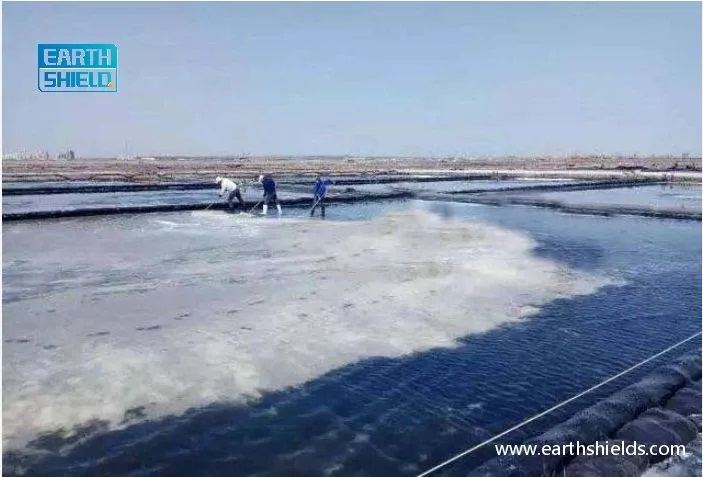
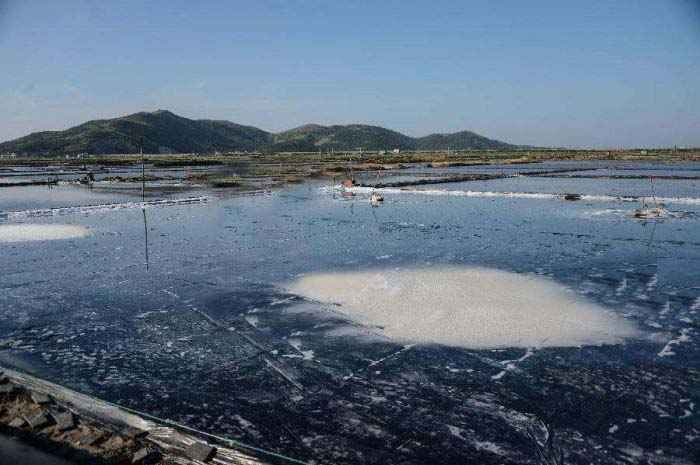
9. Salt pond
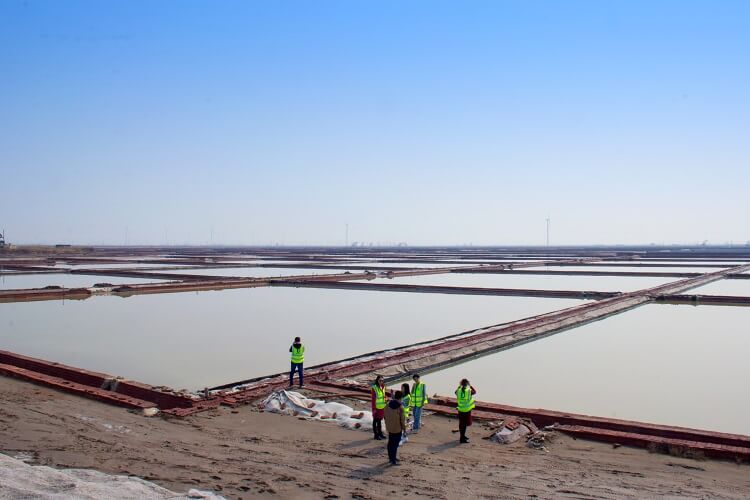
The application of geomembrane in salt fields involves brine pool anti-seepage, salt bed coverage, salt pile coverage, sewage treatment, and salt pool bottom and slope coverage. It plays an important role in increasing salt production, protecting the environment, and utilizing resources.
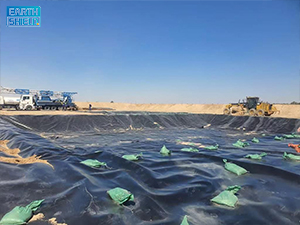
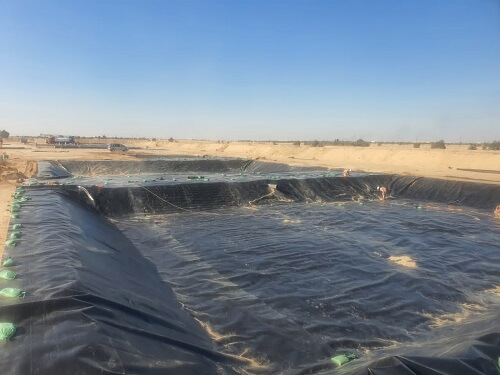
- Anti-seepage of salt water pools: Salt fields are usually used for the evaporation and crystallization of salt water. Geomembranes can be used as the anti-seepage layer of salt water pools to prevent salt water from leaking into the ground or the surrounding environment. By laying a geomembrane on the bottom and sides of the saltwater pool, it can effectively prevent saltwater penetration and improve the concentration efficiency of saltwater.
- Salt bed covering: In order to increase the evaporation rate of salt water and increase salt production, the surface of the salt bed can be covered with a geomembrane. Geomembrane can prevent salt water from being absorbed by the soil, reduce water loss, accelerate the crystallization process of salt, and increase salt production.
- Salt pile covering: The salt pile produced in the salt field needs to be covered to prevent the salt on the surface of the salt pile from being weathered and losing water. Geomembrane can be used as a covering layer for salt piles to protect the salt pile from the influence of the external environment and maintain the quality and yield of salt.
- Sewage treatment: During the production process of the salt farm, sewage containing salt may be produced, which needs to be treated to reduce the impact on the environment. Geomembranes can be used as the anti-seepage layer of sewage treatment systems to ensure that sewage does not leak into groundwater or soil, and at the same time guide the collected sewage through drainage pipes to treatment facilities for treatment.
- Covering the bottom and slopes of the salt pond: In order to protect the bottom and slopes of the salt pond from erosion and erosion, the bottom and slopes of the salt pond can be covered with geomembranes. This helps reduce soil erosion and salt leakage, while also reducing environmental pollution and resource waste.
10. Heap Leach Pads
The application of geomembrane in heap leach fields involves anti-seepage, leachate collection, bottom covering, heap leach cushion, slope and surface covering, etc. It plays an important role in improving the efficiency of the heap leach process, protecting the environment and utilizing resources.
- Anti-seepage layer: A heap leach field is a facility used for leaching metals (such as gold, copper, etc.) or minerals. An effective anti-seepage layer is required to prevent the leachate from penetrating into groundwater or soil. Geomembrane is usually used as the anti-seepage layer of the heap leach field and is laid on the bottom and sides of the heap leach field to effectively prevent the penetration of leachate.
- Leachate collection system: During the heap leaching process, the leachate produced needs to be collected and processed to extract metals or minerals and prevent environmental pollution. Geomembranes can be used to construct the anti-seepage layer of the leachate collection system to ensure that leachate does not leak into groundwater or soil, and to guide the collected leachate to treatment facilities for treatment through drainage pipes.
- Bottom covering layer: In order to reduce odor, prevent pollution and protect groundwater, the heap leach field needs to be covered regularly. Geomembranes can be used as part of the bottom cover layer to cover the surface of newly filled ore to prevent moisture penetration, odor diffusion and contaminant spillage.
- Heap leach cushion: The cushion in the heap leach field needs to have certain protection and support functions to prevent the collapse and deformation of the ore. Geomembranes can be used as part of the heap leach cushion to enhance the stability and durability of the cushion and protect the structural integrity of the heap leach field.
- Slope and surface covering: In order to protect the slope of the heap leach field from erosion and erosion, and reduce the spread of odor, the slope and surface of the heap leach field can be covered with a geomembrane. This helps reduce soil erosion and leakage of heap leach fluid, while also reducing environmental pollution and odor spread.
11. Irrigation
The application of geomembrane in irrigation involves anti-seepage of channels and pools, mulching film covering, anti-seepage of irrigation water sources, bottom covering and moisture retention layer. It plays an important role in improving irrigation efficiency, protecting water resources and soil, and promoting crop growth.
- Anti-seepage of channels and pools: Geomembranes can be used as the anti-seepage layer of irrigation channels and pools to reduce water leakage and waste. By laying geomembrane on the bottom and sides of channels and pools, it can effectively prevent water from penetrating into the ground or soil and improve the utilization rate of irrigation water.
- Film mulching: In irrigation, film mulching is a common farming method and can be used for heat preservation, moisture retention, and suppression of weed growth. Geomembrane can be used as one of the materials of mulch, covering the soil surface, playing the role of heat preservation, moisture retention, inhibiting the growth of weeds, and promoting crop growth.
- Anti-seepage of irrigation water sources: Irrigation water sources (such as reservoirs and reservoirs) need to have good anti-seepage properties to ensure sufficient and stable water resources. Geomembrane can be used as an anti-seepage layer for irrigation water sources to prevent water from leaking into the ground or soil and maintain the stability of water sources and good water quality.
- Bottom covering: In some irrigation systems, in order to protect the bottom soil from erosion and pollution, the bottom of the irrigation system can be covered with a geomembrane. This helps reduce soil erosion and infiltration of contaminants while protecting the quality of groundwater resources.
- Moisture retention layer: Geomembrane can be used as a moisture retention layer, covering the soil surface or under the crop root system to reduce water evaporation and loss, improve irrigation water utilization efficiency, and promote crop growth.
12. Canal liners
The application of geomembrane in channel lining involves anti-seepage, water resources management, bottom covering, channel maintenance, and water body isolation and separation. It plays an important role in maintaining the stability of water resources, the safety and durability of channels.
- Anti-seepage layer: The channel lining needs to have good anti-seepage properties to prevent water from leaking into the ground or the surrounding environment. Geomembranes are usually used as the anti-seepage layer of channel linings and are laid on the bottom and sides of the channels to effectively prevent water penetration and maintain stable water levels in the channels.
- Water resources management: Channels are important channels for water transportation, and it is necessary to maintain the stability and adequacy of water in the channels. Geomembranes can be used as lining materials for channels to prevent water leakage and waste and improve water resource utilization efficiency.
- Bottom covering: In order to protect the bottom of the channel from erosion and pollution, the bottom of the channel can be covered with a geomembrane. This helps reduce water erosion and soil loss while protecting the quality of groundwater resources.
- Channel maintenance: Geomembranes can be used as lining materials for channels to reduce the erosion and wear of the bottom and sides of the channel by water flow, extend the service life of the channel, and reduce maintenance costs.
- Water body isolation and separation: In some special cases, water bodies may need to be isolated and separated in channels to manage and control water resources. Geomembranes can be used to construct water body isolation walls or separation layers to help divide water bodies into different areas for management and control of water resources.
13. Secondary containment
The application of geomembrane in secondary protection involves anti-seepage, chemical storage, oil tank leakage prevention, waste treatment and sewage treatment, etc. It plays an important role in protecting the environment, preventing pollution and maintaining human health.
- Anti-seepage layer: The secondary protection system needs to have excellent anti-seepage performance to prevent stored liquids or chemicals from leaking into groundwater or soil and causing environmental pollution. Geomembranes are usually used as the anti-seepage layer of secondary protection systems and are laid on the bottom and sides to effectively prevent the spread of leaking materials.
- Chemical storage pool lining: In industrial production, various chemicals or hazardous substances may need to be stored. In order to prevent leakage from polluting the environment, an anti-seepage layer needs to be laid inside the chemical storage pool. Geomembranes can be used as lining materials for chemical storage pools to prevent chemical leakage and protect the surrounding environment and groundwater resources.
- Oil tank leak-proof layer: For storage tanks that store petroleum or other liquid fuels, measures must be taken to prevent leakage to avoid groundwater and soil contamination. Geomembranes can be used as the anti-seepage layer of oil tanks to ensure that stored petroleum or liquid fuel does not leak into the ground.
- Lining of waste disposal areas: In waste disposal sites, hazardous wastes and harmful chemicals need to be stored and processed in a safe environment. Geomembranes can be used as lining materials in waste disposal areas to prevent waste from leaking or contaminating soil and groundwater.
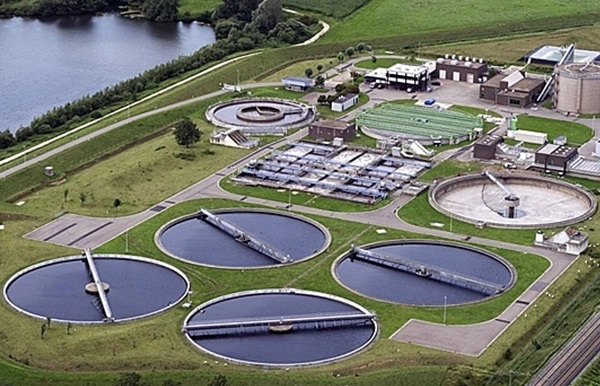
- Sewage treatment tank anti-seepage layer: In sewage treatment plants, a large amount of wastewater and sludge need to be processed and stored. Geomembranes can be used as the anti-seepage layer of sewage treatment tanks to prevent sewage from leaking into groundwater or soil and protect the surrounding area. environment.
14. Tank linings
The application of geomembrane in tank lining involves anti-seepage, chemical storage, oil tank leakage prevention, waste treatment and sewage treatment, etc. It plays an important role in protecting the environment, preventing pollution and maintaining human health.
- Anti-seepage layer: The tank lining needs to have good anti-seepage properties to prevent stored liquids or chemicals from leaking into groundwater or soil and causing environmental pollution. Geomembranes are usually used as the anti-seepage layer of storage tank linings and are laid on the bottom and sides to effectively prevent the spread of leaking materials.
- Chemical storage tank lining: In industrial production, various chemicals or hazardous substances need to be stored. In order to prevent leakage from polluting the environment, an anti-seepage layer needs to be laid inside the storage tank. Geomembranes can be used as lining materials for chemical storage tanks to prevent chemical leakage and protect the surrounding environment and groundwater resources.
- Oil tank leak-proof layer: For storage tanks that store petroleum or other liquid fuels, measures must be taken to prevent leakage to avoid groundwater and soil contamination. Geomembranes can be used as the anti-seepage layer of oil tanks to ensure that stored petroleum or liquid fuel does not leak into the ground.
- Waste treatment storage tank lining: In waste treatment sites, hazardous wastes and harmful chemicals need to be stored and processed in a safe environment. Geomembranes can be used as lining materials for waste disposal storage tanks to prevent waste from leaking or contaminating soil and groundwater.
- Anti-seepage layer of sewage treatment tanks: In sewage treatment plants, a large amount of wastewater and sludge need to be processed and stored. Geomembranes can be used as the anti-seepage layer of sewage treatment tanks to prevent sewage from leaking into groundwater or soil and protect the surrounding area. environment.
With the continuous advancement and development of science and technology, people have higher and higher performance requirements for geomembranes. In the future, geomembranes will improve their anti-seepage, tensile, and tear resistance properties to meet more complex and stringent engineering requirements. Our company’s geomembrane standards completely exceed the performance of American standards to meet customers’ most basic requirements for different geomembrane projects.
Different engineering fields have different requirements and application methods for geomembranes. Geomembrane will continue to develop, and more suitable geomembrane products and application methods will be developed according to engineering needs in different fields. As a geomembrane manufacturer for more than 20 years, our company has launched high-performance HDPE geomembranes and flexible LLDPE geomembranes, allowing customers to choose geomembranes based on the actual geomembrane project conditions.
The use of environmentally friendly materials to produce high-performance geomembranes will become an important development direction in the future to achieve harmonious development of engineering construction and environmental protection. Our company promises to only use 100% new materials and never use a single particle of recycled materials!
If you have a geomembrane project under construction or about to be constructed, you can contact us. Our engineers are online 24 hours a day to provide you with professional services. At the same time, if you need it, we can provide you with free samples of geomembrane.