


- Home
- Companies
- Aimix Group Co., Ltd
- Articles
- What Does ±2% Weighing Accuracy of Self ...
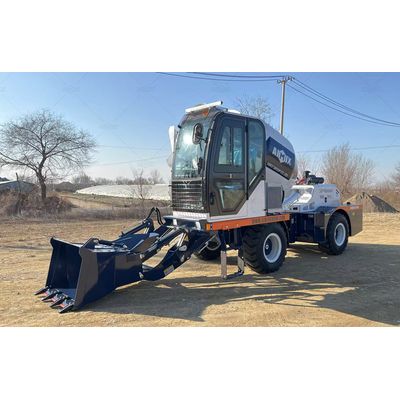
What Does ±2% Weighing Accuracy of Self Loading Concrete Mixer Mean for Concrete Quality?
In modern construction, achieving consistent concrete quality is as critical as meeting project timelines. Variations in aggregate, cement, or water quantities can directly affect strength, durability, and finish. One of the most significant innovations in mobile concrete production is the self loading concrete mixer(hormigonera autocargable) with precise weighing systems. A ±2% weighing accuracy specification may sound technical, but its impact on on-site concrete quality is substantial. Whether contractors are evaluating self loading concrete mixer Chile options or exploring self loading concrete mixer for sale Peru, understanding how this feature translates to real-world performance is essential.
The Role of Weighing Accuracy in Concrete Production
Concrete is a mixture of cement, aggregates, water, and admixtures. The proportions of these components determine its workability, compressive strength, and durability. Small deviations in quantity can lead to cracks, reduced lifespan, or inconsistent performance.
How ±2% Accuracy Works in Self Loading Concrete Mixers
Modern self loading concrete mixers incorporate electronic weighing systems for aggregates, cement, and water. ±2% accuracy means that for a target quantity of any material, the mixer ensures that the actual amount loaded deviates by no more than 2%. For example, if a batch requires 1,000 kilograms of aggregate, the actual weight will fall between 980 and 1,020 kilograms. This tight tolerance maintains mix consistency across multiple batches, especially critical for large projects or sites without access to centralized batching plants.
Benefits Over Manual Loading
Manual loading or mechanical approximations often introduce larger variations, particularly in remote sites or challenging terrain. The ±2% weighing accuracy of a self loading concrete mixer ensures that even in uneven or mobile environments, each batch maintains consistent material ratios, reducing rework and wastage.
Implications for Concrete Quality on Site
Improved Strength and Durability
Accurate material measurement ensures that the concrete achieves its designed compressive strength. For structural applications such as bridges, foundations, or multi-story buildings, slight deviations can compromise safety. By maintaining ±2% accuracy, a self loading concrete mixer produces concrete that reliably meets engineering specifications, which is particularly important for contractors in Chile, where seismic standards are strict.
Consistent Workability
Workability affects how easy the concrete is to place and finish. If the mix is too dry or too wet, it can affect pumping, compaction, and surface finish. Self loading concrete mixers with precise weighing maintain consistent water-cement ratios, which leads to more uniform workability and reduces the risk of segregation or bleeding.
Reduced Material Waste
Excess cement or aggregates can increase project costs and environmental impact. Accurate weighing minimizes overuse of materials while avoiding shortages that require on-site adjustments. Contractors purchasing self loading concrete mixer for sale Peru(autohormigonera venta Perú) can particularly benefit, as remote project locations often make material resupply costly and time-consuming.
Operational Advantages of High-Accuracy Mixers
On-Site Batch Repeatability
Projects with multiple small batches, such as urban housing, road repair, or industrial slabs, require repeatable concrete quality. The ±2% accuracy ensures that each batch matches the previous one closely, providing uniform strength and finish across the project.
Faster Decision-Making and Reduced Rework
When concrete quality is consistent, site managers can make quick decisions about pouring and finishing without needing constant testing. This reduces delays and increases overall productivity.
Integration With Automated Controls
Advanced self loading concrete mixers allow operators to set desired mix proportions digitally. Combined with ±2% weighing accuracy, these systems automatically adjust material inputs, further reducing human error and improving operational efficiency.
Case Study: Chilean Construction Applications
In Chile, where seismic codes and infrastructure standards are rigorous, the benefits of precise weighing are evident. Contractors deploying self loading concrete mixer Chile(autohormigonera en Chile) units for bridge abutments or urban roadway projects have reported fewer strength test failures and more predictable project timelines. The ability to rely on each batch being consistent reduces the need for onsite mix corrections, which is particularly valuable in regions with variable terrain and limited support facilities.
Selecting a Self Loading Concrete Mixer with Optimal Accuracy
When evaluating self loading concrete mixer for sale Peru, buyers should consider:
- Weighing system calibration and reliability
- Integration with water dosing and mixing controls
- Drum capacity relative to project scale
- Local service and spare parts availability
Balancing these factors ensures that the ±2% accuracy translates into tangible benefits rather than just a specification on paper.
Practical Takeaways for Contractors
For contractors, ±2% weighing accuracy is more than a technical metric; it is a critical factor in reducing material waste, maintaining consistent strength, and improving project efficiency. Self loading concrete mixers bring these advantages directly to the construction site, especially in regions like Peru and Chile where logistics, terrain, and regulatory standards pose operational challenges. By choosing equipment with precise weighing capabilities, contractors can achieve higher-quality concrete with predictable performance while minimizing delays and cost overruns.