

- Home
- Companies
- Earth Shield Environmental Co., Ltd.
- Articles
- What is Landfill in Waste Management?
What is Landfill in Waste Management?
What is a landfill?
A landfill is a meticulously designed and managed facility used for the long-term treatment and disposal of municipal solid waste. It is currently the most widely used final waste disposal method. It safely and sanitarily stores and decomposes waste while minimizing pollution to the surrounding environment (particularly soil, groundwater, and air).
It is more than a simple “garbage dump” or “garbage pit” but rather a complex system. Compared to other treatment options such as incineration and power generation, it typically offers lower initial investment and operating costs and can handle nearly all types of municipal waste.
Landfills can be categorized into the following types:
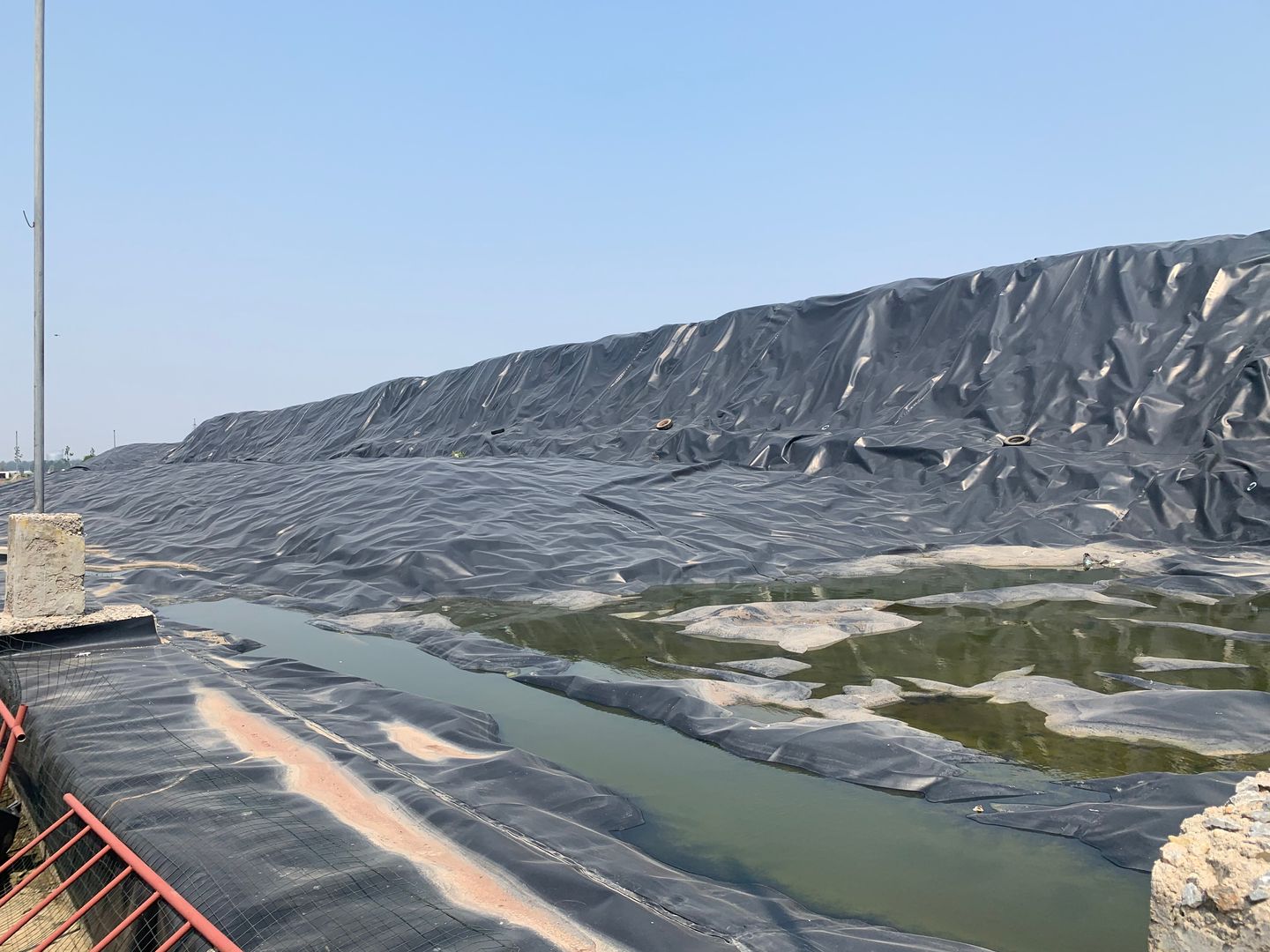
Open-air landfills: These are now banned in most countries and regions. Without any anti-seepage measures, they utilize natural pits or excavated pits for dumping waste. Without a bottom lining, leachate seeps directly into the soil and groundwater, causing serious pollution.
Sanitary landfills: These have a complete anti-seepage lining system: a composite lining system is used on the bottom and sides, typically consisting of a compacted clay layer and an HDPE (high-density polyethylene) artificial impermeable membrane, completely isolating the waste from the outside environment. This ensures maximum safety and minimizes environmental pollution.
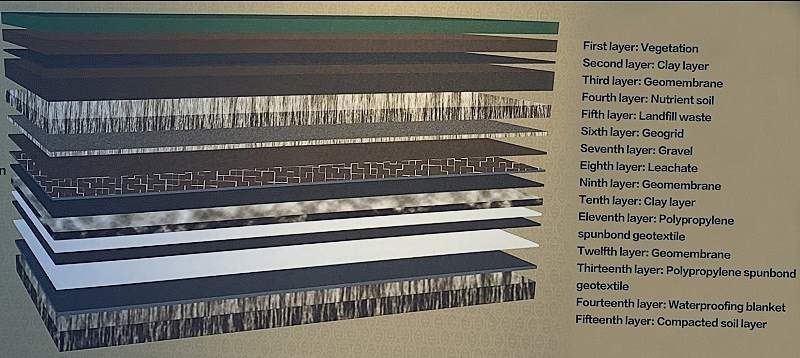
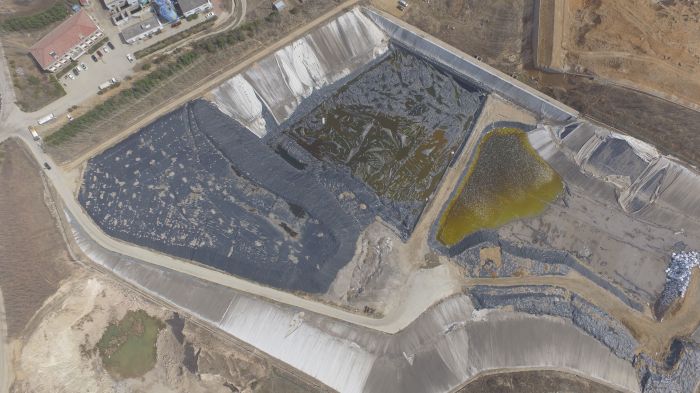
A landfill is like a strictly managed “garbage isolation zone.” The process is as follows:
Pre-leakage prevention: A thick, impermeable membrane is laid at the bottom of the massive pit to prevent wastewater from seeping into the ground.
Layered filling: After the garbage trucks arrive, the garbage is unloaded, flattened, and compacted with heavy rollers.
Daily covering: At the end of each day, a layer of soil or film is placed over the compacted garbage to prevent odor and mosquitoes.
Sewage and waste gas treatment:
A pipe at the bottom collects toxic wastewater (leachate) from the garbage and sends it to a treatment plant for purification.
Another set of pipes collects biogas (primarily methane) produced by the garbage, which is used to generate electricity or flared.
Finally, when full, the entire “garbage isolation zone” is sealed and covered with a thick layer of soil, transforming it into a park or green space.
Landfills are the final destination for municipal waste that cannot be recycled, incinerated, or composted. They safely and centrally isolate and stabilize waste to prevent harm to the environment and human health.
Specifically, the functions of landfills are:
Isolation and containment: Waste is centrally stored and physically separated from the surrounding soil, groundwater, and air.
Harmless treatment: To reduce direct pollution by collecting and treating toxic wastewater (leachate) and flammable and explosive methane gas produced by waste decomposition.
Stabilization: The waste is allowed to decompose naturally and safely within the landfill, ultimately reaching a chemically stable state.
Final disposal: A safe final disposal site is provided for residual waste and unusable waste remaining after other waste treatment methods (such as recycling and incineration).
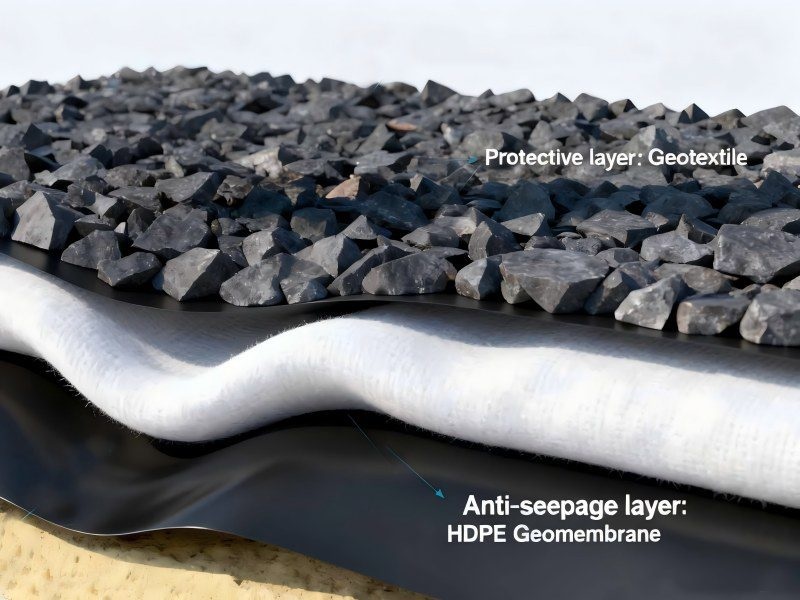
HDPE (High-Density Polyethylene) membrane is currently recognized worldwide as the best-performing and most widely used artificial anti-seepage material. HDPE membrane is essentially an impermeable barrier. Its extremely dense molecular structure makes it extremely difficult for water and other liquids to penetrate.
Advantages of HDPE (High-Density Polyethylene) membrane (typically 1.5-2.5 mm thick):
Extremely low permeability: Almost completely impermeable, providing excellent barrier effectiveness.
High corrosion resistance: Resistant to various chemicals found in landfill leachate. HDPE (High-Density Polyethylene) membrane is highly resistant to most acids, alkalis, salts, and organic solvents.
High strength: Excellent tensile and puncture resistance.
Long lifespan: A service life of over 50 years. High-quality HDPE membranes contain UV-resistant additives such as carbon black and antioxidants to resist degradation caused by sunlight, oxygen, and temperature fluctuations.
Disadvantages:
Imperfect welding or punctures by sharp objects during installation can create leaks.
Highly demanding installation techniques. To address the shortcomings of HDPE (high-density polyethylene) membranes, there’s no single, perfect material for landfills. Instead, a composite lining system is used to achieve optimal results. Geotextiles can be used above and below the HDPE membrane to protect it, which is easily punctured by sharp objects. Geotextiles provide a basic cushioning and protective layer.
As a geomembrane and geotextile manufacturer with over 20 years of professional manufacturing experience, we provide not only HDPE geomembranes that meet the highest standards but also comprehensive solutions that combine superior impermeability, robust durability, and professional engineering support. If you have a landfill project under construction or about to be built, please contact us for 24-hour online technical support. We can provide high-quality geomembranes and geotextiles, as well as guidance on geomembrane welding techniques. If necessary, we can also provide free geomembrane samples for testing.