

- Home
- Companies
- Zhengzhou Kerui (Group) Refractory Co., ...
- Articles
- What is the Definition of Harmless High ...
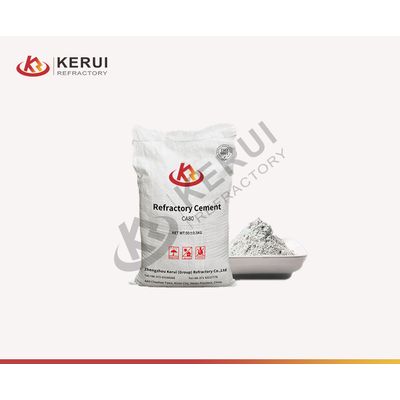
What is the Definition of Harmless High Alumina Cement?
Harmless high alumina cement, also known as low-heat high alumina cement or low-alkali high alumina cement, is a specialized variant of high alumina cement that offers distinct advantages in certain applications. It is formulated to minimize the potential for alkali-aggregate reactions (AAR), which can cause cracking and deterioration in concrete structures over time. In this article, we will delve into the definition and benefits of harmless high alumina cement, exploring its composition, manufacturing process, and applications.
Composition and Manufacturing Process
Harmless high alumina cement shares a similar composition to great high alumina cement definition, primarily consisting of calcium aluminate compounds formed by heating a mixture of limestone and bauxite at high temperatures. However, specific modifications are made to its formulation to reduce the alkali content, which is responsible for potential AAR-related issues.
Benefits and Characteristics
Harmless high alumina cement offers several benefits and characteristics that make it a preferred choice in certain scenarios:
Alkali-Aggregate Reaction Mitigation: The primary advantage of harmless high alumina cement is its reduced susceptibility to alkali-aggregate reactions, specifically the alkali-silica reaction (ASR) and alkali-carbonate reaction (ACR). These reactions occur when alkalis from cement react with certain types of aggregates, leading to expansion, cracking, and potential structural damage. Harmless high alumina cement minimizes the risk of AAR, making it suitable for projects where reactive aggregates are present. We also produce fine silica refractory.
Low Heat of Hydration: Harmless high alumina cement exhibits a lower heat of hydration compared to conventional high alumina cement. This characteristic reduces the risk of thermal cracking during the curing process, making it suitable for large concrete placements and massive structures where temperature differentials can be significant.
High Early Strength: Harmless high alumina cement maintains the rapid setting and hardening properties of conventional high alumina cement. It develops high early strength, allowing for faster construction schedules and reduced curing times. This feature is particularly advantageous in time-sensitive projects.
Conclusion
Harmless high alumina cement of Kerui Group China, also known as low-heat high alumina cement or low-alkali high alumina cement, offers distinct advantages in construction projects where the risk of alkali-aggregate reactions must be mitigated. By reducing the alkali content, it minimizes the potential for cracking and deterioration caused by AAR, ensuring the long-term durability of concrete structures. Additionally, its low heat of hydration and high early strength properties make it suitable for specific applications. Understanding the definition and benefits of harmless high alumina cement allows engineers and construction professionals to make informed decisions and select the appropriate cement for projects requiring AAR mitigation and enhanced performance.