


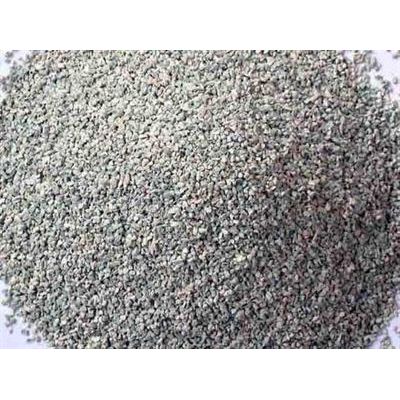
What is Zeolite Water Treatment Media?
How is zeolite water treatment media used in water & wastewater treatment?
Technology is constantly evolving and changing to meet the needs of humanity, and one of those needs is for clean water. The water treatment industry is always researching, testing, and developing new and improved ways in which to treat wastewater and drinking water in ways that are both efficient and environmentally friendly. Zeolite water treatment media is a sustainable, natural treatment solution for drinking water, greywater and wastewater tre
For hundreds of years humans have utilized the resources provided by nature to improve our quality of life. Sometimes we use them in the way that they are available in the environment, and other times we find new and innovative ways they can be implemented. For instance, sand and charcoal are typical examples of this. We utilize these medias in water treatment as filter mediums.
Sand accomplishes this in nature, leaving groundwater free of solid particles. Charcoal has always been seen as a carrier of heat energy, until recent years. Now, it is used in any number of products from skin care to vitamin supplements. It has also been proven to make an effective filter for water contaminated with certain toxins and other contaminants. Lets focus now on the zeolite mineral.
What is Zeolite?
When volcanic rock or ash reacts with alkaline waters, it can form zeolite. Zeolite is a mineral that can form into a variety of structures made of arrays of aluminum, silica, and oxygen known as aluminosilicates. The most common is clinoptilolite. Their structure and composition make them microporous and highly inclined for cation exchange capabiilities. The degree of such exchange properties vary from type to type and are noticeably weaker in naturally occurring zeolites due to potential impurities. However, zeolites can easily be produced synthetically with a heated solution of alumina, silica, and sodium hydroxide.
How is it used in media filters?
Media filters are simple enough that they can be built at home. They essentially consist of a basin that is layered with materials of differing size and density. One common configuration is a gradient of fine to coarse sand atop a gravel bed that is also in a gradient. The idea is to use the gaps between grains to capture particles that are too large to pass through. The configuration described above catches everything at the top and the lower layers provide support and room for drainage. Others have gradients from large to small so that capture gradually occurs layer after layer as the water flows through. Other mediums used in such filters include anthracite, garnet, and activated carbon. Each of them, including sand and zeolite, have properties that make them viable for different applications based on what they can remove. They can be used individually, but in many cases it is beneficial to use several at once in what is simply called a multimedia filter.
Below, we will explore the properties of zeolite water treatment media, that allow it to be a good filter media candidate for the contaminants it can remove and the applications it can be used in.
What makes Zeolite water treatment media a good filter media?
When it comes to filters, the more pores within the treatment media, the more efficient the filtration performance can be. Zeolite medias have many pores, therefore, they do not just capture particles between grains, they also absorb them into their pores to capture them. This is done in part by the zeolite minerals capacity for cation exchange, whereby it takes on positive ions from the water (i.e. dissolved metals, sodium, ammonia), and replaces them with something else.
Due to its high pore density, zeolite has a highly effective surface area, meaning it can capture high concentrations of contaminants before backwashing is needed. Zeolite can also use the process of adsorption to capture particles. This is an active effect where particles actually adhere to the surface of the media instead of passively getting caught between grains.
Zeolite is also less prone to clogging quickly which means a lower pressure drop experienced during treatment. This zeolite water treatment media is also more resistant to chemicals than some other mediums and can remove/reduce certain hardness minerals, allowing it to act as a water softener.
Summary of benefits of zeolite water treatment media:
- Low pressure drop
- High cation exchange capacity
- High solids loading
- Resistant
- Can have water softening capabilities
Zeolite Water Treatment Media Can Treat for:
- Turbidity
- Heavy metals
- Hydrocarbons
- Bacteria
- Ammonia
- Nitrates and Phosphates
- Oils
- Odor
Applications:
- Drinking Water treatment
- Tertiary Wastewater treatment / Pollution control
- Radioactive water treatment
- Fresh Water Aquaculture / Fishing industry
- Industrial Process Water Pretreatment
- Grey water Treatment