


- Home
- Companies
- Chatoyer Environmental Pty Ltd
- Articles
- When and Where to Use Floating Baffles ...
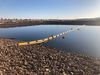
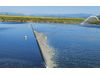
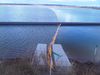
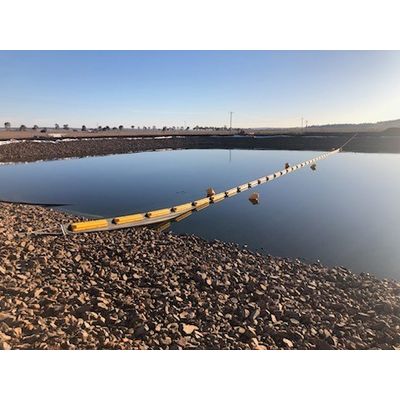
When and Where to Use Floating Baffles in Stormwater, Wastewater and Process Water Systems
When should floating baffles be installed in a basin, pond or treatment system?
Consider installing floating baffles when:
- Designing or upgrading any pond, lagoon or tank where settling, biological treatment or disinfection depends on retention time (for example, maturation ponds, settling basins, clearwells or balance tanks) (Chatoyer Environmental 2025).
- Monitoring shows short-circuiting – for example, dye tests or modelling reveal that water moves from inlet to outlet much faster than the theoretical detention time (Rivers & McLaughlin 2015).
- Effluent results indicate that the pond is not meeting targets for turbidity, BOD, TSS or pathogens despite adequate theoretical volume (Rivers & McLaughlin 2015; Chatoyer Environmental 2025).
- Regulations, design manuals or internal standards call for baffled basins or clearwells to achieve minimum contact times (Rivers & McLaughlin 2015).
Adding baffles during design is ideal, but floating systems are widely used to retrofit under-performing basins without constructing new civil works (Chatoyer Environmental 2025; Chatoyer Environmental n.d.).
When do floating baffles improve performance in sediment basins or stormwater treatment ponds?
In sediment basins on construction or disturbed land, high-velocity inflows often rush straight to the outlet, leaving much of the basin “unused” and reducing capture of fine sediment (Rivers & McLaughlin 2015).
Floating or suspended baffles can (Rivers & McLaughlin 2015; Chatoyer Environmental 2025):
- Lengthen the flow path so runoff uses more of the basin surface area
- Break up a central high-velocity jet, spreading flow across the full width
- Reduce turbulence and back-eddies that keep particles in suspension
- Increase retention of both coarse and finer sediment fractions
In stormwater quality improvement devices and end-of-line ponds, floating baffles also help to:
- Separate inlet “capture” zones from cleaner outlet zones
- Improve performance of downstream media or filtration components by reducing solids loading (Rivers & McLaughlin 2015)
Whenever settling efficiency is poor, adding or reconfiguring baffles is often one of the most cost-effective remedies (Rivers & McLaughlin 2015; Chatoyer Environmental 2025).
When is it necessary to add or retrofit floating baffles?
You may need to add or retrofit floating baffles when (Chatoyer Environmental n.d.; Chatoyer Environmental 2025):
- Flows have increased due to catchment growth or process changes, and the existing pond no longer provides adequate contact time.
- Regulations tighten, requiring better sediment, BOD, TSS or pathogen removal, or explicit baffling to achieve disinfection contact time.
- Monitoring shows non-compliance or inconsistent performance (for example, seasonal spikes in solids or BOD in discharge) (Rivers & McLaughlin 2015).
- You want to extend the life of an existing lagoon or pond instead of building a new basin.
Modular floating baffles can usually be installed with partial dewatering and short shutdowns, making them attractive as a retrofit solution (Chatoyer Environmental 2025).
Where are floating baffles most commonly used?
You’ll commonly find floating baffles in (Chatoyer Environmental 2025):
- Wastewater treatment lagoons – to create multiple cells and reduce short-circuiting.
- Industrial process water and tailings ponds – to improve solids settling and residence time.
- Potable water clearwells – to meet disinfection contact time and prevent dead zones.
- Settling ponds and sediment basins – to increase sediment capture efficiency and calm flow (Rivers & McLaughlin 2015).
Wherever water needs more settling time or controlled flow inside a defined basin, floating baffles are likely part of the design toolkit (Rivers & McLaughlin 2015; Chatoyer Environmental 2025).
Where should floating baffles be positioned inside ponds or basins?
Positioning is critical to performance (Rivers & McLaughlin 2015; Chatoyer Environmental 2025):
- Near inlets
-Use the first baffle to intercept and spread incoming flow, reducing jet velocity. - Across the basin to create a serpentine path
- Alternate the openings (gaps or over/under passes) from one side to the other so water must snake through the pond. - Near outlets
-A final baffle can protect the outlet from floating scum, algae or unsettled solids.
In most cases, baffles extend close to the pond floor so water must pass over the top or around the end, rather than under the curtain, to avoid a fast “short-circuit” channel at depth (Rivers & McLaughlin 2015; Chatoyer Environmental 2025).
When are turbidity (silt) curtains more appropriate than floating baffles?
- Use turbidity (silt) curtains instead of floating baffles when the objective is (Chatoyer Environmental n.d.):
- Short-term sediment containment around construction or dredging works in rivers, lakes, harbours or coastal waters
Creating a quiescent zone so disturbed sediment settles before water leaves the work area
Turbidity curtains typically have permeable or semi-permeable skirts and are anchored as temporary perimeter barriers in open water (Chatoyer Environmental n.d.). Floating baffles, by contrast, are impermeable internal dividers engineered for long-term use in treatment basins (Chatoyer Environmental 2025).