


ACS-Umwelttechnik GMBH & Co. KG products
Reactor
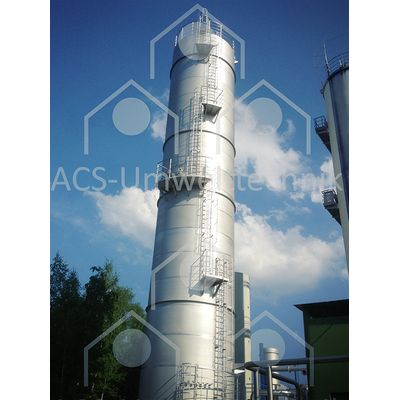
ACS - Model EGSB - Reactor for Efficient Wastewater Treatment
The ACS EGSB reactor leverages a patented technology to offer a highly efficient solution for wastewater treatment. The design includes two separating devices that ensure a laminar flow throughout the reactor, along with an external recirculation pipe. At startup, the reactor is filled with agglomerated methane bacteria, known as pellets. When wastewater pollutants interact with these pellets, energy-rich biogas is generated almost immediately. The reactor achieves full operational capacity shortly after commencement. Notably, the ACS EGSB reactor's design allows for growth of the pellets without support materials, maintaining a high concentration of these pellets within the reactor itself. These technological advancements result in enhanced efficiency and reduced susceptibility to interference, thereby lowering overall production costs. Years of research and experience have culminated in this advanced reactor, making it a preferred choice for companies seeking reliable wastewater management.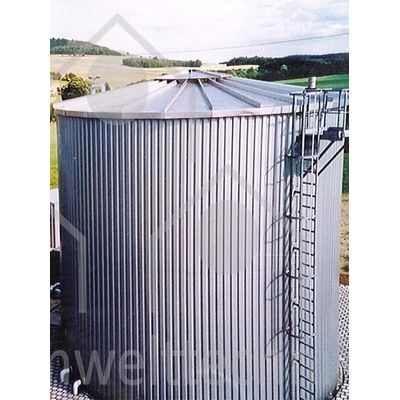
ACS-Umwelttechnik - ACS UASB Reactor for Industrial Wastewater Purification
The ACS UASB reactor, incorporating patented technology, stands as a simplified, yet effective solution for the purification of industrial wastewater. This system, akin to the EGSB reactor but utilizing a single separator rather than two, is designed to achieve high degradation levels even when dealing with low Chemical Oxygen Demand (COD) concentrations and smaller volume flows. During the startup phase, the reactor is populated with agglomerated methane bacteria (pellets), which commence biogas production immediately upon contact with organic pollutants. The reactor's full operational capacity is achieved quickly, thanks to its efficient gas and wastewater flow mechanism from bottom to top. A separation process at the top of the reactor effectively distinguishes sludge, biogas, and purified wastewater. The unique design allows the pellets to grow without the need for support materials, ensuring their high concentration within the reactor. This feature makes the ACS UASB reactor suitable for small-scale applications and budget constraints.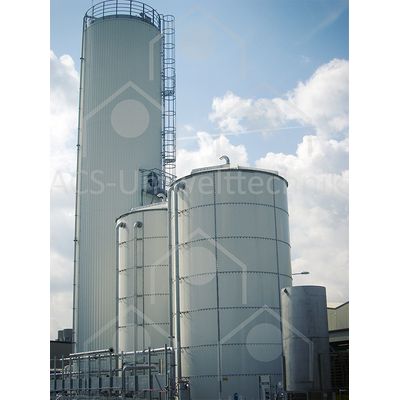
ACS-Umwelttechnik - Lipothan Reactor Hybrid Wastewater Treatment System
The ACS Lipothan reactor features patent-pending technology and serves as a hybrid version of ACS reactors. It includes two primary cleaning areas: a mid-level separation unit and a top collator. These components create laminar flow even at significant reactor heights. The separator removes rising fats and gas bubbles from the water, while an external circulation system maintains wastewater uniformity within the reactor. The collator captures and retains floating substances like fats, oils, and proteins until they degrade biologically. Recirculation is managed through a separate pipeline. For startup, the reactor is filled with specially prepared methane bacteria pellets. These pellets initiate the production of biogas as soon as they contact the organic pollutants in the continuously supplied raw wastewater. The system is designed to enhance the biological breakdown of contaminants and optimize energy-rich biogas formation.
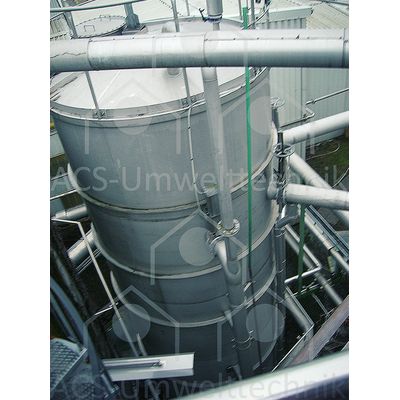
ACS-Umwelttechnik - Pellet Collector for Anaerobic Plants
The ACS pellet collector is an auxiliary component designed to enhance the efficiency of existing anaerobic plants, particularly those that experience pellet losses due to overloading or inadequate separation mechanisms. By integrating the collector at the terminal point of an existing system, the wastewater is directed through a bottom-to-top flow mechanism where floated sludge and pellets are efficiently captured. The design allows for effective pellet collection even at high wastewater flow rates, eliminating the need for costly modifications to the anaerobic reactor. This collector provides an economical solution to improve the operational performance of wastewater treatment plants.Technologies
Aerobic Wastewater Treatment System
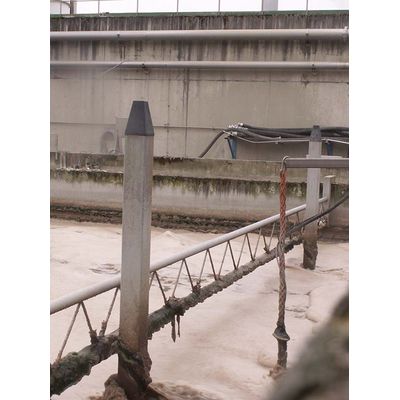
In the aerobic treatment of industrial wastewater, atmospheric oxygen is utilized with the assistance of bacteria to break down pollutants and remove organic substances from the water. This process not only creates carbon dioxide but also generates biomass in the form of activated sludge. Aerobic treatment is essential for achieving the quality required for direct discharge of treated wastewater. Sludge retention can be achieved through sedimentation or membrane equipment. Traditional stages of this treatment include an aeration tank and a secondary clarifier. If nitrogen is present in wastewater, additional nitrification and denitrification steps are necessary. For highly polluted wastewater, a combination of anaerobic and aerobic treatment stages is recommended, ensuring the treated water can be safely discharged into an outlet channel. There are various reactor options to accommodate different needs.
Anaerobic Wastewater Treatment Process
Anaerobic wastewater treatment involves the biological processing of industrial wastewater with high organic content in an oxygen-free environment. This method leverages bacteria to primarily convert the organic substrate into carbon dioxide and methane. The process unfolds across four distinct degradation phases. The first phase, hydrolysis, involves the conversion of water-insoluble substances like cellulose, proteins, and nucleic acids into soluble monomers through exo-enzymes. During the second phase, acidification, various microorganisms further break down these monomers into alcohols, organic acids, carbon, and hydrogen. In the third phase, known as the acetogenic phase, the acids and alcohols produced earlier are transformed into acetic acid by acetogenic bacteria while releasing hydrogen. The final phase, methanogenesis, sees the conversion of formic and acetic acids into methane and carbon dioxide. This sequential degradation renders the wastewater treatment highly effective in reducing organic load.