

Advanced Micro Instruments, Inc. (AMI) applications

Incredible advances in micro-miniaturization of electronic components, integrated circuits and microprocessors have benefited our world and will continue to produce new solutions and conveniences. These advances have resulted in extraordinary innovations, such as very powerful, compact computers, cell phones and various telecommunications devices. And these devices, though inconceivable just a few decades ago, are now common place worldwide.
A shift towards replacing fossil fuels with more renewable energy resources is expected to be a key driving factor in the growth of the Biogas Market. To help meet future global energy demand, incentives and even subsidies have been provided to encourage farmers, municipalities and industrial producers to increase their production volume. Biogas is produced by the breakdown of organic matter, typically plant and animal waste products, in the absence of oxygen using anaerobic organisms. The process is fully controlled within a sealed stainless steel tank. The produced biogas is a clean and renewable energy that is considered an alternative to natural gas for cooking, producing vapor or hot water, and even generating electricity.
The aerospace industry uses some of the most advanced technologies in the world in their turbines and engines. Because these turbines and engines are expected to operate and perform at the highest levels, companies in the aerospace industry employ special crews to perform regularly scheduled service and maintenance. But before any work can begin, the crew members must carry out a process called nitrogen flushing to effectively bring the concentration of oxygen in the air down to a safe level. This significantly decreases the risk of fire and explosion and protects the crew from any unnecessary harm.
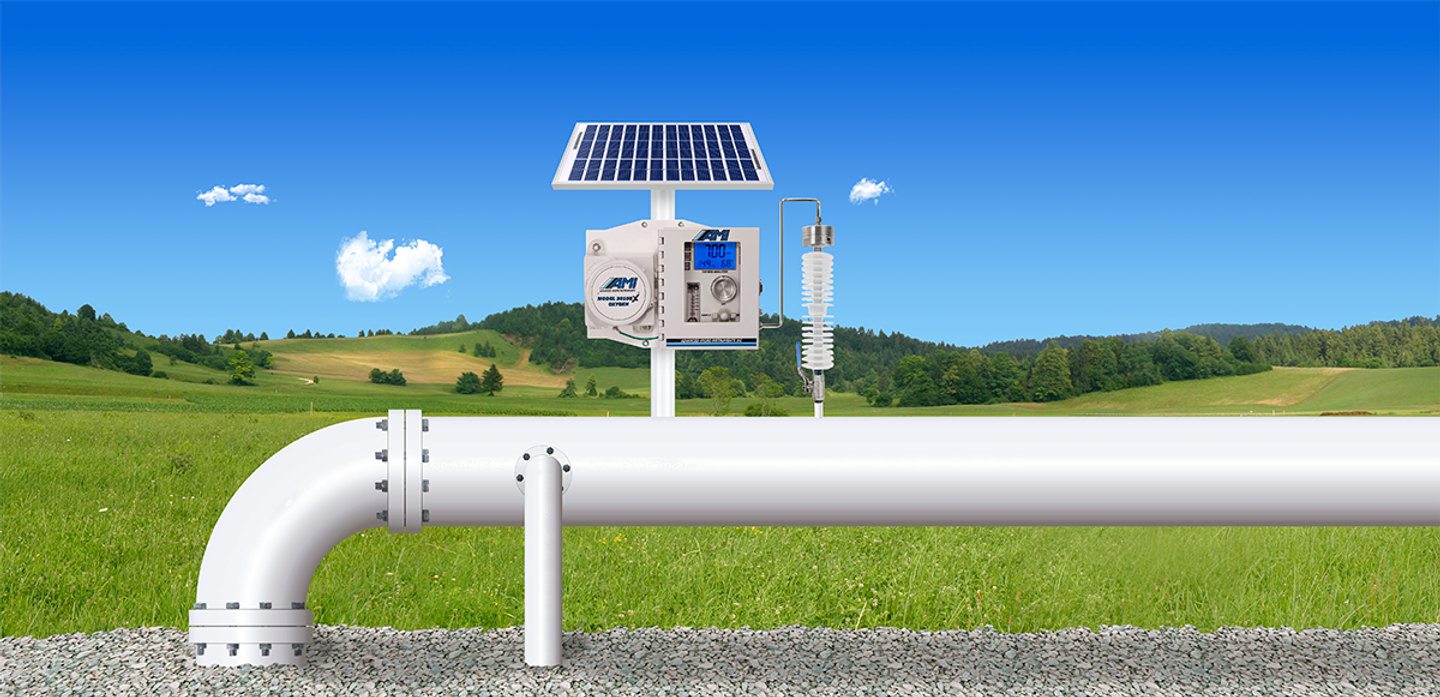
Protecting a pressurized gas pipeline system from leaks and corrosion and minimizing downtime are among the most important responsibilities that oil and gas companies have. According to the National Association of Corrosion Engineers (NACE) International, corrosion alone costs the industry over $1.3 billion a year.
Chemical, biotech and research laboratories perform a wide range of applications and tests. Many of these can be impacted by the presence or absence of oxygen, and, thus, require the use of oxygen analysis to measure or monitor oxygen levels. There are applications and tests that require keeping oxygen at a predetermined level or within a predetermined range so as not to invalidate the results. For example, many procedures require the use of a glove box to maintain a controlled environment. But it is not always understood that oxygen at ambient pressure can diffuse through the pressurized plastic tubing or rubber gloves of the glove box due to Dalton’s Law of Partial Pressures. The unknowing introduction of oxygen may contaminate the research, skew the results and cause the laboratory to incur unnecessary costs to redo the experiment or test.
The production of pure gases can be achieved through air separation. The process first involves cooling atmospheric air until it liquefies and then selectively distilling its components at their respective boiling points. An air separation plant will produce enormous volumes of high purity gases, typically nitrogen, oxygen, argon and sometimes other inert gases, and supply them to important industries. Different factories use different air separation techniques as part of their commercial production run. Cryogenic distillation is the most common method as evident by the number of cryogenic air separation units (ASUs) operating to produce nitrogen, oxygen or argon. Other methods, such as membrane technology, pressure swing adsorption (PSA) and vacuum pressure swing adsorption (VPSA), are utilized when the goal is to separate a single gas from ordinary air.