

Analytik Jena - Lab-loving people Past Events

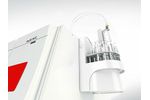


Discover a new way to achieve top-tier analytical performance without sacrificing lab space. In this web seminar, we introduce the new PlasmaQuant 9200 ICP-OES – a compact powerhouse designed to handle even the most complex matrices with ease. Learn how cutting-edge technology, high-resolution optics, and robust plasma power come together to deliver exceptional results in petrochemicals, environmental, material-, water analysis and other demanding applications. Perfect for labs that need precision, flexibility, and efficiency in a space-saving format.

The unique design of the contrAA 800 high-resolution continuum-source atomic absorption spectrometer (HR-CS AAS) allows absorption bands of molecular vibrations and rotations in the 185-900 nm range to be detected and quantitatively evaluated in addition to atomic absorption lines. By adding a suitable molecule-forming reagent, molecular compounds are generated under optimized conditions. One or more molecular absorption bands in the spectral observation window can then be used for analytical evaluation and quantification of an analyte such as fluorine via CaF or GaF molecules. The graphite furnace technique allows very sensitive quantification in the µg L-1 range using CaF or GaF molecule bands in suitable matrices. We will present compelling sample preparation techniques to access the most demanding matrices for fluorine analysis.
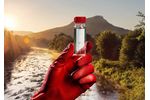
Organic fluorinated compounds pose an increasing risk to human health, flora and fauna, with a focus on the PFAS class of compounds, not only because of their toxicological potential but also because of their very long persistence in the environment. These compounds can now be detected almost everywhere. Targeted analysis can identify PFAS, but is difficult to use with complex compositions and misses non-targeted compounds. A sum parameter method is faster, cheaper and easier to perform, making it the ideal tool for screening samples. The use of AOF or EOF (absorbable or extractable organic fluorine) parameters includes PFAS as well as other fluorinated compounds, such as those found in pesticides and pharmaceuticals. These parameters include almost all organic fluorine compounds, providing a great approach to evaluating our precious natural resources. We present compelling techniques for sample preparation and quantification to address this important parameter.

Come aboard and embark on an adventurous journey through the fascinating world of saline water analysis. Our first challenge awaits us at the port, where we conduct direct analyses of ballast water. Moving into the shallow waters, we collect samples for desalination plants and test for environmental contaminants before navigating the vast and unforgiving ocean of complex seawater matrices. Be prepared to explore the cutting-edge realms of ICP-MS for metal analysis, along with environmental sum parameters such as TOC/TNb and AOX in seawater. We’ll show innovative techniques crafted to address the unique challenges of marine and salt-rich applications. Discover how our advanced methods enhance sensitivity and accuracy, ensuring reliable results, while reducing operating costs — even in the face of complex sample matrices.
Join us for our upcoming online seminar where we dig deep into interesting topics on analyzing elements and sum parameters in natural and agricultural soils. Groundbreaking with heavy metal analysis with AAS, for traces analysis in flame and graphite furnace mode. We will expand our excavation into the layers of sum parameters like TOC, total carbon (TC) and total inorganic carbon (TIC), where we tackle the question for carbon sequestration capabilities by proper carbonate determination. We also deepen our understanding about the value of dissolved organic carbon (DOC) in soil leachates as well as the determination of microbial biomass by TOC/TNb (Total bound Nitrogen) analysis in farmland soil extracts.
In this web seminar we look closer into interesting topics on contaminants in natural water bodies. We will dive headfirst into Chromium speciation analysis, decent into the deep realms of TOC and TNb analysis by the new multi N/C x300 series, before the vast sea of sample preparation for AOF, as a sum parameter for PFAS, emerges before our eyes.
Lithium-ion batteries are widely used in portable electronic devices and electric vehicles. The demand for lithium-ion batteries is increasing, and so is the demand for lithium. The refining of battery cell materials is essential to meet the growing demand for lithium-ion batteries. The analytical challenges of ICP-OES and TOC analysis of battery cell material refining processes for lithium-ion batteries are significant. The samples typically have high total dissolved solids (TDS) content and likely presence of organic and inorganic impurities. The webinar will discuss the challenges of analyzing battery cell material refining samples using ICP-OES and TOC and how to overcome these challenges.