


Applied Oxidation LLC applications
Whether you find yourself in a hotel bath room, cruise ship cabin, hospital, office building, industrial plant, greenhouse, car wash facility or your own hot tub, the combination of certain temperature levels, stagnant water and the presence of biofilm in water systems is a potential recipe for disaster: an outbreak of Legionnaires’ disease. An outbreak of Legionnaires’ disease is often the result of negligence, having legal repercussions for responsible parties. Because of its chemical and biocidal characteristics, chlorine dioxide is ideal for maintaining good standards of water hygiene. Chlorine dioxide has consistently been demonstrating to be the best molecule for eradicating the causative organism of Legionnaires’ disease.

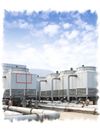
Controlling and preventing the growth of microorganisms in a cooling tower is extremely important and required to keep the system running at optimal levels. The presence of microorganisms will cause the system to breakdown and decreases the efficiency of the heat transfer. Typically oxidizing biocides such as chlorine and bromine have been used to treat cooling water. Unfortunately these chemicals are highly reactive with other chemicals and microbiological species found in the water. Chlorine dioxide however is very non-reactive to other compounds found in the water and retains biocidal efficacy. Likewise it is also a superior chemical for removing the biofilm, which leads to the most predominant problems that all cooling towers face.
A brewery process presents one of the biggest challenges possible to a microbiological control program. Microorganisms are responsible for both the production and the degradation of the product. Microbial control is also critical for production and filling equipment. A brewing environment offers various applications where chlorine dioxide may be employed, like as terminal sanitizing rinse in the CIP systems or sanitizer for pasteurizers or filler head assemblies.
Most food processing facilities currently use a combination of different chemicals for all surface and machine disinfection. They periodically rotate the use of different sanitizers to prevent the harmful microorganisms from building a resistance to their killing properties. Unfortunately facilities are still experiencing pathogen outbreaks. Chlorine dioxide’s unique killing ability does not allow for the build up of resistance or mutation, and therefore eliminates the need for all of the other chemicals. Chlorine dioxide is effective for use in controlling microbiological growth in flume waters and other food processing water systems such as chill water systems and hydrocoolers.

Because of its superior disinfection ability, many applications of chlorine dioxide have been found to be extremely beneficial in the dairy industry. Dosing the drinking water lines has led to the reduction in bacteria in the water and thus decreased the somatic cell count in the milk. Replacing iodine with chlorine dioxide as the active ingredient in teat dips has led to reduced mastitis cases. Using chlorine dioxide as a CIP agent in the milk line disinfection has brought a decrease in the E-coli count found in the milk, thus increasing milk quality. Using chlorine dioxide in cow washes has led to reduction in mastitis, decreased hairy hoof wart cases and overall improved herd health.
In broiler and layer farms, drinking water is often acidified to obtain a lower pH in order to stimulate the feed intake of the birds. However, doing so counteracts the efficacy of chlorine, since this most commonly used disinfectant requires a higher rather than a lower pH of the drinking water. Consequently, more chlorine is needed to compensate the diminishing effect caused by the organic acid, which in turn results in uncontrolled (over)dosing. With chlorine dioxide, nothing of this kind occurs since chlorine dioxide functions perfectly between pH 4 and 10. With chlorine dioxide, it is much easier to influence and improve poultry growing conditions.
Maintaining a high quality sanitation program to prevent the ingestion of microbiologically contaminated fresh produce is of paramount importance to all food operations. Food contamination can irrevocably undermine consumer confidence, elevate irresponsible financial risk due to product recalls, or even result in loss of life and business. Even a single contaminated batch of food, one poor or erratic output can destroy your company’s reputation. Due to its broad-spectrum anti-microbial activity and versatility, chlorine dioxide is the ideal biocide for every biosecurity program. It may be employed in various applications such as process water, hard surface sanitation and post harvest wash.

Chlorine dioxide has a number of advantages over other biocides commonly used in the fish and fish processing industry. Chlorine dioxide in solution can be added to water/ice that is used in processing and packing any fish. The slow release of chlorine dioxide gas from the water onto the surface of fish as the ice melts helps to prevent spoilage and odors during transport. It maintains the microbial quality of water even in presence of high organic load, thereby impacting upon quality maintenance and substantial improvement of shelf life of the products.
Water is one of the single biggest raw materials used in meat processing, and its quality is of great importance to prevent contamination of food product. The use of contaminated water in the processing plant can spread infection across the whole food batch. This is a cause of serious concern to the food industry, consumers and regulatory bodies, besides that, it causes financial losses and food scare. Chlorine dioxide, a very powerful biocide, has a number of advantages over other products commonly used in the meat processing industry. When properly applied, chlorine dioxide can act as a break in contamination thereby reducing/eliminating cross contamination as well as removing superficial microorganisms before they have an opportunity to become attached and penetrate the carcass.
Horticultural and greenhouse operations are facing increasing challenges in dealing with sanitation issues related to water treatment. Over the course of growing a crop, pathogenic microorganisms accumulate and algae flourish on moist surfaces posing a constant threat to plants and produce. The main challenges lie the areas of irrigation water, elimination of biofilm and algae control. Existing biocidal products, while effective in killing algae, are not effective in removing biofilm from the water lines. The ultimate solution would be to employ a biocide that is capable to control algae on greenhouse surfaces and strip the biofilm in irrigation lines. Chlorine dioxide has demonstrated to possess both properties.