

- Home
- Companies
- Aquafrisch S.L.
- Products
Aquafrisch S.L. products
Railway Equipment
Bogie Wash Plants
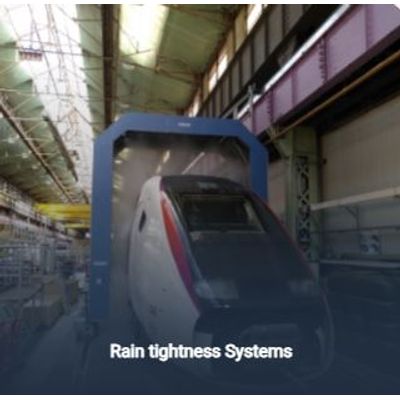
Rain Tightness Systems
These Aquafrisch equipment allow to verify the tightness of the wagons and locomotives once they are manufactured. The system consists of a mobile gantry that moves longitudinally spraying water on the surface of the train. Parameters such as pressure, flow and number of cycles to perform can be configured based on customer requirements. To ensure a correct check of the tightness, the speed of the arc is regulated by frequency inverters. Since the use of water can be high based on the verification requirements by the buyer of the rolling stock, Aquafrisch includes a water recycling system. The control system has a touch screen for easy and intuitive use.
Internal Tank Washing Systems
Aquafrisch manufactures and supplies tailor-made plants for the interior washing of tank wagons, consisting of extensible systems with high-pressure rotating heads (up to 200 bar) for hot or cold water. The combination of these systems with the injection of steam guarantees a quick and safe wash. Our scope includes the steam generation system, as well as the pumping, piping and water treatment groups for use by the boiler. Aquafrisch also makes its long experience in the treatment of industrial water available to the client so that the system guarantees adequate treatment to recycle and reuse the water used in washing the tank.
De-icing Systems
There are cases in which the ice present in the bogies makes maintenance and periodic revisions difficult, and can cause problems in their operation. Aquafrisch has designed a special integrated system to eliminate ice, consisting of a metallic structure on which diffuser nozzles are placed longitudinally to cover the entire surface of the bogies. The system is fully automatic and different programs can be set depending on the amount of ice to be removed. In addition, our system will be able to reuse the water used in the process. The water used will be stored and previously heated by means of a heat exchanger.
Water Treatment
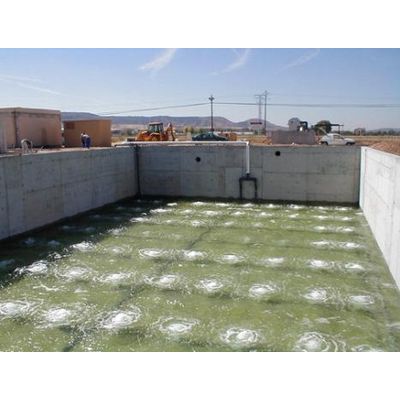
Wastewater Treatment, Urban And Industrial
Wastewater requires specific treatment whether it comes from industrial, domestic or agricultural use. The analysis of its components can reveal polluting substances that make it impossible to divert it to the public sanitation network and therefore require special treatment prior to discharge.
Eurowater Process Plants
Process water is the common name for water that cannot be classified as drinking water. It is used in connection with technical plants and processes in production enterprises, power plants and institutions. This type of water has undergone further treatment, e.g. softening and demineralization.
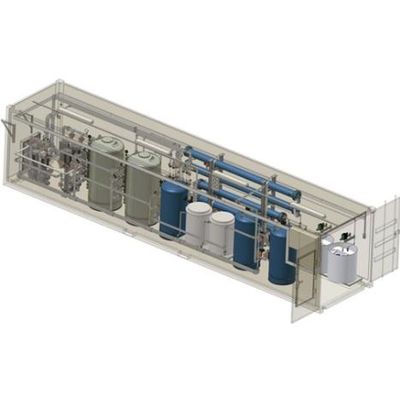
Compact Emergency Plants
The compact plants are installed in containers, trailers or racks, to produce water in emergency situations, provisional needs or to install in remote places.
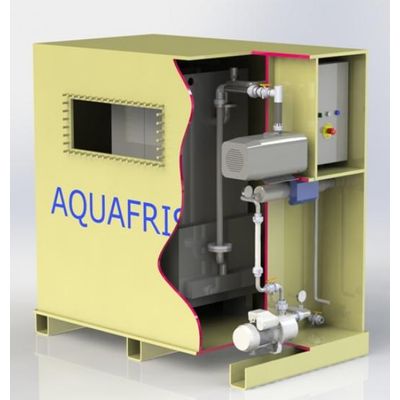
Effluent Reuse and/Or Discharge System
The compact MBR system allows treated water to be suitable for reuse and discharge into a public flow system meeting the most demanding discharge requirements. The COMPACT MBR-UV System allows the reuse of 95%-98% of the treated water or its final discharge with a high water quality. The discharge and reuse of the effluent can be substantially improved by applying an ultrafiltration process, designed as a final process with submersible membranes, which essentially constitute a high-quality tertiary treatment. The installation of this equipment has important advantages with respect to the conventional activated sludge process, by replacing the decanters or conventional filtration system, with the consequent savings in maintenance, reagents, space and safety for operators, as well as complete safety in the final discharge, pH regulation and sterilization.
Railway Equipment - Sand Filling Systems
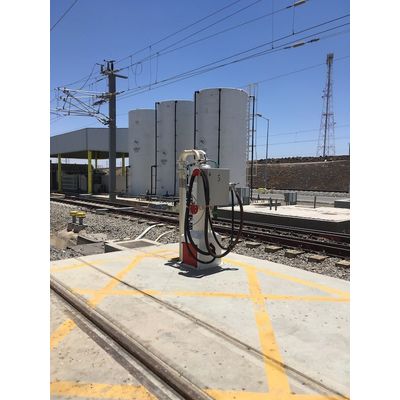
Fixed Sand Dispensers
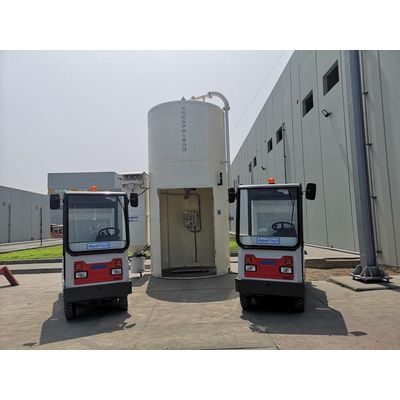
Mobile Sand Dispensers
For greater flexibility, we supply mobile sand dispensing systems, installed on trailers or electric vehicles. This system has a storage tank that is loaded pneumatically and directly from the silo, allowing the sand to be easily transported and dispensed to each tank on the train, using a roll-up hose and gun.