

- Home
- Companies
- Bato Plastics B.V.
- Products
Bato Plastics B.V. products
Horticultural- Substrate Troughs
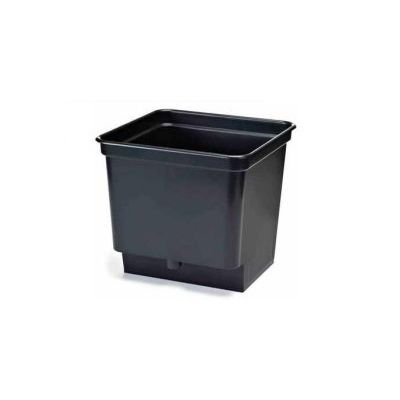
Bato - Hydro Trough
The Bato Hydro Trough is suitable for hydro cultivation systems with constant water reservoirs. The trough has a highly efficient internal drain water discharge system: by installation two assembled Bato knees, the drain water goes from the lowest level of the trough and will be discharged into the central drain pipe. By doing this, the water reservoir is constantly replenished and accumulation is prevented.The Hydro Trough in combination with the Drain pipe Ø 50 mm is an easy, replaceable growing system. The drain water pipe is available in lengths of 5.5 metres. The Bato Trough is available in two types: the Hydro Trough with a volume of 11 litres and a Mini Hydro Trough with a volume of 10 litres.
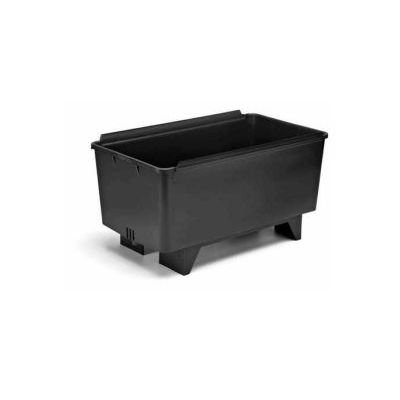
Bato - Allround Trough
The Bato Allround Trough is suitable for all substrates.The Bato Allround Trough can be installed stable on the ground because of the two ridged legs. It has a unique drainage system for moisture control in the substrate. In this trough there are several drainage possibilities:
Horticultural- Plastic Draingutters
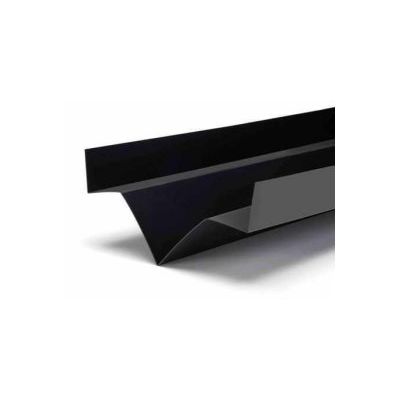
V-Gutter
The V-gutter can be used as a discharge channel on soil and as a discharge channel underneath a growing rack system. For use underneath the growing rack system, we advise to use a minimum of 25 mm side wall folded inside to keep the gutter in his shape. Once cut at row lengths and installed in the row, the gutter ends are easily blocked by folding punch and tyrap.For the discharge of drain water with a V-shaped discharge channel, a square piece of foil of approximately 500x500 mm has to be used. In the middle of the foil a hole of Ø 45 mm is made, in which a drain water discharge plug is placed. After profiling the soil, the riser (with a minimum inside diameter of 36.4 mm) under each gutter is dugged-up and the plug has to be inserted into the P.V.C.-riser and adjusted at the right height. After this, the foil is folded into the gulley and over the soil at both sides next to the gulley, by which a conical shape is achieved.