


BioDiscovery, A Bionano Genomics Company software
CNVs from NGS
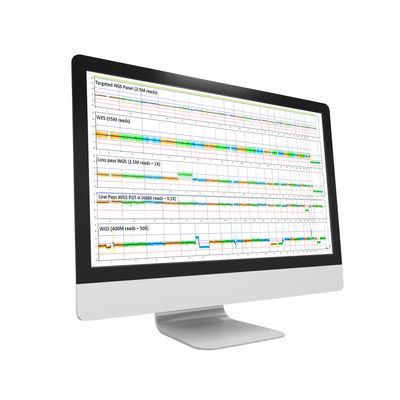
BioDiscovery - Copy Number and AOH Detection from NGS
High-quality detection of CNV from NGS data has been a challenge for many years. BioDiscovery has perfected algorithms for the detection of CNV and AOH from almost all NGS assays.
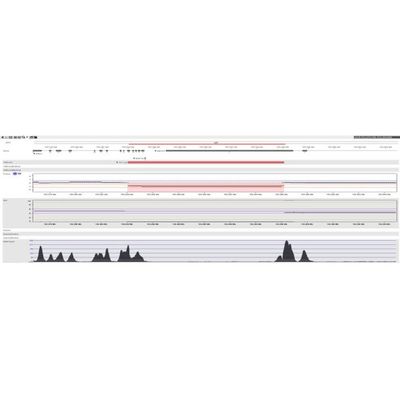
BioDiscovery - Whole Exome Sequencing Tools
Getting CNV calls from Whole Exome Sequencing has been one of the most challenging efforts in the community. There have been numerous algorithms proposed but they suffer either from poor sensitivity or too many false-positive calls. The MSR algorithm has been able to offer the best balance of these competing measures, detecting small true-positives without generating many false-positives. The image below shows a small 12Kb deletion overlapping part of MECP2 gene resulting in only 2 virtual probes indicating a small copy number loss. At the same time, with such sensitivity, only four other CNVs were detected that passed the basic filtering stage demonstrating a very low false-positive rate.
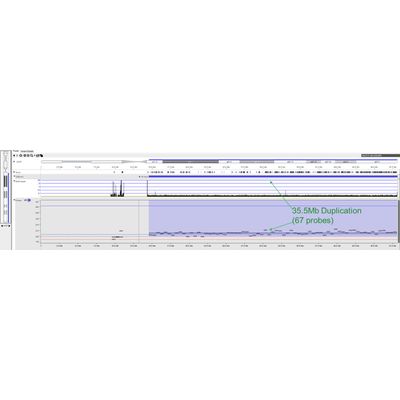
BioDiscovery - Shallow Sequencing
The MSR algorithm can also be applied to detect CNVs from shallow sequencing, including very low-level mosaic events seen in NIPS or ctDNA samples. The image below shows a sample with trisomy 21 detected using 1x WGS.
CNVs are an important contributor to disease and are required for accurate diagnosis. For clinical sequencing to be fully accepted as a replacement for microarrays and other widely used techniques, it must provide high-quality CNV information. NxClinical can easily and accurately provide that information from various approaches using NGS data.
Genomic Scar Scoring
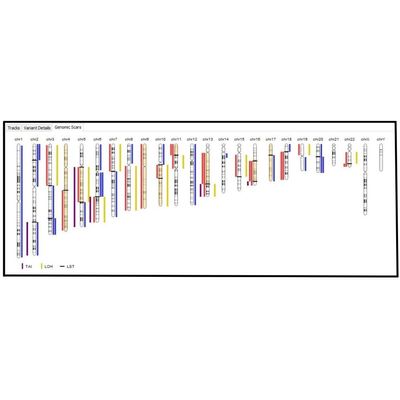
Bionano NxClinical - Automated Genomic Scar Analysis for HRD with Software
Bionano`s NxClinicalTM Software is the leading copy number variation (CNV) analysis software solution for cytogenetics and molecular laboratories. The latest software (v6.2) release adds three measures of genomic instability for homologous recombination repair deficiency (HRD) in solid tumors: Loss of heterozygosity (LOH). Telomeric Allelic Imbalance (TAI). Large-Scale State Transitions (LST).
ACMG Scoreboard
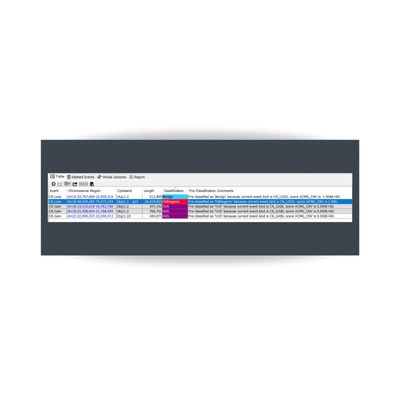
Automated Pre-Classification Software
In addition to using the scoreboard as a stand-alone guideline, this new feature can also be coupled with NxClinical`s popular automated variant pre-classification decision tree to pre-classify events. This allows analysts to quickly sort through the events on the table and prioritize for review.
One-Click UPD
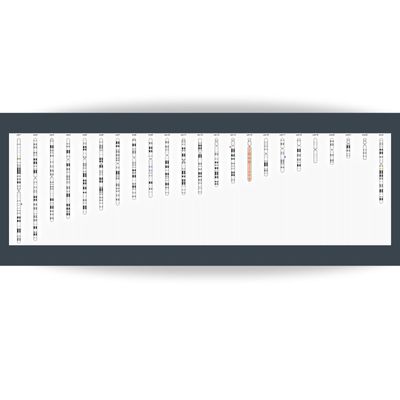
One-Click Uniparental Heterodisomy (HeteroUPD) Detection Software
When analyzing SNP data, NxClinical users who deploy this new feature can now further investigate uniparental heterodisomy events within duos and trios with one simple click - saving them valuable time during the review process.
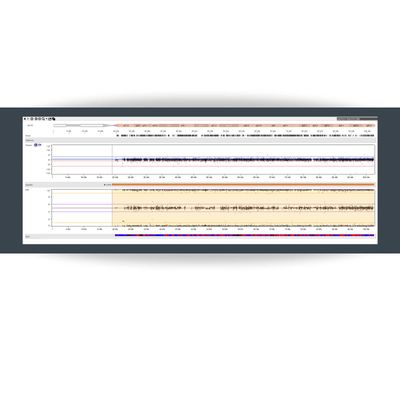
BioDiscovery - Investigate Further Software
The probe track view in NxClinical shows greater detail related to the supporting probes involved in this heteroUPD15 example. Enlarge the image to the right to reveal the heteroUPD15 visualized on both the top chromosome view (represented by the pink horizontal line) and the BAF plot for parental informative SNPs (pink=maternal).
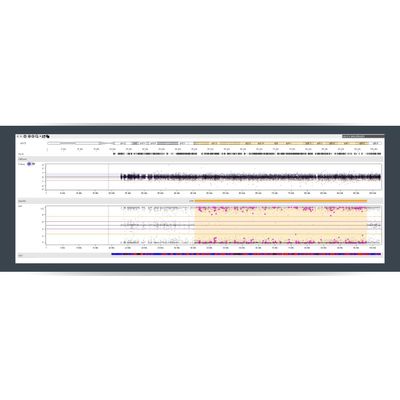
BioDiscovery - Quickly Visualize Software
Within the karyogram view, vertical bars are drawn within the AOH affected chromosome(s) to indicate parent-of-origin (pink=maternal; blue=paternal), and the same color indicators are displayed in the zygosity track. The image to the left displays a maternal inheritance represented by the pink probes on the BAF track.