


BlazeTech Corporation products
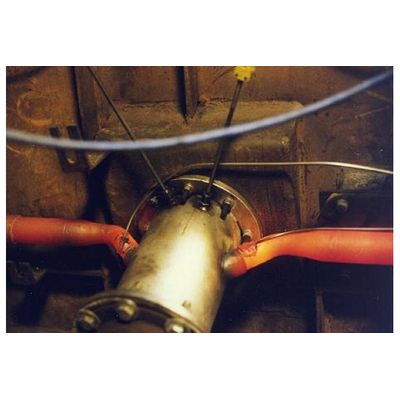
BlazeTech - Low NOx Burner
Historically, the quantity of NO and NO2 (NOx) in the products of combustion was not sufficient to affect performance, and their presence was largely ignored. The growing concern with smog and acid rain producing mechanisms (in both of which NOx plays a vital role) have turned the focus around, and low-NOx burner and furnace designs have undergone intense development for the last two decades. Though several remedies have been suggested and implemented, including reburn, staged combustion, preheated fuel, etc., they all try to couteract at least one of the following two basic principles:
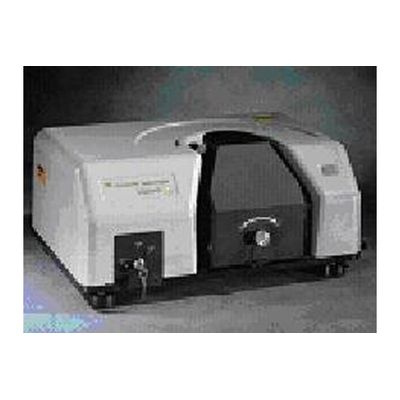
BlazeTech - Polarized Light Scattering Instrument
Works based on elliptically polarized light scattering concept. More information from the scattering signals. Enhanced quality of information from the scattering signals. Helps us to determine size, shape, and structure of particle samples in suspension.
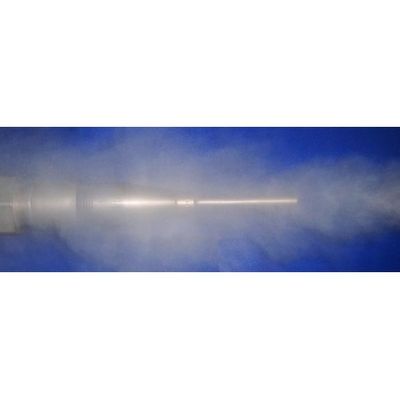
BlazeTech - Air Speed Indicator for Storms
The air speed indicators commonly used on airplanes are Pitot tubes that convert a pressure measurement into speed. When a plane flies through a cloud, the air contains water droplets or ice particles which can affect the accuracy of the air speed measurement by the Pitot tube. Accordingly, standard Pitot tubes are heated to prevent ice formation and contain ports to drain water. Under normal cloud conditions, such a design works well. Yet under severe storm conditions, where both the size and number of the particles increase, such Pitot tubes have two major shortcomings. First, the error in the air speed measurement can be significant yet not apparent. Second, if particles accumulate and freeze in the Pitot tube, the air speed measurement is completely degraded and difficult to interpret. In the recent Air France 447 disaster, both of these shortcomings may have contributed to the plane`s eventual crash.
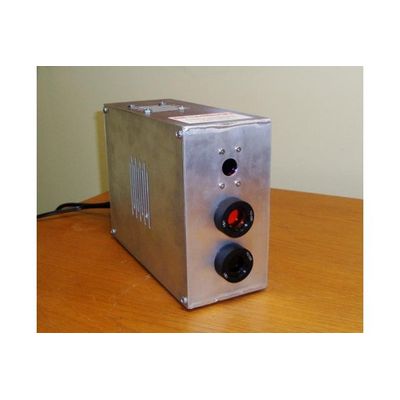
BlazeTech - Fire/Flash Discriminator
Drybays may have ignition sources such as gun-fire and penetrating fragments (under combat). However, these may result in a fire/explosion hazard only if there are combustibles (such as fuel leaks) in the drybay. If a fire does develop, it is desirable to rapidly detect the fire and activate fire suppression systems. On the other hand, if only a flash occurs, activation of the fire suppression system would be wasteful and reduces the protection of the bay against subsequent threats.