


Bondalti products
Industrial Chemicals - Aniline and Derivatives
Bondalti - Nitric Acid
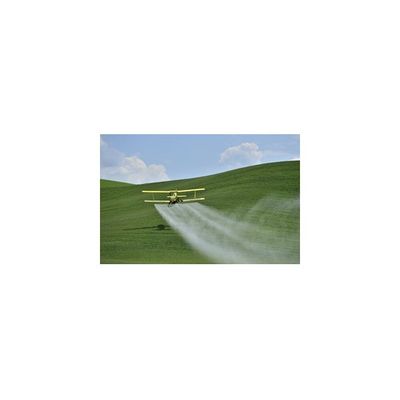
In Bondalti, we supply Nitric Acid in bulk, a product derived from the catalytic oxidation of Ammonia. With the chemical formula HNO3 and also known as "strong water", Nitric Acid is a somewhat viscous liquid with no colour or smell. Old samples can become yellowish, when decomposed in nitrogen oxide and water. Given its low boiling point (83º), Nitric Acid releases characteristic "smokes", at higher concentrations.

Bondalti - Sulphanilic Acid
Its chemical formula is C6H7NO3S, and this product is also known as p-aminobenzene sulphonic acid. Sulphanilic Acid produced in Bondalti is a crystalline white solid, slightly water-soluble. In Bondalti, Sulphanilic Acid is industrially obtained from the hot reaction between aniline and sulphuric acid, subsequently purified, crystallised and, finally subject to drying and bagging. It`s supplied packaged in big-bags or in 25 kg bags.

Bondalti - Aniline
Aniline, also known as phenylamine or aminobenzene fenilamina, is one of the most useful and multifeatured organic substances. With the formula C6H5NH2 this substance is, in its pure state, an oily liquid, with no colour, and a pleasant smell. In Bondalti, aniline is supplied in bulk or in barrels.
Industrial Chemicals - Chlor-Alkali
Bondalti - Hydrochloric Acid
Its formula is HCl. At room temperature, Hydrochloric Acid is a colourless of yellowish gas. It`s usually an aqueous solution, with no colour and a very strong odour. Even in weaker concentrations, it`s still very active, and is sold as Muriatic Acid, an effective remover of humidity stains in several surfaces. It`s one of the gastric acids occurring in our stomach. In Bondalti, Hydrochloric Acid is supplied in its commercial shape, in bulk. Industrially, this product is obtained by the hydrochloric gas in demineralised water. In turn, hydrochloric gas is obtained through the hydrogen combustion in gaseous chlorine. The discovery of hydrochloric acid is attributed by some to a Persian alchemist, Abu Musa Jabir ibn ?ayyan, however, it was most probably discovered somewhere in the Middle Ages.
Chlorine
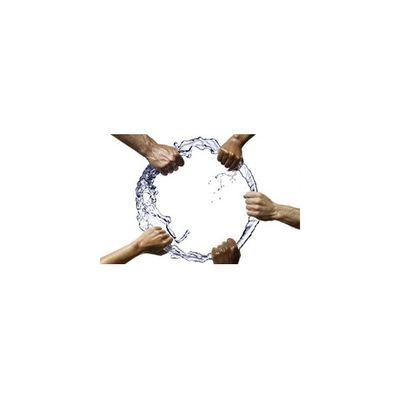
Chlorine is widely abundant in nature, with the symbol Cl and the atomic number 17. Its name derives from the Greek "khlorós", which means greenish. In Bondalti, Chlorine is supplied in bulk or in containers/bottles. In contemporary Chlorine production, gaseous chlorine derived from sodium chloride electrolysis is cooled, filtered, dried, purified and compressed to allow for its liquefaction and storage.

Bondalti - Sodium Hypochlorite (NaClO)
This substance has the formula NaClO. If highly diluted, this product is commonly known as bleach. In Bondalti, Sodium Hypochlorite is supplied in bulk. It`s obtained from the cold absorption of gaseous chlorine in a sodium hydroxide solution. The current production method is the Hooker process, in which Sodium Hypochlorite and sodium chloride are made by running chlorine through a diluted solution cooled with sodium hydroxide.

Bondalti - Caustic Soda
Sodium Hydroxide has the chemical formula NaOH, and is better known as Caustic Soda. It`s a whitish solid, easily soluble in water. This is a strong base, which should be handled with care. In Bondalti, Sodium Hydroxide is supplied in bulk, in concentrations of 32% and 50%. Sodium Hydroxide is co-produced in sodium chlorine electrolysis. Chlorine, sodium hydroxide and hydrogen are obtained from the electrolysis of sodium chlorine in aqueous solution, designated chlor-alkali process.
Industrial Chemicals - Aluminium Salts
Bondalti - Aluminum Polychloride Al(OH)a Cl
Aluminium Polychloride is a poli-nuclear complex made of polymerised aluminium ions. It`s generally described with the formula Al(OH)a Cl bwith a+b=3, combined with small amounts of other substances. This is a highly stable yellowish solution. The Aluminium Polychloride is used for water and wastewater treatment either in normal or situations where large amounts of water with high colloidal concentration must be purified, such as in a flood.