


Continental Controls Corporation (CCC) articles
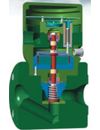
For emissions compliance, new Continental Controls system designed for natural gas engines to 4000 hp
Continental Controls Corp., San Diego, Calif., has introduced a system designed to control the emissions of rich-burn natural gas engines up to about 4000 hp, to comply with increasing lower emissions levels. Current emissions limits for natural gas engines in the Southern California coastal regions per hp/hr are 0.15 grams of NOx, 0.6 grams of CO and 0.6 grams of
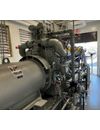
Industry emissions control success on Waukesha VGF engines… CCC - Continental Controls Corporation has developed a fuel system upgrade package based on its ECV5 Emissions Control Valve Management System…
Post Test Data:
Waukesha L36GL (lean burn 7.8% O2)
Remote Monitoring, Digitization, Cybersecurity, Artificial Intelligence, Hydrogen Blending, Auto-Tuning, Big Data, and Digital Twins.
Let’s begin with a home-appliance analogy. Modern refrigerators come with a long list of features including sophisticated temperature settings, voice control, alerts when certain supplies are low or the milk goes bad, and more. On the downside, their motherboards sometimes struggle to cope with cold temperature. Hence, you sometim
Drew Robb
Continental Controls Corp. (CCC), based in San Diego, California, has introduced an emissions control valve, the model ECV-5, that is designed to control the air-fuel mixture of natural gas-fueled, reciprocating engines. CCC said the ECV-5 controls the air-fuel ratio in a closed loop manner, works with an oxygen sensor, is located in the exhaust, and has a three way catalytic converter. The ECV-5 and its O2 sensor, is designed for use with carbureted natural gas engines from 75 to 750 kW, bot
Mark McNeely
Years ago, before exhaust emissions were a concern, the natural gas engines used mainly by the natural gas industry were designed to run with excess air. The air-fuel ratio controllers were mechanical devices that were not very accurate and sometimes not even used. These engines ran very well with 5% to 20% excess air. The air-fuel ratio would often vary with load and as long as the engines would carry the load and didn`t detonate or misfire, people were happy.
Later when exhaust emis
Ross Fisher
Water Injection Application Opts for Engine Rather Than Electric Power
Enticed by a grant offered by the state of California`s Energy Commission, Tidelands Oil Production Co. of Southern California found a way to make good use of on-site gas and lower its utility bill at the same time. Tidelands recently installed a Waukesha Engine VHP P9390 GSI and pump package fueled by gas previously flared into the atmosphere. The package replaced an electric motor driven unit, but i
For emissions compliance, new Continental Controls system designed for natural gas engines to 4000 hp
Continental Controls Corp., San Diego, Calif., has introduced a system designed to control the emissions of rich-burn natural gas engines up to about 4000 hp, to comply with increasing lower emissions levels.
Current emissions limits for natural gas engines in the Southern California coastal regions per hp/hr are 0.15 grams of NOx, 0.6 grams of CO and 0.6 grams o
Greg Dahl called the situation worse than a disaster, and he wasn`t exaggerating. His company, Texas-based Applied LNG Technologies, recently had opened its new Wildwood Liquefier in Stockton, CA, with the simple goal of converting stranded well-waste gas from an industrial site into high-purity liquefied natural gas (LNG), a form of gas that boasts several advantages over traditional petroleum-based fuels. It seemed like an easy task; Applied LNG, after all, is the largest wholesaler of LNG
Dan Rafter
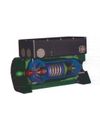
One Electronic Valve Performs Better Than Two Hydraulics
As part of its efforts to upgrade control of its compressor systems. El Paso, a natural gas provider based in Houston, Texas, was looking to improve the fuel system - the main interface from the control system to the gas turbine. Over the years, development of new fuel-control valves has provided for better control of these turbines.
EI Paso decided to upgrade the control systems in its installations becaus
Continental Controls’ products combine to increase output and fuel efficiency while holding the line on exhaust emissions
The increased demand and cost of natural gas coupled with ever tightening exhaust emission standards presents a challenge to those who must extract the most power from their engines while using less fuel and staying within exhaust emission regulations. One company helping meet these challenges with its ECV5 emissions control valve and VM-350
Mike Mercer