


Continental Controls Corporation (CCC) products
Gas Engine Products
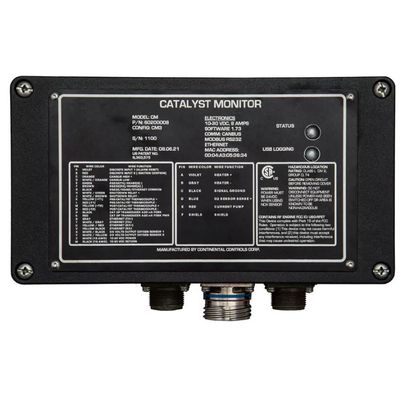
CCC - Catalyst Monitor Used for Integrating Air Fuel Ratio Controls (AFRC) and Catalysts for Gas Engines
Integrating Air-Fuel Ratio (AFR) controls and Catalyst diagnostics for advanced natural gas engine emissions control and management. CCC technology is the key to integrating Air Fuel Ratio controls (AFR) and Catalyst diagnostics for advanced natural gas engine emissions control and management. The CCC Catalyst Monitor is the central communication hub for various engine inputs and outputs for NSCR and Oxidation catalysts that doubles assurance that these devices were working as designed. The CCC Catalyst Monitor provides this function and is available in two basic versions: Data Logging (CMI) and Emission Control System (CM2-Single/CM3 Dual). The Catalyst Monitor solutions provide a comprehensive and intelligent approach to optimize air-fuel ratio control, catalyst performance, and emission reduction in natural gas engines.
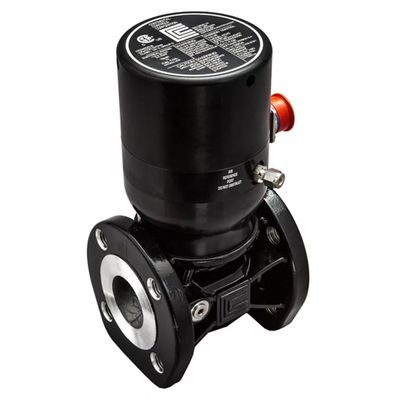
CCC - Model ECV5 - Air-Fuel Ratio and Emissions Control Valve
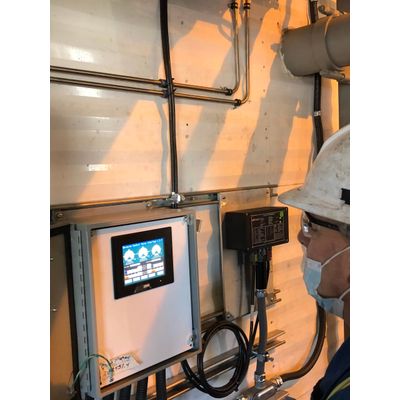
CCC - Model ECVI - Emission Control Valve Interface System
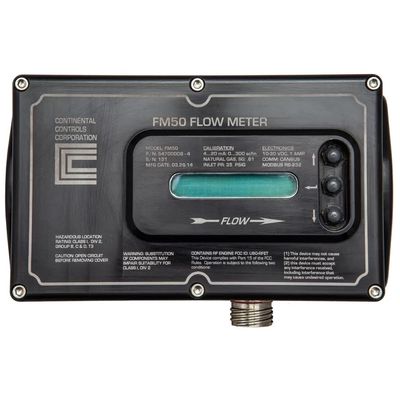
CCC - Model FM50 - Multifunctional Control Module for Gas Flow Measurement
The FM50 is a multifunctional control module designed for use in gas compressor applications. It provides control for gas fuel, air/fuel ratio, and speed for gas engines, as well as monitoring and protection features. The FM50 can communicate with other control systems and devices using various protocols and interfaces, including Modbus, CANbus, and Ethernet. Its modular design allows for easy customization and integration with different engine types and applications. The FM50 is designed to enhance the performance, efficiency, and reliability of gas compressor systems.
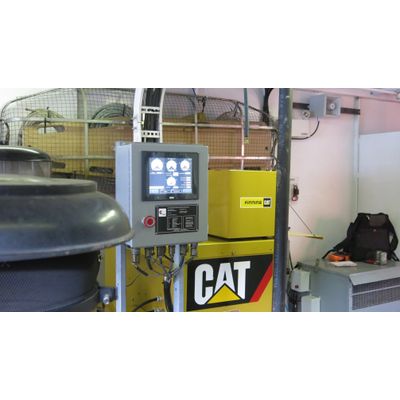
CCC - Model GSS - Gas Substitution System
Continental Controls Corporation`s Gas Substitution System (GSS) is an innovative product that allows diesel engines to operate on a combination of natural gas and other low-cost gases, such as biogas, landfill gas, or digester gas with traditional diesel fuel. The GSS system is designed to provide reliable and efficient combustion control for these blended gases while maximizing fuel savings and minimizing environmental impact. The GSS system features specialized control panels and software to monitor and automatically adjust the combustion process in real-time to ensure optimal performance and stability. The system is also equipped with advanced safety features, such as shutdown systems and flame detection to prevent any potential hazards.
Gas Turbine Products
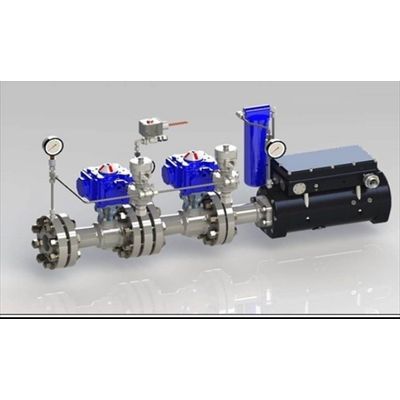
CCC - Model FT50 - Gas Fuel Train Shutoff Valve
Continental Controls Corporation’s designed the FT50 pre-assembled with 2″ valves for hassle free installation. The FT50 is applicable with various engines and fuels such as natural gas and propane, etc. The fail safe rapid shutdown response stops gaseous fuel flowing through in less than 200 milliseconds. Its operation relies on a spring-loaded piston within the valve to be moved by the supply pressure. Energizing the valve opens the spring-loaded piston, allowing fuel to enter the turbine. When the electrical solenoid’s current signal is disrupted, the spring-loaded second-stage piston undergoes a change to allow for the release of primary control pressure. As a result, the fuel flow is brought to a halt due to the main spring forcing the primary piston to close. Additionally, the pneumatic valve, pilot valve for pneumatic, and ¼” vent valve are generally closed valves.