

- Home
- Companies
- Cook Inlet RCAC
- Training
Cook Inlet RCAC training
Environmental Monitoring and Assessment Program (EMAP)
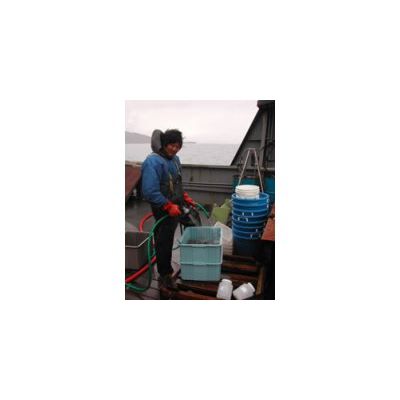
Environmental Monitoring and Assessment ProgramIn 2002, Cook Inlet RCAC collaborated with the Alaska Department of Environmental Conservation to conduct a coastal assessment of the south central Alaska coastal bays and estuaries by looking at a suite of contaminants in benthic sediments and organisms. This was the first survey of the five biogeographical provinces of coastal regions in the Alaska Monitoring and Assessment Program (AKMAP). The southcentral region was selected for the first survey of this new program because of the importance of the major estuarine resources (Prince William Sound and Cook Inlet) to local economies, the state economy, and aquatic living resources.
Integrated Cook Inlet Environmental Monitoring and Assessment Program (ICIEMAP)
In 2008 and 2009, a unique partnership was developed to coordinate four separate Cook Inlet contaminant studies into an Integrated Cook Inlet Environmental Monitoring and Assessment Program (ICIEMAP). Much of the effort was directed towards understanding the diversity of the Inlet, a complex and highly dynamic environment, but potential impacts by certain oil production operations in the upper Inlet were also assessed. The combined field efforts surveyed chemical, biological, and physical parameters of Cook Inlet. The initial project around which the integrated program was built was an effort by Cook Inlet RCAC to conduct a probabilistic study within Cook Inlet based on EMAP protocols (described in a separate section). Field sampling and laboratory analyses were coordinated to leverage costs and resources and to share analytical results while still meeting goals of the four unique initiatives.