

Cooper Environmental / Sailbri Cooper Inc. articles
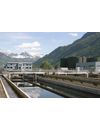
This application focuses on measuring inorganic metals including: copper (Cu), zinc (Zn), arsenic (As), selenium (Se), cadmium (Cd), and antimony (Sb), using Cooper Environmental’s Xact® 920, a continuous multi-metal monitor based-on energy dispersive X-ray fluorescence.
Industrial facilities consume and discharge various chemicals as a byproduct of the commodity they produce. The discharge from these large facilities must meet local and national agency poll
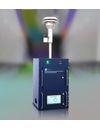
Xact 625i has been selected for the ASCENT network for characterizing aerosols in high time resolution using state-of-the-art instruments.
SailBri Cooper, Inc. is pleased to announce its participation in Atmospheric SCience and mEasurement NeTwork (ASCENT). This new air monitoring network in the United States was made possible by a $12 million grant from the Mid-Scale Research Infrastructure program at the National Science Foundation (NSF). The grant was awarded to Ge

Public potable water supplies are being stressed by growing population, cyclical droughts, and climate change. One way to sustainably augment the potable water supply is to recycle (reuse) wastewater. This is performed by using a tertiary wastewater treatment facility followed by advanced water purification (AWP) which includes; Reverse Osmosis (RO), UV/advanced oxidation and free chlorine disinfection. RO is the core technology of AWP providing a physical barrier to waterborne pathogens and
The U.S. EPA, under the Clean Water Act, establishes Effluent Limitation Guidelines (ELG). On August 31, 2020 the EPA issued a finalized version to the Stream Electric Power Generating category (40 CFR Part 423). This finalized version added numerical limitations on several pollutants and waste streams. One waste stream of interest is flue gas desulfurization (FGD) wastewater. FGD waste streams received numerical limits on total arsenic (daily = 18 ppb (parts per billion), monthly = 8 ppb), t
Brandon Yuan
The Missouri Department of Natural Resources (MoDNR) and Washington University participated in a project to collect and analyze air toxics metals data. It was funded through a Community Air Toxics Grant from the U.S. Environmental Protection Agency (USEPA). The study grew out of the southside St. Louis Community Air Project (CAP) which identified six hazardous air pollutants of concern including arsenic and health risk thresholds for each pollutant. However, the quality of the fine particulat
Jay Turner
Abstract
Ambient measurements of elemental species concentrations were made using an online elemental monitor at an air pollution monitoring station in Gwangju, Korea to evaluate the performance of the monitor for near–real time PM2.5 elemental monitoring and identify possible sources of the observed elements. This study also demonstrates the utility of integrating hourly elemental data with the meteorological data to better understand the sources of elements
Seung–Shik Park;Sung–Yong Cho;Mi–Ra Jo;Bu–Joo Gong;Jin–Soo Park;Suk–Jo Lee
Trace metals are found at low concentration in the ambient environment and are associated with adverse health effects.
The gold standard metal measurement is Inductively Coupled Plasma Atomic Emission Spectroscopy (ICP-AES); however, sample preparation is laborious and expensive.
The Xact 625 metals monitor uses non-destructive X-ray fluorescence technology. A built-in sample collection system enables near-real-time trace metal measurements in ambient air. Modifying the
Siyan Guo;Krystal J. Godri Pollitt;Cheol-Heon Jeong;Greg J. Evans
5 `Southern Ontario Centre for Atmospheric Aerosol Research. University of Toronto, Toronto, M5S 3E5. Canada Correspondence to: Cheol-Heon Jeong (chjeongiiiiutorontoca) and Greg J. Evans (greg.evansfiiutoronto.ca)
Abstract. Source apportionment analysis of hourly resolved particulate matter (PM) speciauon data was performed using positive matrix factorization (PMF). The data were measured at an urban site m downtown Toronto. Canada during two
10 c
Markus Furger1,*, María Cruz Minguillón2, Varun Yadav3, Jay G. Slowik1, Christoph Hüglin4, Roman
Fröhlich1, Krag Petterson3, Urs Baltensperger1, André S. H. Prévôt1
1Laboratory of Atmospheric Chemistry, Paul Scherrer Institute, 5232 Villigen 5 PSI, Switzerland
2Institute of Environmental Assessment and Water Research (IDAEA), Consejo Superior de Investigaciones Científicas
(CSIC), Jordi Girona 18-26, 08034 Barcelon
Airborne Metals Instrument System
Cooper Environmental Systems Xact 620)
National Ambient Air Monitoring Conference, Nashville, Tennessee November 2-5, 2009
Missouri Department of Natural Resources, Air Pollution Control Program and Environmental Services Program
Washington University, St. Louis
U. S. EPA
Project Plan
- Phase I. Spatially and Temporally Enhanced 24-hour Integrated Measurements