


Discerning Systems Inc. software
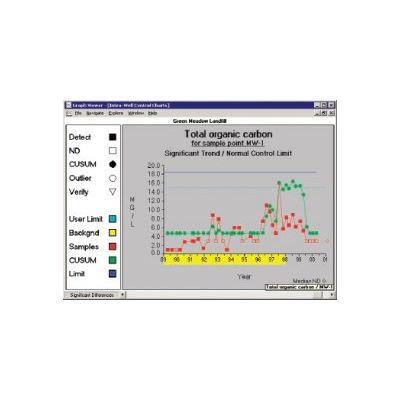
Discerning - Model DUMPStat - Groundwater Monitoring Data Analysis Software
DUMPStat is a program for the statistical analysis of groundwater monitoring data using methods described in Statistical Methods for Groundwater Monitoring. It guides you through importing your lab data and defining your site and then provides complete analysis of all wells and constituents with a single click; automatically selecting the most appropriate statistics to minimize both false positive and false negative rates for your entire facility.
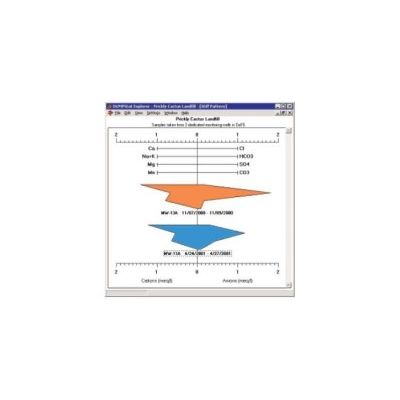
Discerning - Model DUMPStat Explorer - Hydrogeochemical Data Evaluation Tool
DUMPStat Explorer is a suite of hydrogeochemical data evaluation tools which can be used on its own or with existing DUMPStat or CARStat databases to explore aqueous chemistry data, investigate chemical signatures and further interpret your statistical results.
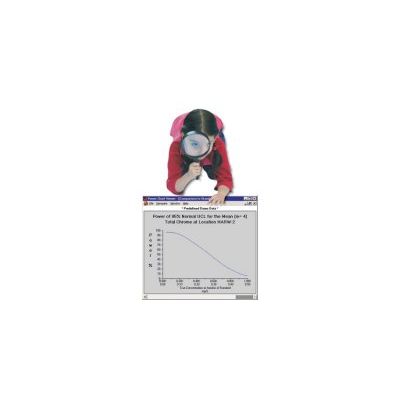
Discerning - Model CARStat - Compliance Analysis & Remediation Software for Environmental Monitoring
CARStat is an easy-to-learn statistical analysis system that automatically performs a complete analysis of all sampling locations, groups of locations, and constituents with a single mouse click. It is completely consistent with USEPA Subtitle C and D regulations and all USEPA guidance documents. CARStat performs comparisons to background and to regulatory standards as well as natural attenuation analysis. Appropriate confidence limits, prediction limits, distributional testing, treatment of nondetects, trend analysis, and outlier detections are automatically generated.
Discerning - Model MIXOR - Programming Software
MIXOR was the first program developed as part of the Mixed-up Suite of applications. MIXOR is a program which provides estimates for a mixed-effects ordinal probit and logistic regression model. This model can be used for analysis of clustered or longitudinal ordinal (and dichotomous) outcome data. For clustered data, the mixed-effects model does not assume that each observation is independent, but does assume data within clusters are dependent to some degree. The degree of this dependency is estimated along with estimates of the usual model parameters, thus adjusting these effects for the dependency resulting from the clustering of the data. Similarly, for longitudinal data, the mixed-effects approach can allow for individual-varying intercepts and slopes across time, and can estimate the degree to which these time-related terms vary.
Discerning - Model MIXREG - Programming Software
MIXREG is a program that provides estimates for a mixed-effects regression model (MRM) including autocorrelated errors. This model can be used for analyses of unbalanced longitudinal data, where individuals may be measured at different number of timepoints, or even at different timepoints. Autocorrelated errors of a general form or following an AR(1), MA(1), or ARMA(1,1) form are allowable. This model can also be used for analysis of clustered data, where the mixed-effects model does not assume that each observation is independent, but does assume data within clusters are dependent to some degree. The degree of this dependency is estimated along with with estimates of usual model parameters, thus adjusting these effects for the dependency resulting from the clustering of the data.
Discerning - Model MIXNO - Nominal Logistic Regression Analysis Software
MIXNO provides maximum marginal likelihood for mixed-effects nominal logistic regression analysis. These models can be used for analysis of correlated nominal response data, for example, data arising from a clustered design. For clustered data, the mixed-effects model assumes that data within clusters are dependent. The degree of dependency is jointly estimated with the usual model parameters, thus adjusting for dependence resulting from clustering of the data. MIXNO uses marginal maximum likelihood estimation, utilizing a Fisher-scoring solution. For the scoring solution, the Cholesky factor of the random-effects variance-covariance matrix is estimated, along with the effects of model covariates.
Discerning - Model MIXPREG - Poisson Regression Analysis Software
MIXPREG provides maximum marginal likelihood estimates for mixed-effects Poisson regression analysis. These models can be used for analysis of correlated count data, for example, data arising from a clustered design. For clustered data, the mixed-effects model assumes that data within clusters are dependent. The degree of dependency is jointly estimated with the usual model parameters, thus adjusting for dependence resulting from clustering of the data. MIXPREG uses marginal maximum likelihood estimation, utilizing a Newton-Raphson iterative solution. Specifically, the Cholesky factor of the random-effects variance-covariance matrix is estimated along with the effects of model covariates.