Durr CTS Inc. products
Exhaust Air Purification
Ecopure® FGA
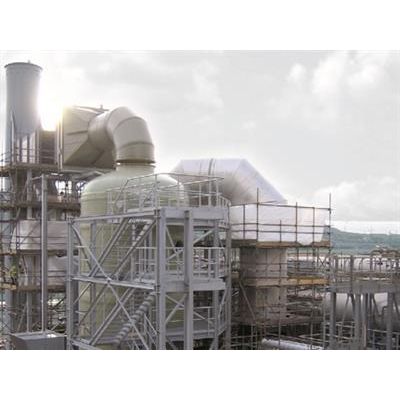
EcopureFGA Scrubbing Systems can be used to remove gaseous inorganic pollutants and particles from flue gases downstream of a thermal oxidizer.
Ecopure® CCF - Catalytic Candle Filter
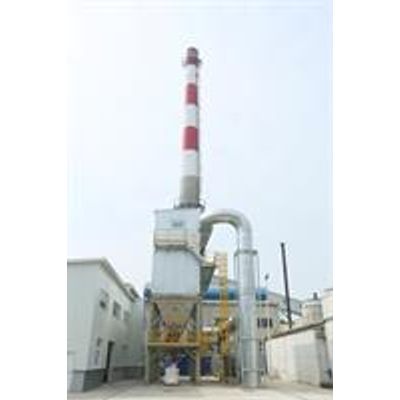
The novel multi-pollutant air pollution control technology combines DeDust, DeSOx and DeNOx processes in a single catalyst coated candle filter system - the Catalytic Candle Filter (CCF). The EcopureCCF system enables the simultaneous control of dust, heavy metals, oxides of sulphur (SOx), acid gases (HCl, HF) and oxides of nitrogen (NOx) in one unit. Advantages of the Ecopure CCF include the minimization of risks associated with unwanted reactions between ammonia and sulphur compounds as well as increased efficiency due to the higher maximum operating temperature - up to 380°C. As such, the system offers a cost-effective alternative for the control of multiple pollutants from thermal processes.
Ecopure® HPX - High Pressure Catalytic Systems
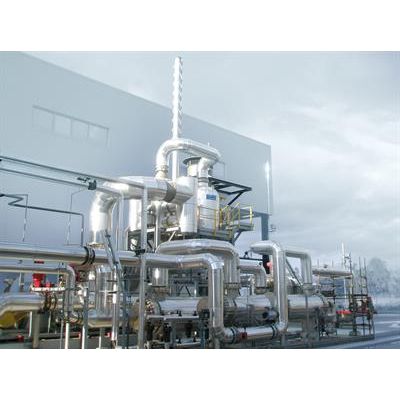
For the purification of flue gases from facilities producing purified terephthalic acid - PTA for short - and other applications exhausted at a high pressure, Dürr applies theEcopureHPX abatement system as a standard. The high-pressure PTA flue gas typically contains methyl acetate, methyl bromide, and carbon monoxide can be treated directly without prior decompression. The flue gas from the process is heated to the required catalyst operating temperature by a combination of heat exchangers which operate on steam or preheated air and by a purified air heated air-to-air heat exchanger. After conversion of the pollutants on the catalyst, the purified flue gas is cooled and the heat is recovered in the air-to-air heat exchanger. The purified, pressurized flue gas is then routed to an expander for energy recovery, used for pneumatic conveying, or further treatment of hydrobromic acid.
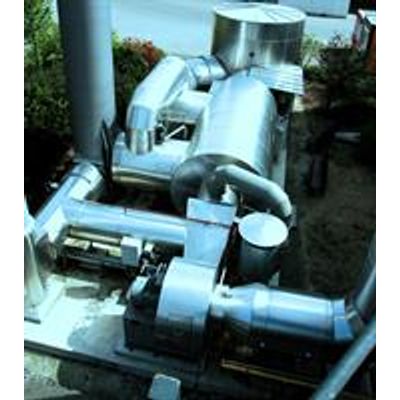
Ecopure® LPX - Low Pressure Catalytic Systems
EcopureLPX systems are in principle suitable for all catalytic applications. In anEcopureLPX system, the conversion of VOCs takes place at pressures slightly above or below ambient pressure. The exhaust air from the production facility is typically heated by an air-to-air heat exchanger. The air is usually then heated further to the necessary catalyst operating temperature by a burner, thermal oil, or steam. The heat generated during the VOC conversion process is transferred to the untreated exhaust air from the production facility. If the VOC concentration is so high that more heat is generated than required, the excess heat can be ducted through a heat exchanger bypass directly into the stack without being used.
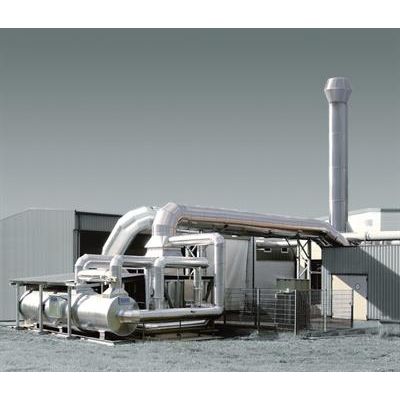
Ecopure® KPR - For the effective concentration of solvents
Ecopure® KPR plants transform large volumes of exhaust air with low pollutant concentrations into a small exhaust air volume with a high pollutant . Ecopure® KPR systems distinguish themselves by their intelligent modular structure and optimized accessibility. All essential individual components such as the exhaust air fan, the pre-filter as well as the adsorption rotor, which ist the heart of the system, are integrated into the Ecopure® KPR module housing and are pre-assembled in our workshops. Dürr in-house manufacturing ensures a high level of quality and flexibility.
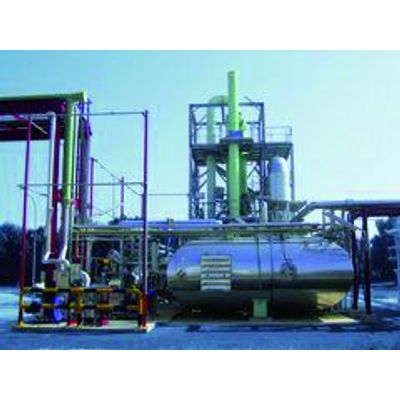
Ecopure® VAR - Exhaust gas and waste liquid oxidation
In the light of increasingly stringent limits the safe and complete oxidation of exhaust gases and liquid residues requires special equipment that is characterised by a combination of different process measures. Besides the technical measures needed to ensure efficient combustion and safety to a high degree, increasing importance has to be attached to a high level of purity of the treated flue gas. Suitable methods are applied for the removal of inorganic residual products such as halogenated compounds and sulphurous substances from the flue gas. If nitrogen compounds are contained in the exhaust gases or liquid residues, then several denox methods can be applied. For dioxin and furan removal there are also several possible methods. The Ecopure® VAR modular abatement system allows for the flexible combination of these methods.
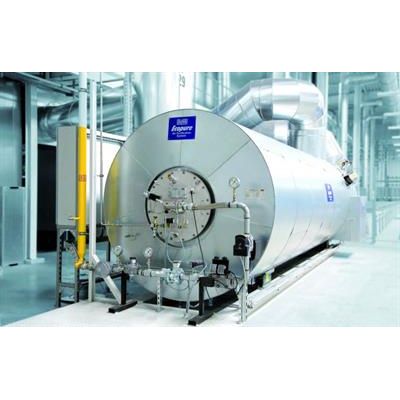
Ecopure® TAR - Thermal exhaust air purification
Exhaust air purification with heat recovery and TARCOM burner technology The Ecopure® TAR recuperative thermal exhaust air purification process is the best-proven, safest and most universally applicable incineration method, by means of which organic contaminants are transformed mainly into water and carbon dioxide. The most stringent legal requirements are met. There are no secondary problems such as waste water. The plants maintain their high removal efficiency throughout their lifetime. These systems can run fully automatically and require minimum maintenance. Dürr Ecopure® TAR plants are used worldwide. DÜRR has already built more than 1.800 plants of this type and delivered them to customers. The recuperative thermal exhaust air purification process Ecopure® TAR is the most suitable method to be applied when process exhaust air has to be purified on the one hand and process heating is required at the same time.
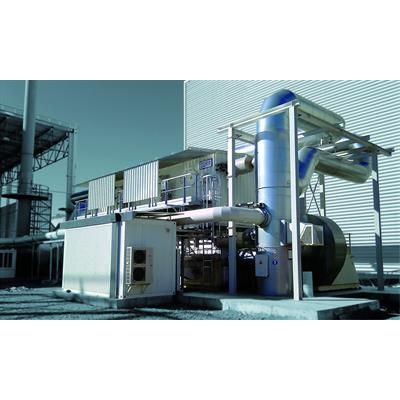
Ecopure® - RTO - Regenerative Thermal Oxidation
The regenerative thermal oxidizer from type Ecopure® RTO are characterized by a cost optimized, a standardised and a low maintenance design. The most modern process technology of the Ecopure® RTO allows a economic disposal of solvent-containing and offensive odour exhaust air with a efficiency of over 99,8%. Due to different design options the Ecopure® RTO is insertable universal. The patented air routing with tightly sealed, low-maintenance stainless steel disc valve guaranteed the best possible heat exchange flow at minimal area requirements and greatest ease of maintenance. Because of the intelligent RTO design it is possible to modularly expand the quantity of heat exchangers for a better capacity management. Ecopure® RTO plants are used mainly for exhaust air volumes with contaminant concentrations of up to approx. 10 g/mN³.
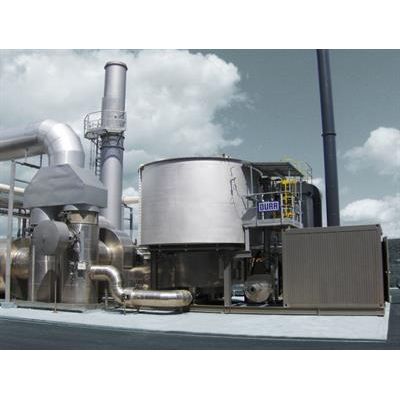
Ecopure® - RL - Regenerative thermal oxidation with rotary valve
The Dürr Ecopure®RL rotary regenerative thermal oxidizers are available in pre-engineered sizes for 3,700 SCFM to 60,000 SCFM process systems. With a compact, rugged design, the unique Ecopure®RL rotary valve Ecopure®RTO is our most advanced and cost-effective way to control VOCs, HAPs and odors from industrial process exhaust streams.