


Ecospec NovelTech Pte Ltd products
Onshore
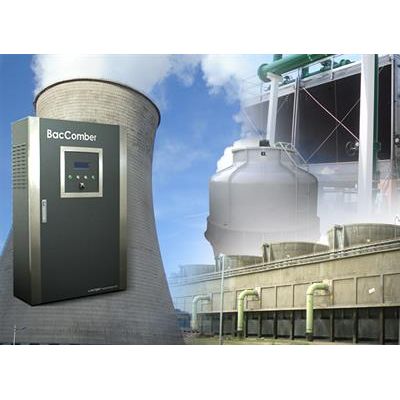
Ecospec BacComber - Cooling Water Treatment System
With the increasing demand on high performance green technology to save our environment, Baccomber offers not only more effective & efficient water treatment solutions, but also provide long term eco-friendly protection to your system. BacComber uses Ultra Low Frequency (ULF) Patented Technology to treat the water without harming the environment (non-chemical treatment), and is proven to be effective & efficient in scaling, corrosion, and biological control as all-in-1 solutions for your water treatment.
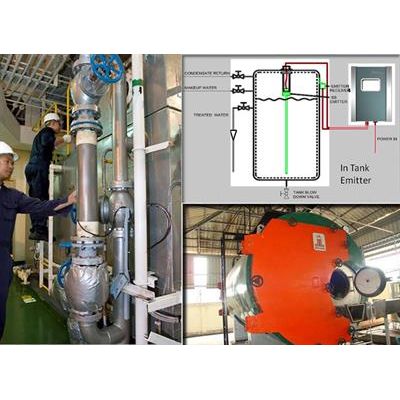
Ecospec ScaMag - Boiler Water Treatment System
Ecospec’s ScaMag system effectively controls scaling and corrosion in the boiler without utilizing any chemicals. Through the patented Ultra Low Frequency (ULF) wave treatment, aragonite and non-porous magnetite (Fe3O4) are produced. While the non-adhering powdery aragonite is easily removed unlike the conventional adhering hard calcite scales, magnetite attaches strongly to steel surfaces, acting as a long-term protective layer against corrosion. This unique system offers both water and energy savings and since no chemical is involved, there is no discharge water quality problems, reducing potential environmental, safety and health issues. Descaling effect in old boilers can be obviously seen from 3rd months after installation.
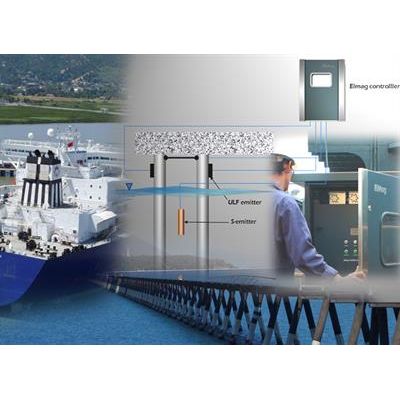
Ecospec ElMag - Advanced Corrosion Control System
Corrosion protection for seawater submerged steel structures in the marine environment is a critical protection regime to assure the asset life lasts as designed. Conventional Cathodic Protection (CP) either by sacrificial anode system or impressed current system is adopted for seawater submerged steel protection. Cathodic Protection is widely applied practically on every ship, drilling rig, offshore platform, marine wharf and jetty. Both the sacrificial anode and impressed current system have their own advantages and disadvantages. In the sacrificial anodes system, the energy consumption cost is embedded in the initial capital outlay as the anodes deplete throughout the design life while the impressed current system consumes energy progressively.