


Edinburgh Instruments - TECHCOMP Group articles
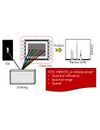
Unsure whether a CCD, EMCCD, or InGaAs detector is best for your Raman application? In this Spectral School tutorial, we discuss the differences between the detectors available for Raman microscopes, and how to select one based on important performance parameters such as quantum efficiency and spectral range.
Introduction
In a Raman microscope, the role of the detector is to convert photons into a meaningful signal that provides qualitative and quantitative i
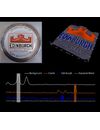
Welcome to Edinburgh Instruments’ monthly blog celebrating our work in Raman, Photoluminescence, and Fluorescence Lifetime Imaging. Every month we will highlight our pick for Map of the Month to show how our spectrometers can be used to reveal all the hidden secrets in your samples.
April
In our latest instalment, to highlight our affiliation with Edinburgh Rugby, we tackled the Raman analysis of an Edinburgh Rugby 150th Anniversary pin badge containing the
We recently launched our newest product, the IR5 FTIR Spectrometer, but what is FTIR spectroscopy? This blog post will highlight the basics of FTIR spectroscopy, discussing how it works and what the resulting FTIR spectrum can reveal about your sample.
Infrared Spectroscopy
Infrared (IR) spectroscopy is one of the most used spectroscopic techniques in analytical laboratories for both qualitative and quantitative analysis. It measures the interaction of IR r
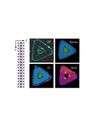
Welcome to Edinburgh Instruments’ monthly blog celebrating our work in Raman, Photoluminescence, and Fluorescence Lifetime Imaging. Every month we will highlight our pick for Map of the Month to show how our spectrometers can be used to reveal all the hidden secrets in your samples.
March
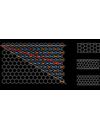
Tungsten diselenide (WSe2) is a multifunctional semiconducting material that possesses distinctive layer-dependent electronic and optical properties and has th
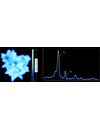
Welcome to Edinburgh Instruments monthly blog celebrating our work in Raman, Photoluminescence, and Fluorescence Lifetime Imaging. Every month we will highlight our pick for Map of the Month to show how our spectrometers can be used to reveal all the hidden secrets in your samples.
December
2D materials are an emerging class of thin-layer crystals of interest due to their unique optoelectronic properties. The first in this class to gain traction was graphene, now
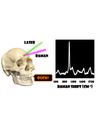
As well as rising from the grave to wander the earth and haunt us every Halloween, skeletons are made of hard, metabolically active bone tissues that perform several major functions to help our bodies thrive. These includes maintaining and supporting our shape, allowing us to have a dynamic range of movement, protecting our vital organs from damage, producing blood cells, and storing key nutrients.
Bone tissue consists of cells embedded within an extracellular matrix made up primarily o
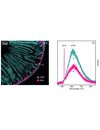
Welcome to Edinburgh Instruments monthly blog celebrating our work in Raman, Photoluminescence, and Fluorescence Lifetime Imaging. Every month we will highlight our pick for Map of the Month to show how our spectrometers can be used to reveal all the hidden secrets in your samples.
November
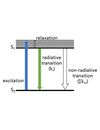
Fluorescence lifetime is an important photophysical parameter that provides insight into the energy relaxation and dynamics of the species under study, such as energy transfer between molecular states, molecular rotation, and dynamic quenching.
Figure 1 shows a single molecule’s transition from its ground electroni
Welcome to Edinburgh Instruments monthly blog celebrating our work in Raman, Photoluminescence, and Fluorescence Lifetime Imaging. Every month we will highlight our pick for Map of the Month to show how our spectrometers can be used to reveal all the hidden secrets in your samples.
August
Single-wall carbon nanotubes (SWCNTs) have unique electrical, thermal, mechanical, and optical properties which make them attractive for a wide variety of applications; ranging f
Welcome to Edinburgh Instruments monthly blog celebrating our work in Raman, Photoluminescence, and Fluorescence Lifetime Imaging. Every month we will highlight our pick for Map of the Month to show how our spectrometers can be used to reveal all the hidden secrets in your samples.
September
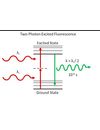
The development of fluorescence microscopy in the early 20th century sparked a new era for the field of biological microscopy. The technique allowed scientists to use flu