Enki Water Treatment Technologies Ltd
11 products found
Enki Water Treatment Technologies Ltd products
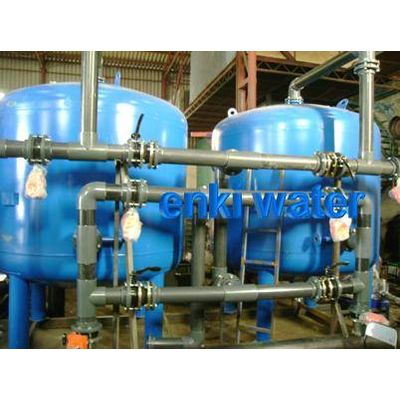
EnkiSand - Model ISF - Sand Filter
Sand filter contains only one kind of media, gravel and sand.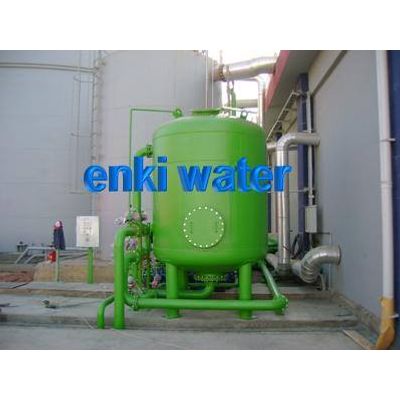
EnkiDUAL - Model IDF - Dual Media Filter
Industrial Dual Media Filter Dual media filters contains anthracite sand and gravel
EnkiCARBON - Model ICF - Activated Carbon Filter
Industrial Activated Carbon Filter When is used an activated carbon filter? Activated carbon filters are very similar to multi media filters and other pressure filters in construction and operation. The purpose of an activated carbon filter is to remove free chlorine, an oxidizing agent that will damage most resins and/or membranes in a water treatment system. A chemical injection system using sodium bisulfite (a reducing agent) can be used in place of an activated carbon filter to remove chlorine. Granular activated carbon is a particularly good adsorbent medium due to its high surface area to volume ratio. One gram of a typical commercial activated carbon will have a surface area equivalent to 850-1.000 square meters. This high surface area permits the accumulation of a large number of contaminant molecules.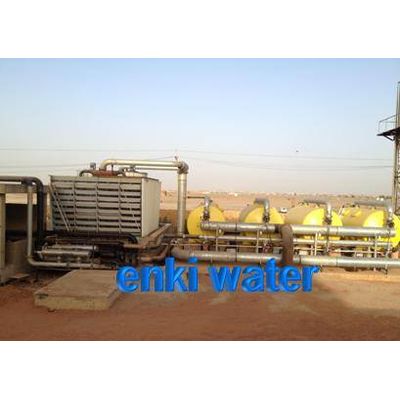
EnkiHORIZONTAL - Model IHFA - Horizontal Pressure Filter
Horizontal pressure filters" typically are used for larger water/wastewater/seawater treatment plants. "Horizontal filter" has larger filtration area and minimum footprint. The diameter of filters is between 2.1 and 4 m and cylindrical length up to 12 m. We have horizontal media filter for seawater filtration (desalination). In side of these horizontal media filters are lined with ebonite or neoprene. Complete shop fabricated, skid-mounted filter modules are available with all required instrumentation and controls.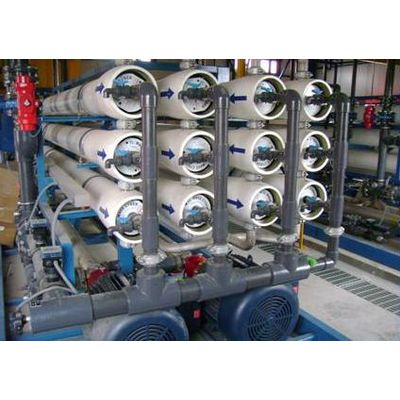
EnkiRO - Model IRO - Brackish Water Reverse Osmosis
Reverse osmosis is the finest level of filtration available. The reverse osmosis membrane acts as a barrier to all dissolved salts and inorganic molecules, as well as organic molecules with a molecular weight greater than approximately 100. Water molecules, on the other hand, pass freely through the membrane creating a purified product stream. Rejection of dissolved salts is typically 95% to greater than 99%. Classification of brackish water: • Low salinity brackish waters: up to 5.000 ppm • High salinity brackish waters: between 5.000 - 15.000 ppm • Sea water: up to 45.000 ppm Reverse osmosis is a technology that is used in the production of ultrapure water for use in the semiconductor industry, power industry (boiler feed water), and medical/laboratory applications.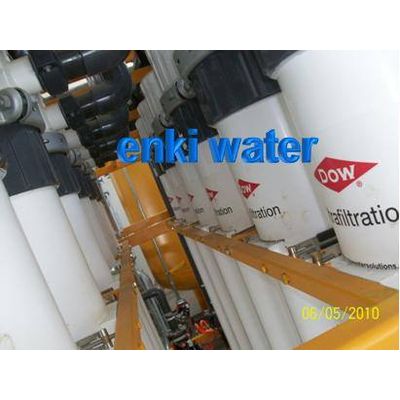
EnkiUF - Model IUF - Industrial Ultrafiltration
In comparison to conventional water treatment processes, the advantage of "ultrafiltration" as a filter technology is its superior ability to remove germs and microorganisms from water. At around 20 nm, the pores of the membrane are small enough to prevent even viruses from passing through them. "Ultrafiltration" systems are designed for fully automatic operation. A control mechanism is used to control the various operating modes of the ultrafiltration process: filtration, cleaning and backwashing. enki’s industrial ultrafiltration units are available from 25 to 500 m3/h and more . Our ultrafiltration systems are available in either Outside-In or Inside-Out configurations. Outside-In configuration UF Systems; DOW H-PVDF Hollow Fiber UF Membranes Inside-Out configuration UF Systems; Inge PESM Hollow Fiber UF Membranes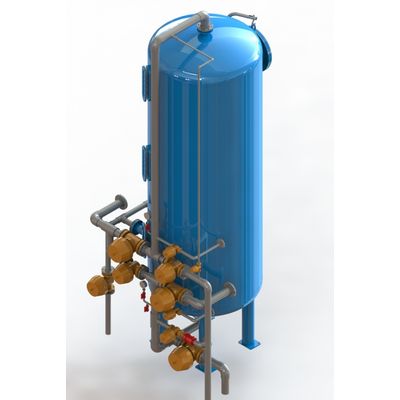
EnkiMX - Model IMX - Mixed-bed Ion Exchanger
Both cation and anion resin can be feed in to an ion exchanger tank and mixed to create a mixedbed ion exchanger. A mixedbed ion exchanger is more complicated than other types of ion exchangers because it has to separate and regenerate the two resins. The carefull mixing of the cation and anion resin allows a very high degree of deionization. Mixed bed ion exchangers produce the highest quality demineralized water of any of the ion exchanger units. Working mixedbed ion exchangers deionize water with up to 50 ppm TDS (Total Dissolved Solids). Polishing mixedbed ion exchangers are located after cation and anion exchangers or reverse osmosis units Strong acid cation and strong base anion resins are used in mixedbed ion exchangers, as complete demineralization is the objective. A small volume of inert resin can also be used to facilitate separation of the cation and anion resin beads during regeneration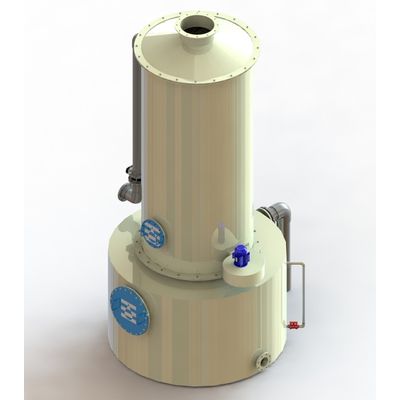
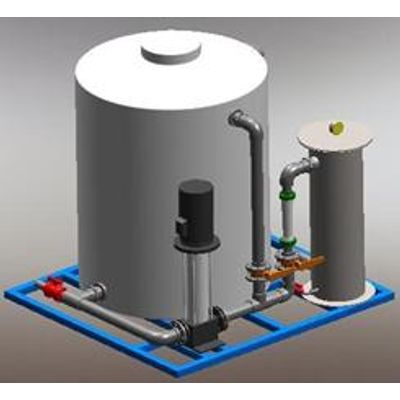
EnkiDEG - Model CDP - CO2-Degasser
"CO2 degasser" (degassifier) is a relatively simple water treatment device. Incoming water is sprayed into a tower filled with packing material. The drops of water that flow down through the tower strike the packing material and form a thin film on the packing material surface, encouraging the release of excess carbon dioxide. A centrifugal fan creates an updraft of air through the tower to carry away the released carbon dioxide gas. The carbon dioxide gas exits through a vent at the top of the unit. In ion exchange demineralizer system is used "CO2 degasser" and is located between the cation and anion exchanger. The degasser (degassifier) removes carbon dioxide produced by the cation exchange process Degasser can also be used before or after Reverse Osmosis units to remove carbon dioxide generated by adding acid before reverse osmosis for pH control. We supply large capacity CO2 "degasser" tower for "seawater" "desalination" plant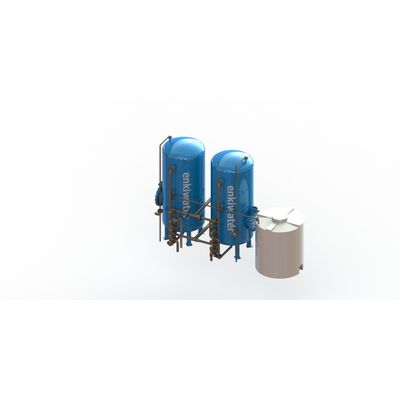
EnkiSOFT - Model ISU - Softener
Softener المنقي - Enthärter - Adoucisseur - - سختیگیر تبادل یونی How will be softened hard water? Hard water is softened by removing the calcium (Ca+2) and magnesium (Mg+2). When hard water passes through the resin bed in softening system. The hard ions (Ca+2, Mg+2) in the water exchanges for soft ones (Na+), so will be softened water. Once the resin bed fills up with hardness ions, it must be regenerated. Salt is typically used in the regeneration process. After regeneration can be used again. The chemical reaction between hardness and resin; Ca+2 + 2 R-Na+ -----> R2-Ca + 2 Na+ Service Mg+2 + 2 R-Na+ -----> R2-Mg + 2 Na+ Service R2-Ca + 2 Na+ -----> 2 R -Na + 2 Ca+2 Regeneration (NaCl) R2-Mg + 2 Na+ -----> 2 R -Na + 2 Mg+2 Regeneration (NaCl) Hard water causes a higher risk of lime scale deposits in water systems. Due to this lime scale build-up, pipes are blocked and the efficiency of hot boilers and tanks is reduced.