- Home
- Companies
- ENVI-PUR, s.r.o.
- Products
ENVI-PUR, s.r.o. products
Wastewater Treatment
BioCleaner - MBR Wastewater Treatment (WWTP)
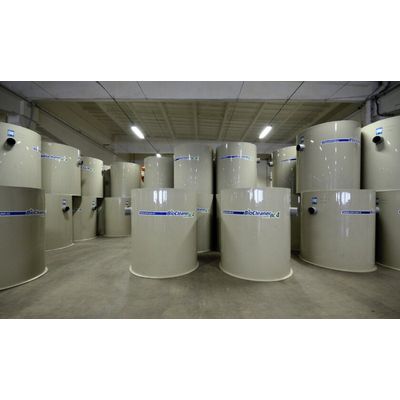
BioCleaner BC4-MBR, BC8-MBR, BC12-MBR, BC15-MBR. Use - Treatment of household waste water.
BioCleaner - Container WWTP
Use: Treatment of municipal waste waters (produced by bathrooms, WCs, laundry, kitchens etc.) and industrial waste waters.
BioCleaner - Compact WWTP
Compact WWTPs BioCleaner® are an optimal solution for villages and towns up to 10 000 citizens. These plants may also be applied for treatment of organically polluted industrial sewage water, especially from the food industry. Technological layout of the WWTP, but also the building and architectural design is always designed exactly to the investor’s requirements and appropriate institutions of state administration. WWTP can be made as one-line up to four-line (parallel lines) organization, which enables reacting to up-to-date load at the gradual sewerage built-up or reacting to seasonal inequalities in tourist areas. WWTP can be made as an open-air or partially covered or fully covered unit in order to adopt to hygiene and other requirements.
Water Treatment
AMAYA - Membrane DWTP
Mobile membrane-based water treatment plants AMAYA M: Emergency supply of drinking water in a crisis situation as part of an integrated rescue system, Expeditious supply of drinking water as part of humanitarian, development and military operations, Operational or permanent substitution of small stationary water treatment plants, Ensuring of drinking water supply for sports and cultural events. Stationary membrane-based water treatment plants AMAYA S: A permanent supply of drinking water for villages and town suburbs using unsuitable local sources (exact design of requested capacity), Local treatment of drinking water for small factories, hospitals, hotels and holiday resorts, Part of complex projects of treating, distributing and delivering of drinking water.
Leopold - Water Treatment - Water Filtration Technology
Because the upward flow of air through an underdrain creates low-pressure zones in the underdrain, some orifices can become starved for flow ... or even reverse flow. Leopold has designed a water recovery channel into its Type S™ Technology Underdrain to help ensure uniform and continuous airflow from all of the top deck orifices. The water recovery channel is designed to allow water to re-enter the underdrain to equalize the low-pressure areas. This dramatically improves the performance of the underdrain and provides superior results, particularly with the dual lateral design.
Waste Water Treatment Plants
BioCleaner - Household Wastewater Treatment Plant
BioCleaner treatment plants are designed for disposal of waste water from the smallest individual sources of pollution such as: family houses, small hotels etc. They are replacing antiquated septic tanks due to its effectiveness, savings and they are in accordance with modern housing. These BioCleaners enable cleaning of waste water from kitchens, bathrooms, social facilities, washing machines, dishwashers. The costs for cleaning are very low.
ENVI-PUR - WWTP for Guesthouses and Hotels
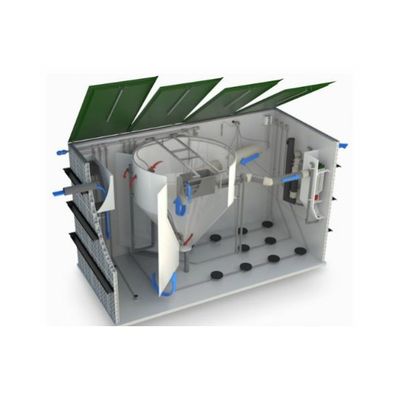
For wastewater treatment from hotels and boarding houses, a container wastewater treatment plant is the best choice. The treatment plant works on the principle of an aerobic cleaning process, so when properly functioning, there are unnecessary fears of odour. Container treatment plants also respect the requirement for the lowest possible noise. We will help you choose the size and model of the container treatment plant with regard to the capacity of the guests, seasonal and off-season operation and, last but not least, to your individual requirements concerning the region, legislation or selection of accessories. In the case of a smaller boarding house (up to 30 EO), a circular domestic WWTP for cottages may be a suitable choice. The BioCleaner WWTP is certified according to ÄŒSN EN 12566-3-A1
ENVI-PUR - Membrane Wastewater Treatment Plants
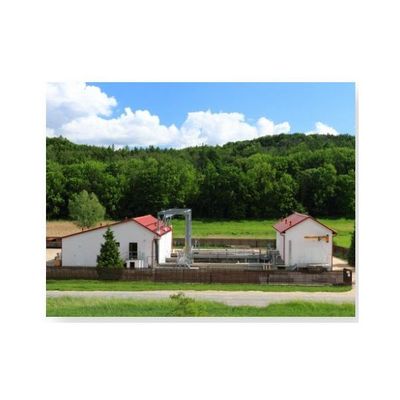
A membrane bioreactor (MBR) WWTP combines conventional biological wastewater treatment with membrane technologies. Separation of activated sludge in conventional wastewater treatment plants takes place in settling tanks. This method of separation therefore has its limits in the quality of purified water and in a higher demand on the composition of activated sludge. Membrane separation consists of suppression or microfiltration, where the mixture of purified water and sludge is filtered through vacuum through membranes and the resulting effluent (permeate) is free of almost all undissolved substances and microbial contamination, so the permeate is hygienically secured.