Environmental Remediation Contractor services
Construction Services
Contaminated Groundwater Treatment Service
Passive Groundwater Treatment Systems are used to permit groundwater to flow through specific treatment media. Contaminants in groundwater react with installed groundwater treatment medium and are either degraded, precipitated or absorbed on-site, or in-situ, depending on the type of contaminant and treatment system.
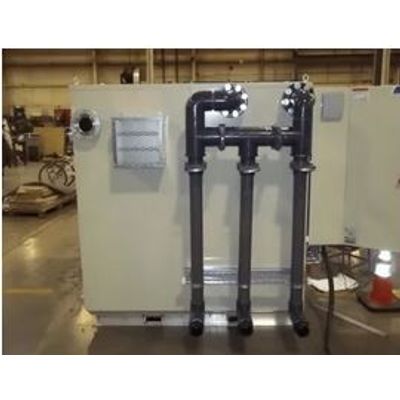
Remedial System Installation Service
Soil Vapor Extraction (SVE) is an in-situ remediation technology for the physical treatment of volatile and semi-volatile contaminants in the vadose zone (unsaturated soils) (EPA, 2012). Soil Vapor Extraction is also referred to as in-situ soil venting or vacuum extraction. It is based on a mass transfer of contaminants from the solid and liquid phases into the gas phase. Vacuum blowers and extraction wells are used to induce gas flow through the subsurface. This gas phase contamination is collected at extraction wells then treated in above-ground systems tailored for the volume and constituent of concern.
Air Sparging Service
Air Sparging, also known as in-situ air stripping and in-situ volatilization, is an in-situ remediation technology used for the treatment of saturated soil zones and groundwater contaminated with volatile organic compounds (VOCs). This technique involves the injection of pressurized air into contaminated groundwater enabling the hydrocarbons to change its state from dissolved to vapor state. The injection of air helps to flush the contaminants upward into the unsaturated zone where a vapor extraction system is typically implemented to remove the volatilized contaminants. This technology has beneficial side effects like adding dissolved oxygen to the contaminated groundwater and unsaturated zone soils. This enhances the biodegradation of contaminants below and above the water table.

Interceptor Trench Service for Contaminated Soil Remediation
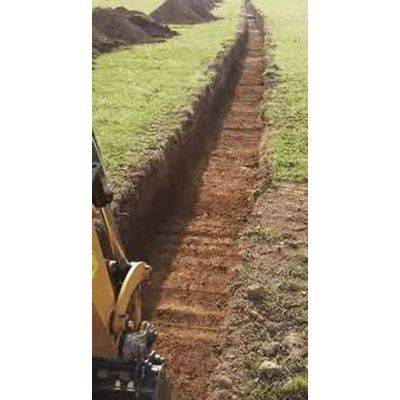
An Interceptor Trench is a good option to intercept contaminated groundwater which is perched above a relatively impermeable soil. An interceptor trench is excavated into a relatively impermeable soil layer and installed for migrating contaminated groundwater to be intercepted and collected as it flows across the impermeable layer. The trench is typically installed across a contour of a slight to a moderate sloping area to intercept groundwater prior to influencing slope stability. Generally, trenches are constructed 2 to 3 feet wide and are lined with a quality geotextile and filled with an aggregate that does not clog.
In-Situ Remediation Services
New in-situ soil and groundwater treatment or oxidation technologies have become popular, for remediation of a wide range of soil and groundwater contaminants.
Stream or River Restoration Service
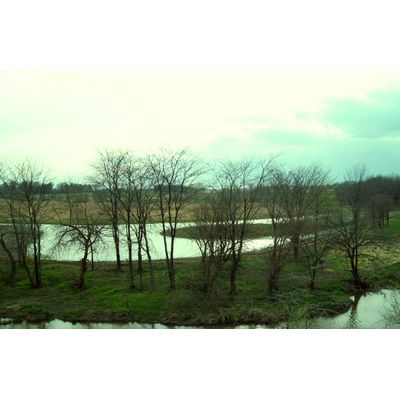
Environmental Remediation Contractor restores the natural state and functionality of streams and river systems in support of biodiversity, recreation, flood management, and landscape development. Improved water health may be indicated by an expanded habitat for diverse species (e.g. fish, aquatic insects, other wildlife) and reduced stream bank erosion. Enhancements may include improved water quality (i.e. reduction of pollutant levels and an increase of dissolved oxygen levels) and achieve a self-sustaining, functional flow regime in the stream system that does not require periodic human intervention, such as dredging or construction of flood control structures. Stream restoration projects can yield increased property values in adjacent areas.
Wetlands Creation, Restoration or Wetland Construction Services
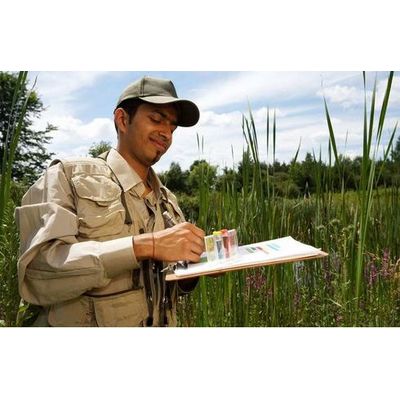
Wetlands Creation is the construction of a wetland in an area that was not a wetland in the recent past (within the last 100-200 years) and that is isolated from existing wetlands (i.e., not directly adjacent). In other words, creation occurs when a wetland is placed on the landscape by some human activity on a non-wetland site. Typically, a wetland is created by excavation of upland soils to elevations that will support the growth of wetland species through the establishment of appropriate hydrology.
Landfill Construction Services
Predominantly we contract on existing or abandoned landfills performing various scopes of work. Repairing or reconstructing clay caps with liner if pertinent. Installation of welded HDPE pipe for leachate or gas collection piping. Installation of structures or storage tanks to support the leachate and gas collection system. Installation of leachate sprinkler systems to re-circulate landfill liquid waste. Managing onsite waste from excavations. Installation and implementation of erosion control measures and site restoration including seeding and mulching.
Soil Remediation Services
Excavation processes can be as simple as hauling the contaminated soil to a regulated landfill which is typically referred to has dig and haul. It can also involve aerating the excavated material in the case of volatile organic compounds (VOCs). Recent advancements in bio-augmentation and bio-stimulation of the excavated material have also proven to be able to remediate semi-volatile organic compounds (SVOCs) onsite. If the contamination affects a river or bay bottom, then dredging of bay mud or other silty clays containing contaminants may be conducted. Stabilization/solidification (S/S) is a remediation and treatment technology that relies on the reaction between a binder and soil to stop/prevent or reduce the mobility of contaminants.
Environmental Services - 24hr Emergency Response: 877.683.7724