

- Home
- Companies
- EnviroVantage
- Articles
EnviroVantage articles
1. Keep the humidity level in yo
Centers for Disease Control and Prevention
Construction companies typically view sales, quality and profitability by cultural imperatives – but what about safety? Almost all accidents at construction sites can be prevented with zero-accident culture. Some large construction companies operate for millions of manhours without a lost-time accident. Small and medium-sized contractors also can achieve unblemished records through education, training and unwavering commitment to building a culture of safety.
Highly skilled work
Construction Executive
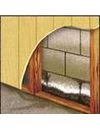
Working as a MA realtor for almost twenty five years, I can say without a question that one of the greatest fears of any home owner is having a water problem in their basement! When buying a home, the uneasiness of having a water issue will be magnified ten fold if the intention of the owner is to finish the basement as additional living space. Having a little bit of water in a 200 year old colonial with old stone foundation walls and a dirt floor is far more acceptable than seeing even a dro
Bill Gassett
The U.S. Environmental Protection Agency enacted a new rule for professional contractors in April 2010 to help keep small children safer from the dangers of lead dust exposure.
If you live in a home built before 1978 and you’re contemplating any work that will disturb more than six square feet of painted surfaces inside the home or 20 square feet on the exterior of the home – for example, replacing a window, installing cabinets, or adding on to your home – the contra
On October 5, OSHA revealed the top 10 most cited violations in fiscal year 2010 during a special session at the National Safety Council (NSC) Congress and Expo in San Diego, highlighting the agency’s enforcement efforts for fall protection, hazard communication, electrical safety and more.
Thomas Galassi, director of OSHA’s directorate of enforcement programs, shared the top 10 violations with NSC attendees on the expo floor. As expected, this year’s list did not de
www.ehstoday.com
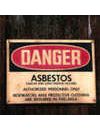
Asbestos and Mesothelioma News
October is Children’s Health Month. To heighten awareness about environmental issues impacting children, EPA is providing parents and caregivers simple tips they can use to help protect children in their homes, schools and communities.
“As both EPA Administrator and a mother, I understand the importance of protecting our children from environmental threats,” said EPA Administrator Lisa P. Jackson. “Throughout Children’s Health Month, we will work to help parents and caretaker
Environmental Protection Agency
Its long fibers are often found in a wide variety of materials such as vinyl floor tiles, mastic, sheetrock, joint compound, shingles, siding, and thermal pipe insulation. Asbestos has had many positiv
EnviroVantage
“It was brutal,” Ronan says. “Before we see how bad the mold is, we have to get rid of the water — empty out the water in basemen
EnviroVantage