
- Home
- Companies
- EPT Clean Oil
- Products
EPT Clean Oil products
Other Products
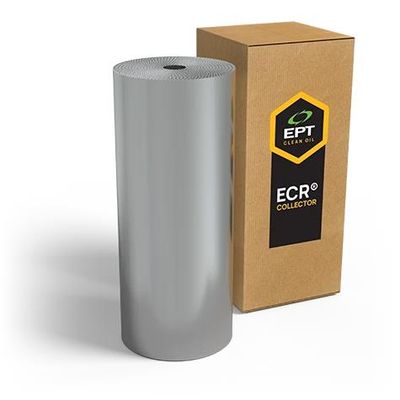
EPT - Model ECR - Collector Elements
Collector elements are designed for ECR® electrostatic oil cleaners. ECR Collector elements are not classified as filters as they do not remove particles by their physical size, but rather their weight. Collectors are used to remove sub micron particulates in EHC fluid systems that are below the range of ISO4406.
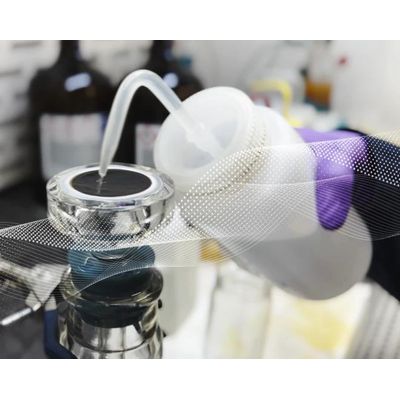
EPT - Model MPC - Varnish Test Kit
Lubricant varnish potential testing is an essential part of turbine and compressor lubricant management. For rapid assessment of potential varnish-related problems on-site use ASTM D7843 approved MPC varnish test. For all critical turbine installations, monthly MPC testing is recommended to mitigate catastrophic varnish-related failures.
ICB - Ion-Exchange Filter
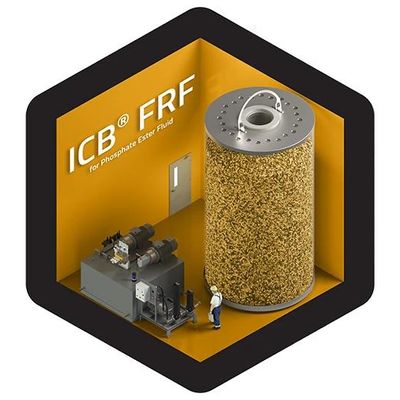
EPT - Model ICB FRF - Ion-Exchange Filter for Phosphate Ester Fluid
Phosphate esters are fire-resistant fluids (FRFs) used in turbine electro-hydraulic control (EHC) systems throughout the power generation industry. Used primarily for their fire-resistant properties and thermal stability, these synthetic fluids hydrolyze and oxidize readily during service, creating harmful acids and phenols. These breakdown products are established varnish precursors that must be removed to ensure reliable servo valve performance in EHC systems.
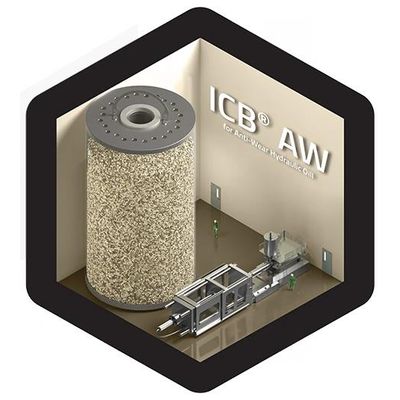
EPT - Model ICB AW - Ion-Exchange Filter for Anti-Wear Hydraulic Oil
Anti-wear (AW) hydraulic oils are found in various applications, from small assembly processes to integrated steel and paper mill applications. Offering excellent protection against corrosive acid and metal surface wear in critical hydraulic systems, Anti-wear hydraulic oils break down to form varnish due to oxidation of their base oil and additive depletion.
SVR - Oil Varnish Removal System
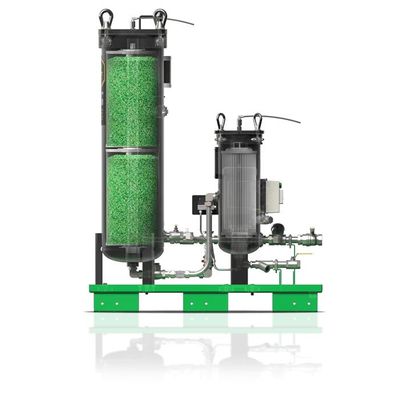
EPT - Model SVR RO - Oil Varnish Removal System for Rust & Oxidation Turbine Oil
From the first day, a lubricant is put into service, it begins to accumulate dissolved oxidation by-products – the feedstock of varnish, constraining the life of the oil. These oxidation by-products accumulate until the lubricant has no remaining capacity, forcing any excess into insoluble material. Based on their polarity, this insoluble material is more attracted to metal surfaces, creating solid varnish – a common failure mechanism. In the absence of active lubricant chemistry management, oxidation by-products will accumulate, guaranteeing this failure mechanism will occur. Furthermore, this contamination increases the rate at which additives are consumed, significantly reducing the life of the oil.
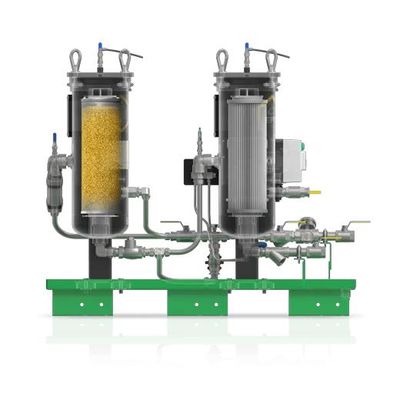
EPT - Model SVR FRF - Oil Varnish Removal System for Phosphate Ester Fluid
Phosphate ester fluids are the preferred hydraulic fluid for electro-hydraulic control (EHC) systems due to their excellent fire-resistant properties. Suffering from unnecessarily high acid production levels, these fluids are challenging to maintain, demanding additional fluid maintenance and chemistry management. Standard acid filters aren’t enough, often contributing to fluid breakdown and equipment failure as they don’t address fluid chemistry.
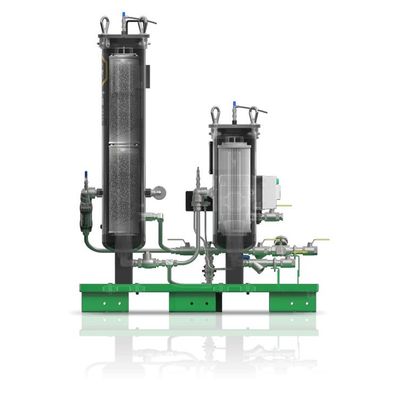
EPT - Model SVR JET - Oil Varnish Removal System for Aeroderivative Turbine Oil
Coking is a failure mechanism that will affect most aeroderivative turbines in their operating life leading to premature mechanical overhauls and production losses. Coke begins as a dissolved oxidation by-product produced by high temperatures, water content and entrained oxygen before converting to a solid form and depositing on metal surfaces. Existing oil analysis and maintenance programs do not consider this contamination leading to high acid numbers, coking or varnish deposits, and shortened oil life.