


European Plastics Recyclers services

Plastics Waste Management
Originally, plastics recycling grew alongside the plastics industry, with companies initially concen-trating on the reprocessing of production and the processing of scraps. But over the years, the re-cycling of post-consumer plastics gradually took off, with important growth being recorded in the last decade. This industry, therefore, plays a significant and essential role in today’s move towards a sustainable society. Post-consumer plastic waste generation in Europe in 2010 raised, mainly as a result of a stronger economy than that of 2009. An increase of plastic waste collection was noted within all plastics applications. 2010 brought as well rise in recovery & recycling with a lower disposal rates.
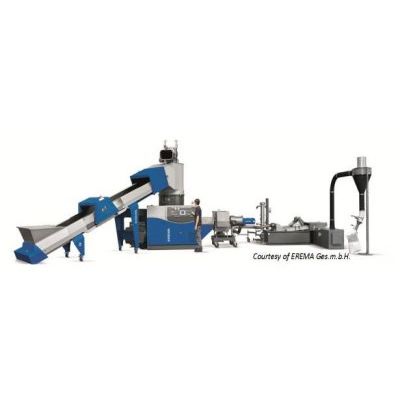
Mechanical Recycling
Mechanical recycling refers to operations that aim to recover plastics waste via mechanical pro-cesses (grinding, washing, separating, drying, re-granulating and compounding), thus producing recyclates that can be converted into new plastics products, often substituting virgin plastics. For mechanical recycling only thermoplastic materials are of interest, i.e. polymeric materials that may be re-melted and re-processed into products via techniques such as injection moulding or extrusion. Thermosets cannot be reprocessed in this way but may be chemically recycled back to feedstock or used as a carrier (e.g. cement kilns).
Chemical Recycling
Chemical recycling (feedstock recycling) refers to operations that aim to chemically degrade the collected plastics waste into its monomers or other basic chemicals. The output may be reused for polymerisation into new plastics, for production of other chemicals or as an alternative fuel.
Several technologies have been or are being developed by major chemical companies. In general, investment levels and energy consumption are such that only very large-scale plants are expected to be economically viable. Therefore, another key factor is ensuring the supply of sufficient input materials of the right quality.
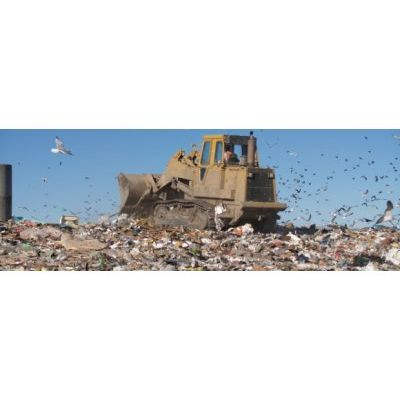
Disposal & Landfilling
This activity consists of the final disposal of waste or residuals from the aforementioned operations, through landfilling or incinerating without energy recovery, and as a result is not considered as a recycling or recovery operation. As plastic is wasted on landfills it is vital to propagate environmen-tal awareness and waste management as plastic is a valuable recyclable resource. In addition, more restrictive laws should be enforced which would lead to ban of landfilling.