


- Home
- Companies
- FIT Bearings
- Products
FIT Bearings products
Bearings
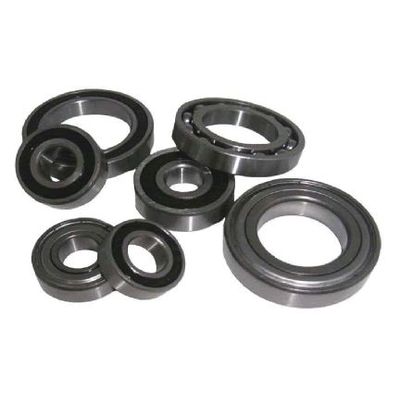
FIT Bearings - Radial Ball Bearings
Radial ball bearings are the most widely used type of bearings. They are simple in design and require little attention in operation. Primarily used to carry radial loads, they can also take considerable axial loads from both directions. When mounted on a shaft, they are capable of restricting the relative displacement of the shaft or housing within the axial clearance limit of the bearings.
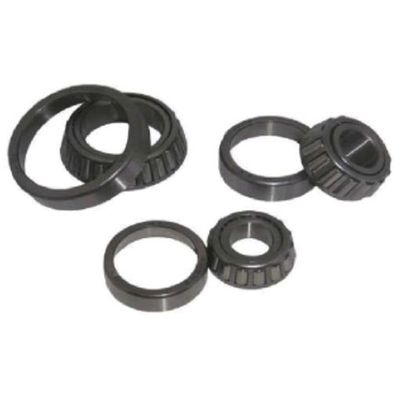
FIT Bearings Metric - Tapered Roller Bearings
Tapered roller bearings are used to carry combined axial and radial loads in which the radial load is predominant. These bearings are of separable design, i.e. the rollers retained by the cage, constituting an assembly with the inner ring, can be separated from the outer ring. The outer rings are interchangeable. The axial clearance can be slightly adjusted during mounting and operation. Single-row tapered roller bearings restrict the relative axial displacement of the shaft or housing in one direction. Any misalignment between shaft and housing should be avoided during mounting. Since an induced axial load will appear by applying a radial load when two tapered roller bearings are used on a spindle, they should be mounted `face-to-face` or `back-to-back` to cancel induced axial loads.
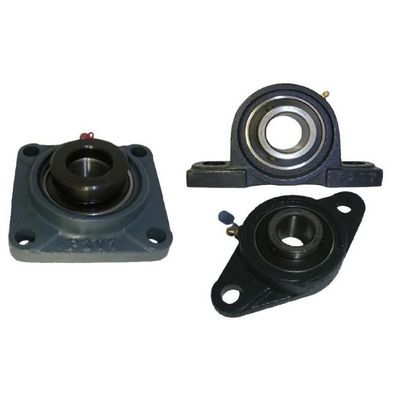
FIT Bearings - Mounted Units
FIT mounted units consist of a deep groove ball bearing insert and housing. Insert bearings are sold separate from housings for replacement purposes.
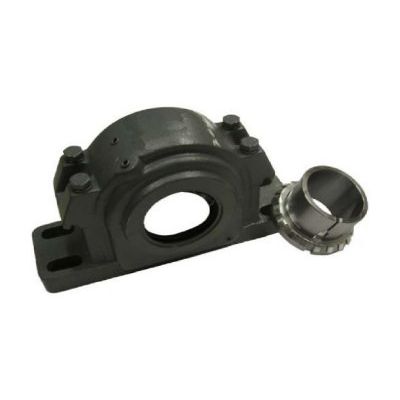
FIT Bearings - Model SAF500 Series - Split Housing Assemblies
Split Housing Assemblies (plumber blocks) are the most commonly used blocks in manufacturing, mining, and construction industries for mounting self-aligning ball or spherical roller bearings with adapter sleeves or cylindrical bores. They are designed for use on conveyors, dryers, road building equipment, run-out tables, fans, crushers, hammer mills, and many other high-precision, heavy duty applications. Split housings offer high load carrying capacities for radial or combination radial and thrust loads. They are also convenient for assembly and disassembly. The housing material can be cast or ductile iron, and come as either expansion or non-expansion. The main components consist of a 2-bolt or 4-bolt housing, an adapter sleeve assembly, a triple seal ring, and a locating ring.
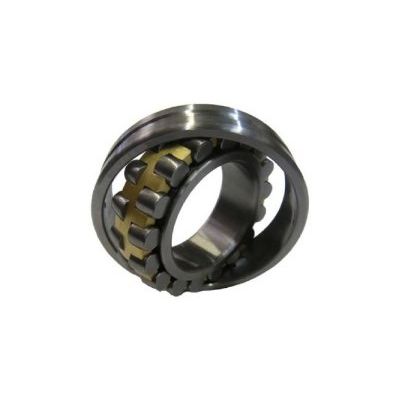
FIT Bearings - Model 22200 - Spherical Roller Bearings
Spherical roller bearings have two rows of spherical rollers running on two raceways in the inner ring, and a common spherical raceway in the outer ring. This construction allows the bearing to internally self-align and permits minor incoaxiality of the shaft relative to the housing. This type of bearing is designed mainly to take heavy radial loads. Although it can also take axial loads in both directions, it is not recommended for taking only axial loads. The relative axial displacement of the shaft to the housing is restricted to the axial clearance limit of the bearing.
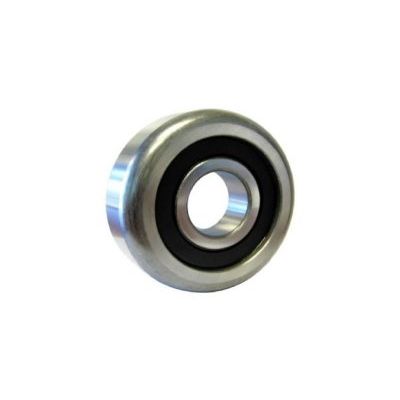
FIT Bearings - Mast Guide Bearings
Mast guide bearings are designed for heavy load carrying capacities in forklift applications. Heavy radial and thrust loads are experienced in the mast of a forklift. Mast guide bearings have heavy section outer rings, which act as rollers and guides for the carriage in the mast channels. This is designed to fit the contour of the mast channel, and helps to prevent misalignment. It also facilitates lifting and lowering of the mast. All mast guide bearings are lubricated and sealed to prevent contamination from getting into the roller elements and raceways.
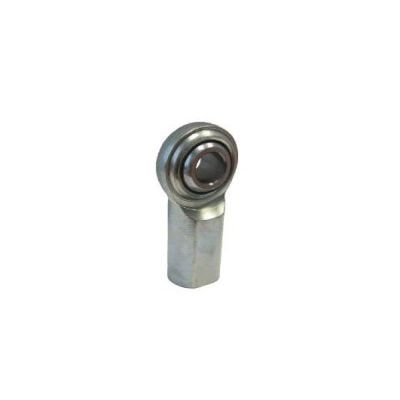
FIT Bearings - Model CM and CF Series - Rod Ends Bearings
Rod ends are used for linkage applications where a bearing must accommodate misalignment. They are available in both male and female threaded shanks, in left or right hand threads, and in self-lubricating or relubricating designs. There are three construction types: four piece, two piece, and cartridges. Grades consist of commercial, precision, and construction. Commercial rod ends provide low friction, smooth performance, and have a long dynamic life suitable for operations such as packaging and machine linkages. Precision rod ends are intended for linkage applications where significant misalignment is applied to the bearing. Construction rod ends feature a cost effective answer for high, reversing, or shock load applications.