


- Home
- Companies
- FLAIM Systems
- Training
FLAIM Systems training
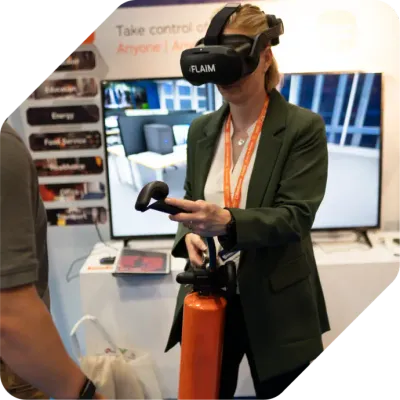
WSF - Immersive VR Fire Extinguisher Training
Workplace Safety - Fire offers an innovative approach to fire safety training through its immersive VR fire extinguisher training system. With over 60 scenarios tailored to various workplace environments, this system ensures effective training without the environmental or health hazards associated with live fire training. Designed for ease of use, it can be set up in less than two minutes, making it a practical solution for on-demand training. The system's portability allows for training at any location or time, irrespective of weather conditions. Integration with FLAIM's analytics platform, Capture, allows for real-time measurement of performance data, easing compliance and improving future training outcomes. Introduced in 2021 and continually upgraded, this comprehensive solution supports over 300 organizations worldwide, delivering cost-effective training while mitigating carbon emissions and enhancing safety protocols.
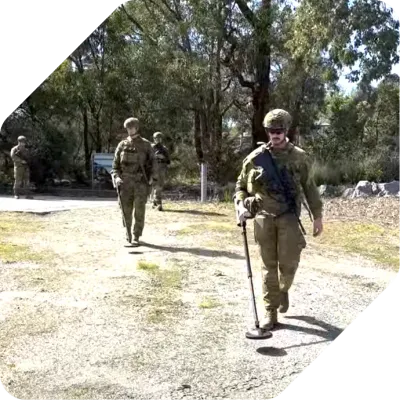
Sweeper - Immersive Explosive Hazard Awareness Training
The Sweeper system is an advanced solution designed to facilitate training in explosive hazard awareness and counter-mine operations, providing a versatile platform for both defense and humanitarian organizations. Utilizing cutting-edge immersive virtual reality, Sweeper replicates industry-standard mine detection equipment enabling realistic, high-fidelity training scenarios. Originally developed for the Australian Defence Force, it integrates seamlessly with any demining device to offer adaptable training across diverse environments. The system includes a haptic feedback mechanism that enhances the simulation of terrain interactions, while real-time performance monitoring via a Trainer tablet allows for customizable scenarios and data-driven After-Action Reviews. Its portable design is housed in two Pelican cases, making it ideal for on-demand training in various indoor settings, supporting frequent practice without the logistical complexities of traditional field exercises. Biometric data capture, such as heart rate and temperature, further evaluates trainee stress responses, offering a comprehensive training solution that minimizes risk while maximizing readiness.