


Fluid Handling Technology, S.A. products
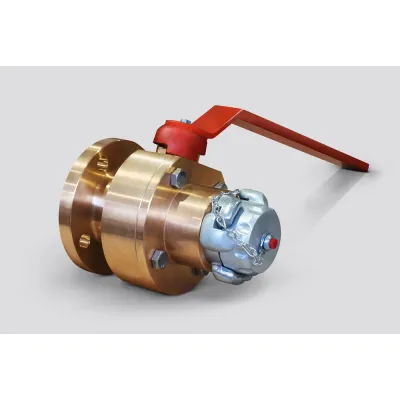
FHT Valves - Bronze Valves
Bronze is not a pure metal, but rather an alloy known as “copper-based” or “non-ferrous” and is composed mainly of copper and tin, although aluminium, lead, zinc or nickel can also be added to achieve performance and quality suitable for different industrial uses. Given the high durability of bronze, the use of bronze valves guarantees high profitability, as they have a very long service life, as well as minimal maintenance, which generates the consequent cost savings. Bronze can be recycled an almost unlimited number of times without losing its mechanical properties, it is a completely environmentally friendly material.
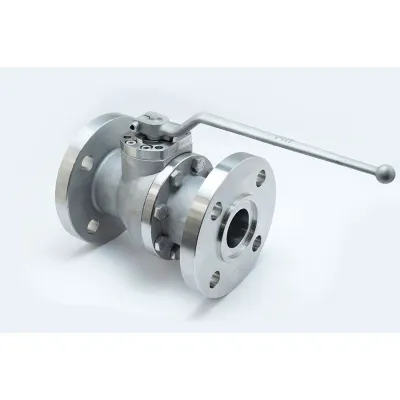
FHT Valves - Floating Soft-Seated Ball Valves
Floating soft-seated ball valves are designed for efficient fluid control in various industrial applications. They feature a ball operated by a shaft that rotates 90 degrees to either open or close the flow path. As the ball turns, flowing pressure pushes it against the downstream seat, forming a tight seal. Despite their efficacy in most applications, these valves may not seal as effectively at very low pressures due to potential seat wear, as insufficient pressure might not push the ball firmly against the downstream seat. The soft seats are made from thermoplastic non-metallic materials like PTFE, Nylon, and PEEK, suitable for operating temperatures below 270°C. These seats offer high sealing capabilities but are not ideal for corrosive, dirty, or abrasive media, which could cause seat degradation and leaks. While often less expensive, soft-seated valves are generally not intended for severe service compared to metal-seated valves, which are more robust but costlier.
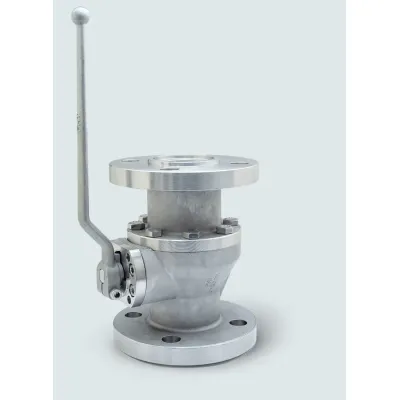
FHT Valves - Metal-Metal Floating Ball Valves
Metal-metal floating ball valves are designed to control fluid flow through a mechanism operated by a shaft linked to the ball, enabling a 90-degree rotation to open or close the valve. This design allows for a tight seal as the downstream flow pressure pushes the ball against the seat. However, in low-pressure environments, seat wear may impact sealing effectiveness, as there may be insufficient pressure to maintain a tight seal. Metal seats are suitable for corrosive environments and high temperatures, coping well with solid particulates. While metal-seated valves typically endure harsher conditions such as acids, high temperatures, and mechanical shock better than soft-seated valves, they can exhibit more leakage than soft-seated options. Commonly used materials include copper alloys for low-pressure applications and nickel-based alloys for corrosive mediums. These valves generally have a higher cost due to their robust material requirements.
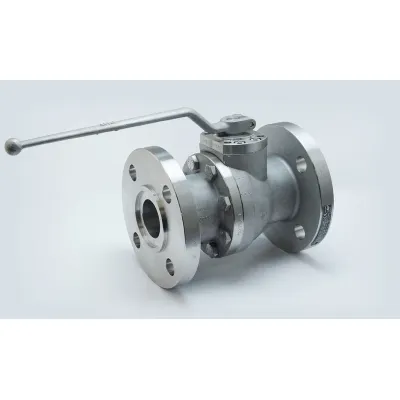
FHT Valves - Industrial Guided Ball Valves
Guided ball valves, also known as trunnion mounted ball valves, provide a unique advantage over floating ball valves by anchoring the ball with an additional shaft at the bottom of the shutter. This design prevents the ball from shifting out of its axis, allowing these valves to maintain efficient sealing on both ends simultaneously. These features make them particularly suitable for applications involving three or four-way valves and very low-pressure scenarios where the flow might be insufficient to force the ball against its downstream seat. Guided ball valves perform effectively in both low and high-pressure applications and require less torque than their floating counterparts. Soft seats, constructed from non-metallic thermoplastic materials such as PTFE, Nylon, and PEEK, operate efficiently up to temperatures below 270°C, though this varies depending on the sealing material. However, they are not ideal for corrosive, dirty, or abrasive media, which can degrade the material, leading to leaks.
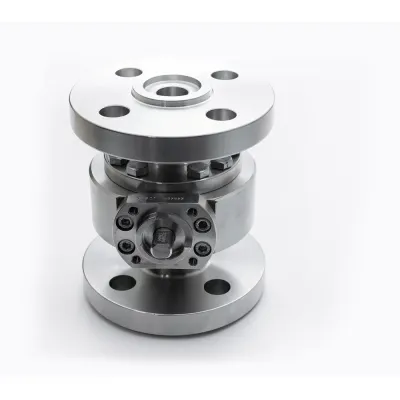
FHT Valves - Metal-Metal Guided Ball Valves for Industrial Applications
Guided ball valves in industrial applications are designed to offer improved stability through a second anchoring axis at the shutter's bottom, known as a trunnion. This design prevents the ball from deviating from its axis, ensuring a reliable seal on both sides, making it particularly effective for three and four-way valves, as well as applications with very low pressure where flow is insufficient to push the ball downstream. These metal-seated valves provide resilience in corrosive environments and high-temperature conditions, due to their material composition, like copper-based alloys for low pressure and nickel-based alloys for corrosive media. Despite metal seats potentially costing more and being more prone to leakage than soft seats, they outmatch soft-seated valves under harsh conditions like acids, high heat, abrasives, erosion, and corrosion. At FHT Valves, we offer an extensive range of guided ball valves with various seat configurations to meet challenging industrial needs.