


Friedrich Vollmer Feinmessgerätebau GmbH products
Strip Thickness
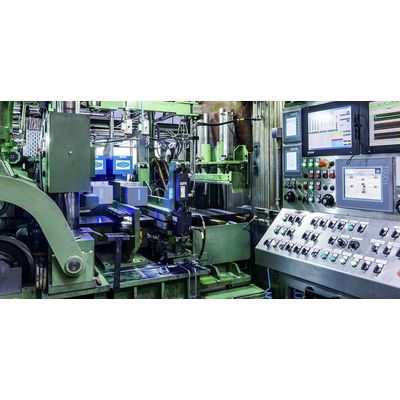
Vollmer - Model VTLG - Laser Optical Thickness Measuring System for Rolling Mills
The VTLG Laser Optical Thickness Measuring System, developed by Vollmer, is engineered for precise measurement of strip thickness in rolling mills, presenting a robust solution for industrial applications requiring high-precision and rapid processing. Capable of measuring at up to a remarkable precision of ±0.5 μm, the VTLG system operates under strenuous conditions, such as high strip temperatures up to 180°C and environments with dense rolling oil mist. Unlike other measurement methods, the VTLG system, based on laser triangulation technology, facilitates reliable data acquisition irrespective of alloy type. Major innovations include its compact measuring head and automatic air cleaning, ensuring accuracy and minimal maintenance. The system's ability to function near the roll gap introduces novel process control capacities, meeting demands in the cold rolling of high-strength strips and foil applications. With a throat depth up to 1,480 mm and a measurement resolution of 0.1 µm, it efficiently manages wide strips and variable thicknesses.
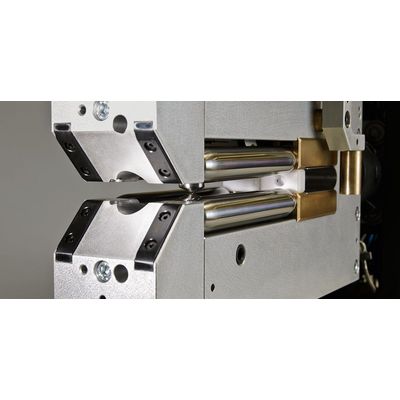
Vollmer - Model VBM / VBF - Tactile Thickness Measurement System for Strip Production
The tactile thickness measurement systems, including the VBM, VBS, and VBK series from Vollmer, are engineered to deliver high-precision thickness measurement across all phases of cold rolling for both thin foils and heavy plates. Operating under diverse conditions, these systems achieve measurement precision of up to ± 0.5 µm. They are suitable for use from annealing lines to rolling mills, as well as in finishing and processing lines and steel service centers. These gauges can handle thicknesses ranging from 0.005 to 19 mm, effectively measuring even on wavy strips by maintaining perpendicular alignment to the strip surface, thus minimizing angular errors. The tactile method involves precise transducers that measure the distance between sensors touching the upper and lower surfaces of the strip, with automatic zeroing capabilities ensured through the use of diamond-tipped crowned sensors.
Strip Shape
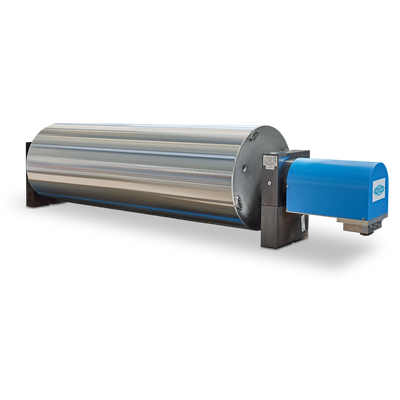
Vollmer BFI - Model VPMR - Shapemeter Rolls for Flatness Measurement
measurement for strip flatness, vital for ensuring the quality of metal production processes. These rolls replace existing deflector rolls in mill stands, and their homogeneous steel surface is adaptable, with diameters ranging from 200 to 600 mm. They are engineered for individual applications, allowing zoning widths above 17 mm and surface finishes of steel, tungsten carbide, plastic, or chrome. Integration with digital systems is facilitated through TCP/IP, enabling web-based control and monitoring across network devices. The BFI measuring rolls utilize piezoelectric pressure sensors placed under the surface, capturing strip tension distribution for reliable flatness evaluation. The design eliminates the need for slip rings, compressed air, or water, enhancing maintenance efficiency. This system is tailored for specialized challenges like wedge-shaped strips, ensuring accurate flatness measurements even under coiling-induced transversal stress.
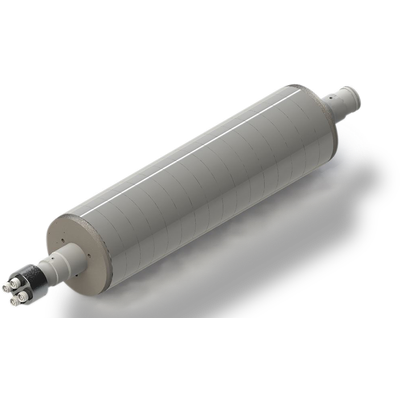
Vollmer - Segment Roll for Shape Measurement
Friedrich Vollmer Feinmessgerätebau GmbH has engineered segment rolls specifically targeted at shape measurement in stretch, bending, and levelling lines. The design incorporates outer rings on individual segment bodies that operate with remarkable smoothness, eliminating the need for auxiliary drives even when engaging with low strip tension and varying wrap angles. These segment rolls allow for continuous and highly precise shape measurement, with segment bodies available in widths of 33, 50, or 100 mm. Constructed with a coated outer ring, each segment is affixed to an inner base ring using ball bearings, which are directed by a ball bearing system along a rigid central axis. Each segment's axis is equipped with a force sensor leveraging strain gauge technology to monitor radial force in the strip within each measurement zone. The collected data is transferred to the flatness computer through connections like Profinet, TCP/IP, or analog and digital I/Os. These technical features ensure accurate communication with the system technology.