

FST GmbH products
Nitrogen Generators
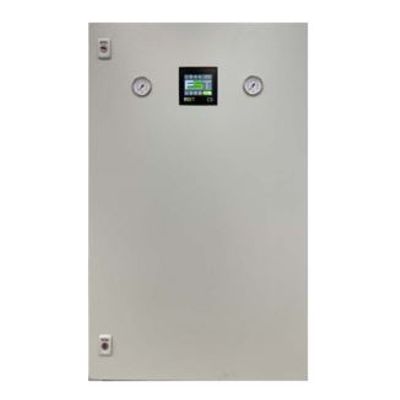
FST - Model GNM0,1-22 - Nitrogen Generator
Our nitrogen generator GNMO.1-22 works with membrane technology instead of pressure swing adsorption. Accordingly, the compact generator is well suited for the preparation of low volume flows. It is practical, easy to operate and almost maintenance-free because no reactive agents need to be replaced..
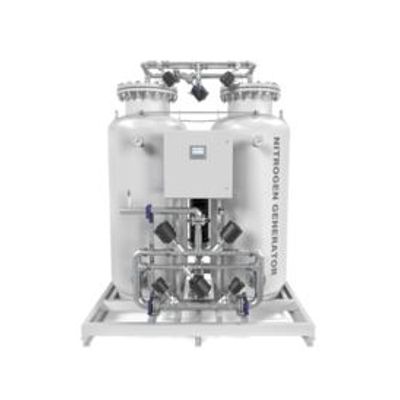
FST - Model GNA20-150 - Nitrogen Generator
Each nitrogen generator of the GNA20-150 series produces cost-effective and high-purity nitrogen quality of up to 99.9995 % through pressure swing adsorption. Thus, it provides an extremely low air factor compared to the competition. FST customers particularly appreciate our GNA20-150 nitrogen generators when they need higher volume flows and nitrogen quantities: for example, on oil tankers, in food preservation, or for pharmaceutical applications. In other words, wherever several applications are supplied with nitrogen at the same time.
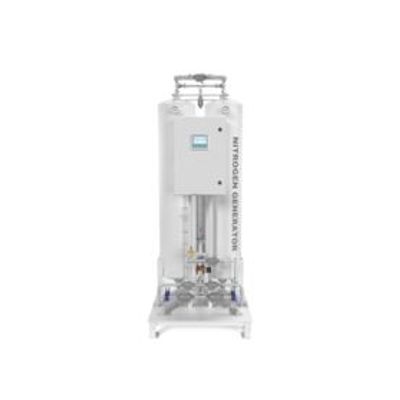
FST - Model GNA2-15 - Nitrogen Generators for Industrial and Laboratory Applications
FST GmbH offers specialized nitrogen generators utilizing advanced technologies for a diverse range of industrial and laboratory applications. The company provides generators employing two distinct methods: Pressure Swing Adsorption (PSA) and membrane technology. PSA models, such as the GNA series, support high-purity nitrogen production up to 99.9995% with efficient regeneration cycles, ideal for applications necessitating large volume flows such as laser cutting and food packaging. They are equipped to function at pressures of 7.5 to 10 bar and connect in accordance with volume flow requirements. The GNM series, utilizing membrane technology, caters to lower volume flows up to 99.5% purity, performing quietly and with minimal maintenance. This series is particularly effective in providing uniform nitrogen supply without load swings, fitting applications in specialized laboratory settings. The company's on-site nitrogen generation solutions offer cost benefits by eliminating supply chain dependences, cylinder storage issues, and adjusting to variable purity and volume needs, thus optimizing operational efficiency.