


Global Odor Control Technologies (GOC) products
Addition
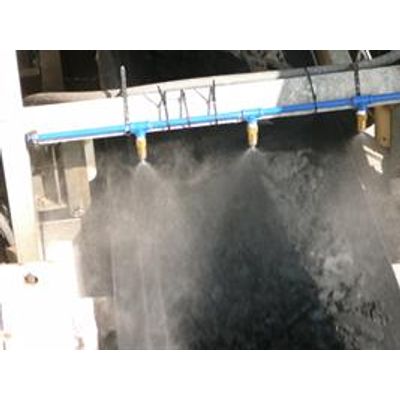
QuikSoil - Model 2600 - Amino Acids
2600 is a combination of amino acids, proteins, nucleic acids, intermediate metabolism products, complex glycosides, and selected minerals. This combination provides everything necessary for the metabolization of organic compounds. By increasing the reductive potential of the mass while maintaining good structure, 2600 promotes increased facultative proliferation throughout the interior of the substrate. Concurrently, aerobes, micro-aerophiles and existing facultative microbes utilize (by respiration {oxidation}) any molecular oxygen which approaches the interior strata of the substrate, yielding simple non odorous compounds and water. 2600 also provides sulphur reducing anaerobes with a preferential replacement for sulphates as a source of oxygen.

QuikSoil - Model 2300 - Amino Acids
QuikSoil® 2300 is a combination of amino acids, proteins, nucleic acids, intermediate metabolism products, complex glycosides, other organic acids, and selected minerals. 2300 is utilized instead of 2600 in situations where high nitrogen levels (above 2.2%) occur in the feedstock. Typically, sewage bio-solids, poultry manure, and certain types of food waste would utilize 2300 rather than 2600. 2300 immediately lowers the overall pH of the mass. This increases the availability of the mass to more strains of bacteria, and allows for increased growth rates and reproduction rates. 2300 also provides sulfur reducing anaerobes with a preferential replacement for sulfates as a source of oxygen.
QuikSoil - Model 2900 - Bio-Augmentation and Odorcontrol Product
QuikSoil 2900 is a bio-augmentation and odor control product useful in all municipal and private wastewater processing operations producing pressed or centrifuged bio-solids. QuikSoil® 2900 is helpful wherever bio-solids are decomposing intentionally or unintentionally. While QuikSoil® 2900 odes not eliminate bio-solids odors, it is reasonable to expect a 65% to 75% reduction in odor if the product is properly applied. It is also reasonable to expect decomposition of long chain odors capable of traveling great distances. This results in a localization of odor concerns in much smaller physical areas.