

Granimex W. Granops sp j. products
Water Treatment
Chlorate Removal
Chlorate is a derivative of chloride dioxide decomposition. Chlorine dioxide is gaining on popularity as an agent used for disinfection. It has strong bactericidal, virucidal and sporicidal properties. Chlorates are soluble in water and have oxidizing properties. Data on the effects of chlorates on human health are not sufficient to establish a permissible concentration value. However, it is recommended to reduce the concentration of chlorates in water.
Membrane Cleaning
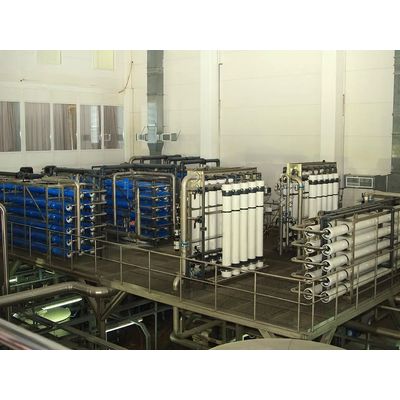
Membrane cleaning is an extremely important procedure if you want the water treatment process in your system to be smooth, quick and trouble-free. You should not expect that fouling will not occur just because you have provided the right operating conditions, pre-treated the membrane or have applied high quality anti-scaling products. All of these measures are definitely important, but they are not enough to prevent fouling, so in practice, you can only delay the process and only to a certain extent. What, on the other hand, is necessary for proper membrane operation? - It is regular cleaning. Why does fouling occur on the membrane surface? Fouling is the outcome of many factors: decreasing quality of so-called permeate, i.e. filtrate and, consequently, decreasing flow rate (stream), pressure changes (which have a direct impact on the efficiency of a reverse osmosis process) or fluctuations in salt level and temperature.
Waste Water Treatment
Waste Water Disinfection
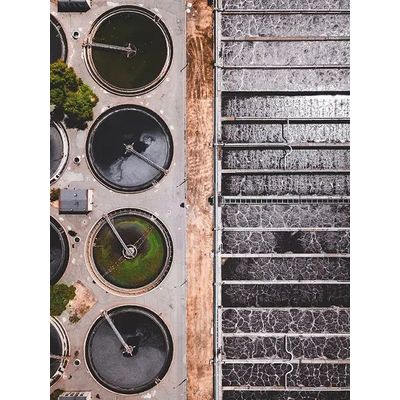
Wastewater treatment allows not only to improve its parameters, but also to reduce its impact on the environment. However, for this to become possible, it is necessary to use modern techniques and tools. Our company guarantees access to systems that will make your waste water unsafe. Disinfection can be carried out in several different methods, using mechanisms and processes adapted to individual customer needs. Our company provides delivery and installation of wastewater treatment plants, using ozone, chlorine, chlorine dioxide and hypochlorite.
Rotary Biological Treatment
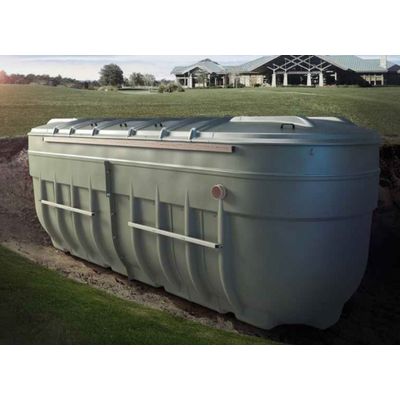
The rotary biological deposit allows for exceptionally effective and environmentally friendly removal of various contaminants. This type of treatment is possible thanks to BioDisc® system from Klargester (currently part of the international Kingspan Environmental group), which is based on four active treatment zones that “fit” into one tank. Thanks to such a construction, the method is not only highly effective, but also possible to apply in various conditions. The tank can be installed both inside and outside the building. It is not large, and its appearance does not interfere with the aesthetics of a place where it is located. The GRP tanks are characterized by high resistance to various environmental conditions – hence the high degree of versatility of their use.
Blowers for Wastewater Treatment Plants
Blowers are an indispensable tool for successful wastewater treatment. Thanks to such devices as pressure blowers, it is possible to pump air under appropriate pressure in order to optimize treatment (including aeration – e.g. of sewage and various types of tanks). Blowers allow compression of air and gases in a low-pressure manner. These devices operate both as compressors and vacuum pumps. They are also used to rinse filters in water treatment plants, or in desulphurization. Increasingly popular are modern blowers designed in a way that not only increases the efficiency of treatment, but also maximizes the safety of the entire process. These types of blowers are characterized by appropriately shaped rotors – these are called rotary blowers. Rotors with profiled gears make the blower extremely effective (thanks to higher speed and at the same time stability in operation) and quieter than traditional models.