

H2Olabcheck products
Drinking Water
Mains Water Quality Test
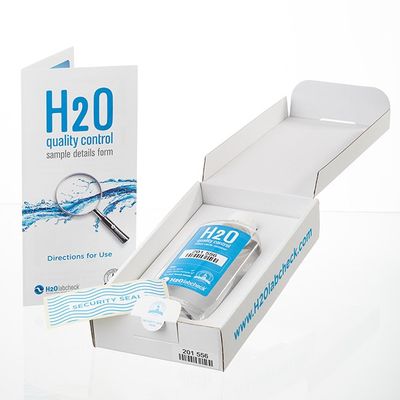
Fluoride is added to public water supplies in some countries to help reduce tooth decay. Chlorine is used as a disinfectant to remove pathogens in the water. However, after many studies involving the use of these substances, it has been found that ingestion of high dosages can cause harm to human health.
Essential Quality Check - Lab Sampling Kit For Well Water
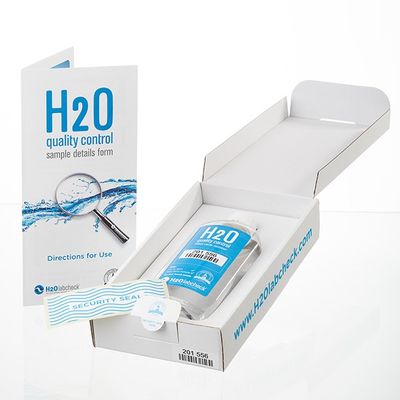
There are a number of key parameters that must be taken into account when assessing the quality and safety of drinking water intended for human consumption. Health authorities advise that microbiological testing should be performed every 12 months on private wells and chemical profiling every three years to mitigate the use of contaminated waters and causing damage to humans, soil and/or its distribution network. This analysis should consider parameters such as turbidity, sediment, odour, pH, alkalinity, dissolved solids, nitrates, iron, manganese, conductivity, hardness, and identification of the presence of bacterial ingress.
Wastewater
Final Effluent Compliance Test
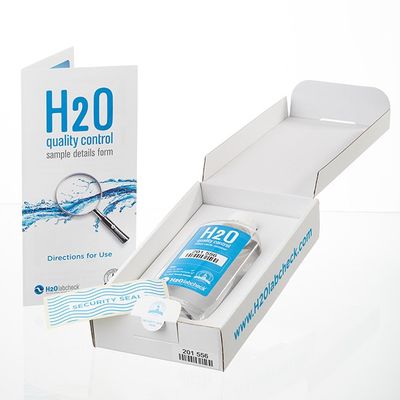
Industrial activity generates a large volume of effluent that will be discharged into the environment, it can be with previous treatment or without this. Each effluent has its own characteristic inherent to the process that it comes from and may contain the most varied chemical or biological substances, including biodegradable, polluting, toxic and pathogenic agents. An accurate analysis of the effluent must be carried out prior to its launch in order to avoid environmental damage and human health risks.
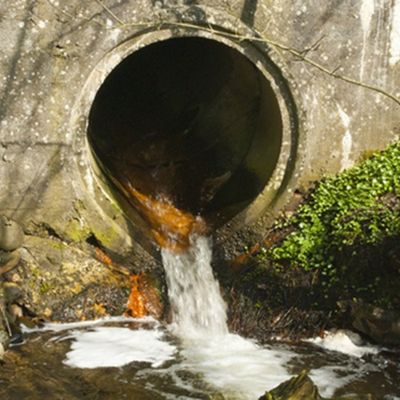
Community Wastewater scheme Compliance Test - Wastewater Testing
In relation to global water scarcity, water reuse or ecological right disposal, are current advantages due to new technologies. As water used in domestic activities contain traces of chemical and biological components, it must be treated so that it can be reused for garden irrigation and toilet flushing or be discharged without causing any damage to the environment. Therefore, for it to be possible to reuse or release this effluent, an efficient treatment must be performed in order to eliminate any contaminant agents. With the intention of evaluating the efficiency of this treatment, parameters should be analyzed, such as pH, turbidity, solids removal, BOD, COD and ammonia.
Industrial Process Water
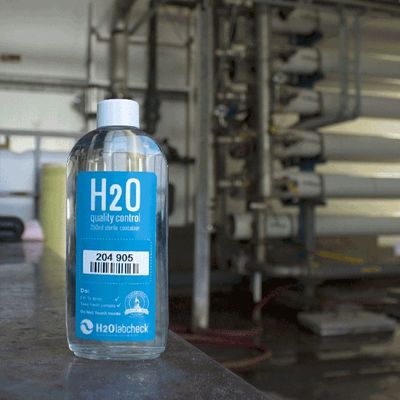
Industrial Reverse Osmosis Permeate Test
With water around the globe becoming scarce, water reuse from industrial processes is a current advantage due to new technologies. As water used in industrial systems contain traces of chemical components used in the process, it must be treated so that it can be reused in a new process. Then comes the new technology as forms of treatment increasingly efficient in water purification. Reverse Osmosis is an example of water purifier widely used by industries because of its practicality and efficiency. However, like any system, it is subject to errors and alterations that may occur due to saturation of the solution inside of the equipment or errors in the handling and use of this system. In this way, analysis of the water treated by the equipment must be performed periodically in order to verify the efficiency of the system.