
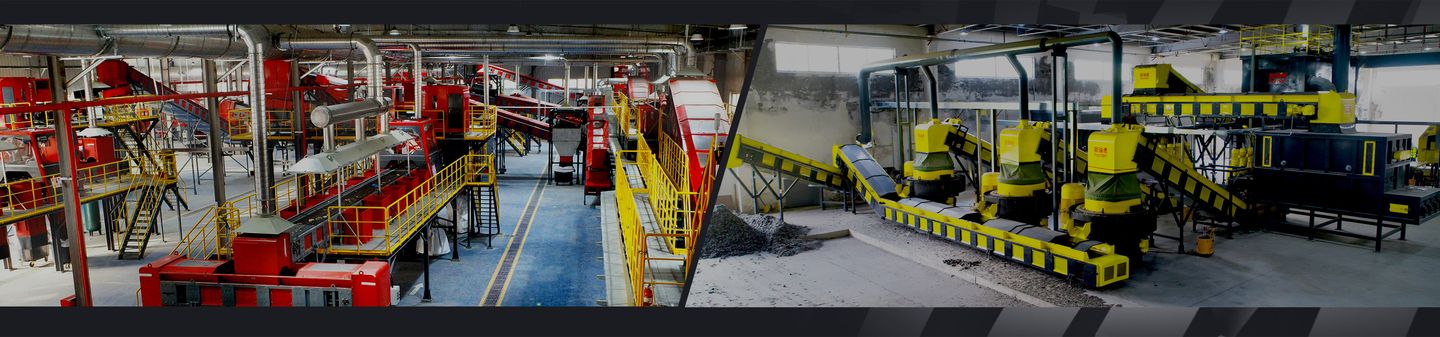

Harden Machinery Ltd. articles
In the field of RDF (Refuse-Derived Fuel) production, the selection of shredders directly impacts processing efficiency and fuel quality.
Based on the number of shafts and structural design, HARDEN’ s RDF shredders are primarily categorized into single-shaft, two-shaft, and four-shaft systems, each with distinct technical characteristics and application scenarios.
1. Single-Shaft Shredder: The "Precision Particle Size Controller"
HARDEN’ s si
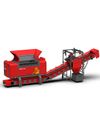
In the field of solid waste treatment, every technological breakthrough translates to higher resource recovery efficiency and a greener future.
Since its launch, the HARDEN One-Step Shredder has gained rapid recognition across industries—municipal solid waste, industrial scrap, textile waste, and more—thanks to its exceptional adaptability, high throughput, and lower cost-per-ton shredding performance.
To demonstrate its capabilities, HARDEN
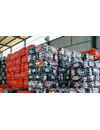
Using discarded textiles as alternative fuel in cement kilns plays a vital role in resource conservation and carbon reduction.
Waste textiles have uniform composition and low impurity content, making them ideal for conversion into SRF/RDF (Solid Recovered Fuel/Refuse-Derived Fuel) with a typical particle size of 50–300 mm.
Why Waste Textiles?
High Calorific Value = Cost Savings
Baled for easy transport & sale
Dry-base
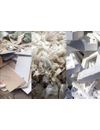
Construction and demolition waste (C&S waste) contains 30%-40% lightweight combustibles (wood, plastics, textiles, etc.).
Direct landfilling or incineration not only occupies land and pollutes the environment but also wastes valuable energy resources.
1. Construction and Demolition Waste
C&S waste is complex in composition. Beyond heavy materials like concrete and masonry, it includes significant amounts of lightweight comb
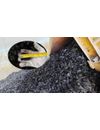
Did You Know? Black Pollution Is Devouring Our Land.
Take China as an example: over 200 million end-of-life tires are generated annually, weighing as much as 3 million tons of steel! If these "black pollutants" are landfilled, they take 200 years to decompose naturally.
When stockpiled outdoors, tire fires release highly toxic substances like benzene and dioxins, contaminating air and groundwater.
But now, Harden Machinery’s TDF (Tire-Derived Fuel) production tec
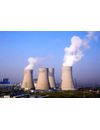
From an energy structure perspective, Refuse Derived Fuels (RDF)—a promising renewable energy source—have emerged as the fourth-largest energy option for industrial kilns (e.g., cement kilns), ranking only behind coal, petroleum, and natural gas.
As a high-quality and eco-friendly recycled resource, alternative fuels are processed from solid waste.
They offer combustion efficiency comparable to fossil fuels but with significantly lower carbon emissions.
<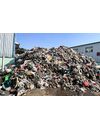
What is Non-Hazardous Treatment of Municipal Solid Waste (MSW)?
After proper classification, most non-recyclable municipal solid waste undergoes non-hazardous treatment through methods such as landfilling and incineration.
What is Resource Recovery from Municipal Solid Waste?
Mixed municipal solid waste contains a significant amount of recyclable materials, such as beverage bottles, metals, and cardboard, which can be recovered and reused.
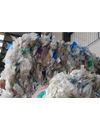
Data from the UN Environment Programme reveals that one million plastic bottles are sold every minute worldwide, while approximately 40 million tons of plastic waste enter the oceans annually, equivalent to dumping a truckload of garbage into the sea every minute. Plastic pollution has become a global environmental crisis!
I. The Challenges of Plastic Recycling
Plastic recycling is often termed the "most complex waste sorting challenge."
Material c
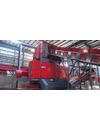
"There is no waste, only misplaced resources"—and the single-shaft shredder is the "ferryman" that transforms waste into value.
As the global solid waste management system faces a "capacity crisis," single-shaft shredders, with their precision shredding capabilities, turn waste into fuel, revenue, and carbon reduction KPI, making them the undisputed MVP of the "solid waste transformation revolution"!
1. Solid Waste: The "Black GDP" of Natio
Bulky waste refers to discarded items generated by individuals and organizations in their daily life that weigh over 5 kilograms, have a volume exceeding 0.2 cubic meters, or are longer than 1 meter.
These items are characterized by their large size, strong integrity, and the need for disassembly before they can be recycled or safely disposed of.
Examples include sofas, mattresses, tables, chairs, wardrobes, bookcases, and other discarded furnitu