


- Home
- Companies
- HRS Heat Exchangers Ltd.
- Applications
HRS Heat Exchangers Ltd. applications
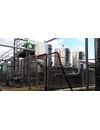
The heating and concentration of wastewater streams and sludge are an essential process in many industries, not just water treatment. Pasteurisation of sewage sludge and digestate (biosolids) to make them biologically safe for further processing, disposal or use is a key process. Two common issues with some other sludge pasteurisation systems are their inherent inefficiency and fouling of the heat exchanger tubes due to the nature of the sludge or wastewater material. HRS Heat Exchangers overcomes the fouling issues by using its corrugated tube in tube technology as found in our DTI Series, together with cleaning-in-process (CIP) technology where necessary.

Thermal hydrolysis is a process where the long chain molecules which form cellulose and hemicellulose are broken apart using heat in order to obtain the constituent parts of the molecules. This makes it an economic pre-treatment for biomass being used to produce bioethanol or biogas. Given that cellulosic biomass is plentiful, it has attracted interest as a bioenergy feedstock which does not compete with cultivated food crops, avoiding potential negative price effects that the use of such crops for bioenergy may cause. The technology creates the potential to use certain industrial wastes to generate energy.
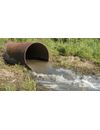
Waste water can take many forms, from relatively clean water which has been used for heating, cooling or minor processing, through to heavily contaminated water and sludge generated by industrial processes and cleaning activities. The recovery of valuable materials from waste streams, together with the treatment of fresh water sources to prevent product or equipment contamination are key processes which can help make the difference between economic success and failure.

Process water covers a wide range of uses, including general heating and cooling applications, cleaning and transportation, boiler feed water, engine cooling and even chemical and product dilution and suspension. While softer water is generally better to avoid scaling problems, the exact parameters, such as oxygen and carbon content, conductivity and purity will depend both on the water source (for example whether from mains water, private supply or recovered from elsewhere in the process) and its use.