


- Home
- Companies
- In-Situ Process
- Articles
In-Situ Process articles
Overview
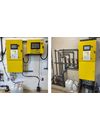
In 2022, the McDowell Creek Water Resource Recovery Facility (WRRF) sought to update ChemScan equipment serving the plant since 2007. Two ChemScan sequencers were installed to monitor the plant’s five-stage BNR process, testing for nitrite, nitrate, ammonia and phosphorous from primary clarifier influent through tertiary filter effluent.
Challenge
The McDowell Creek Water Resource Recovery Facility, part of Charlotte Water, expanded from a pe
In-Situ

Overview
A few years ago, the West Harris County Regional Water Authority (WHCRWA) sought replacement analyzers to reduce maintenance and run retreatment operations more efficiently. An upcoming expansion project adding two new pump stations to the district by 2025 makes reliable measurements even more important, as WHCRWA will be responsible for blending water from multiple sources while still producing consistent residuals.
Challenge
ANNMARIE DELFINO
Simplify DO Monitoring with Flexible, Low-Maintenance Sensors
There’s no bigger priority in wastewater treatment than monitoring dissolved oxygen–and making sure measurements are accurate.
Inaccurate DO measurements are disastrous for process and budget. Pump too little oxygen and the organisms converting ammonia can die, putting the whole process on hold until you can get bacteria back in your tanks. That can take days.
This can be avoided by
ANNMARIE DELFINO - In-Situ
Overview
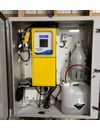
After studies indicated a need for additional phosphorous treatment, this plant placed a colorimetric water analyzer at the point of effluent to inform chemical dosing.
Challenge
The wastewater treatment plant for the City of Madison, IN, averages about two million gallons per day and oversees about 50 lift stations, for a population of approximately 16,000. A staff of 12 handles plant operations and laboratory analysis of dai
In-Situ Process
The Howard F. Curren Advanced Wastewater Treatment Plant is one of the largest nitrification/denitrification filter plants in the world with a design capacity of 96 million gallons per day average daily flow. It serves about 110,000 accounts in the City of Tampa and portions of Hillsborough County, Fla. Over the years, the quality of its treated effluent has been frequently cited as the primary factor behind the dramatic improvements in Tampa Bay`s water quality and the return of its sea gras
Dave Marsh
Pasco County, Florida Water Utilities serves its customers with water from its 58 permitted wells blended with the water supplied by its large regional supplier, Tampa Bay Water. In 2002 Tampa Bay Water converted to monochloramine disinfection because of its advantages over free residual chlorine. Monochloramine is more stable and better extends the disinfectant residual throughout the distribution system. It also has been shown to reduce the formation of trihalomethanes and halogenic acetic
Dave Marsh
In 1994, the Bonnybrook Wastewater Treatment Plant in Calgary, Alta., completed the first phase of an upgrade to biological nutrient removal (BNR) after several years of testing.
Bonnybrook was not the first treatment plant to upgrade bioreactors for nutrient removal: Other communities had struggled with the technology. Bonnybrook operators determined that real-time information on final effluent quality was important to the BNR processes and installed online process analyzers to pr
Dave Marsh
Meeting very stringent total phosphorous requirements is a challenge for a treatment plant that is receiving wastewater from a dairy process. With a total phosphorous limit less than 100 ppb, a reliable, precise, highly accurate ortho-phosphorous measurement is required to monitor and control the tertiary phosphorous removal process. Small town plants in the upper Midwest commonly encounter this problem.
The existing analyzer at one such plant, provided by the filter manufacturer,
Scott Kahle
Problem:
The wastewater plants in Clarkson and Guelph, Ontario use chlorine for disinfection but have severe limits on the concentration of chlorine residual that can be discharged. The receiving stream has limited capacity and is populated by aquatic life sensitive to chlorine. The usual approach to this problem is to feed sulfite in sufficient concentration to de-chlorinate the effluent. However, sulfite is an oxygen scavenger, and large residuals can result in r
Bernie Beemster
The population of Hillsborough County, Florida has doubled since the Valrico advanced wastewater treatment plant (AWTP) was built in 1990 to treat the sewage of several small communities west of the City of Tampa. When it began operation, the Valrico AWTP capacity was only 4 MGD; small when compared to Tampa’s 96 MGD Howard F. Curren AWTP located not far to the east. But Valrico serves as a very important link in the chain of WWTPs treating the county’s sewage while protecting Flo
Dave Marsh;Dave Marsh