


International Water Management Institute (IWMI) articles
Building resilience to climate change and disasters requires bottom-up, community-led response.
Advocating for inclusive resilience to disaster requires sustained collaboration at local and national level, between communities, humanitarian/development actors, and government authorities. This message was reiterated by speakers marking the International Day for Disaster Risk Reduction (DRR) 2023, a joint initiative of the Disaster Management Centre, the International Water
Tania Perera

On World Food Day, a look at the role of water for more resilient and sustainable food systems.
Water is essential for all life on earth and is central to the healthy functioning and sustainability of the Earth’s ecosystems. But what about the profound impact of water on our food systems?
The Food and Agriculture Organization highlights that 3.2
Niroshini Fernando
Drought struck the North, North Central and Eastern Provinces of Sri Lanka this August and September generating cascading consequences for the entire island. Drought mapping technology and anticipatory action plans could help to manage disaster risk and mitigate the damage.
Victoria Blymier
Enhancing disaster preparedness and building resilience in fragile settings requires fostering a deeper understanding of the complexities involved.
Floods, landslides, cyclones, droughts, and heat waves are just a number of rapid and slow-onset disasters that are becoming increasingly prevalent as a result of climate change. The vulnerability of both human and natural
Sandra Ruckstuhl
In 2022, nearly 800 million people faced hunger. This figure has been increasing slowly in the last decade and is likely to continue to rise. Meanwhile, an estimated 13 percent of food is lost as it moves along the supply chain from the producer to the consumer, with another 17 per cent lost at the retail and co
Tania Perera
As Europe swelters in unprecedented summer heat, water stress is a major and growing concern. The same is true for many places across the globe. The need for more water storage is obvious but simply building more dams is not the solution.
Growing popu
Matthew McCartney
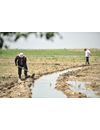
The Central and West Asia and North Africa (CWANA) region is highly vulnerable to the impacts of climate change. The agricultural sector is particularly susceptible, employing 50–60% of the labor force and contributing significantly to the region’s socio-economic development. The CWANA region is already experiencing more frequent – and intense – droughts and heat waves. These higher temperatures and changes in precipitation patterns could reduce crop yields, increase t
Zafar Gafurov;Oyture Anarbekov;Maha Al-Zubi
The Zambezi River Basin (ZRB) in southern Africa connects eight riparian countries-Angola, Botswana, Malawi, Mozambique, Namibia, Tanzania, Zambia, and Zimbabwe. The population there mostly reside ruraly, and over 80 percent of agriculture is attributed to smallholder farmers facing the brunt of the climate crisis. Di
Greenwell Matchaya;Patience Mukuyu;Nilu Rajapakse
Currently, 1.42 billion people live in high or extremely high water-vulnerable areas. Water security is deeply intertwined with climate change, and without immediate and bold action, water availability will worsen. With a growing population, global water demand is projected to increase by 20–30% per year by 2050, which could leave even more people water insecure.
Populations at the highest risk of future water insecurity are in the Global South. This is due to complex hydrology,
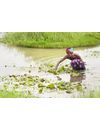
Wetlands are an indispensable part of our environment that supports life on Earth. Wetlands support diverse livelihoods and provide us other resources such as water, food, building materials, even the bases for traditional belief systems. These services globally are estimated to be worth the equivalent of over US$47 trillion dollars a year (Davidson et al. 2019). Moreover, despite accounting for a mere 6% of the planet’s land surface, 40% of all plant and animal species spend all or par
Sanjiv de Silva;Chaturangi Wickramaratne;Deepa Joshi;Matthew McCartney;Priyanie Amerasinghe;Chris Dickens;Radheeka Jirasinha