

Intrinsyx Environmental articles
ABSTRACT:Endophytes have been isolated from a large diversity of plants and have beenshown to enhance the remediation efficiency of plants, but little information is available on theinfluence of endophytic bacteria on phytoremediation of widespread environmentalcontaminants such as polycyclic aromatic hydrocarbons (PAHs). In this study we selected anaturally occurring endophyte for its combined ability to colonize plant roots and degradephenanthrene in vitro. Inoculation of two different will
Zareen Khan;David Roman;Trent Kintz;May delas Alas;Raymond Yap;Sharon Doty
LINCOLN, Nebraska (June 14, 2021) – The Arbor Day Foundation and Intrinsyx Environmental are partnering to launch a remediation program to use trees and plants to clean up contaminated land, which is a process known as phytoremediation.
"We have always seen trees as a solution to the most pressing issues we face, and we`re excited to explore trees as a solution for industrial-scale contamination that can happen in our comm
Jeff Salem
Intrinsyx Environmental was contracted to implement its phytoremediation solutions at a former manufacturing facility with very high concentrations of TCE, DCE, and vinyl chloride. Intrinsyx performed a site assessment and came up with a systems design of strategic planting locations to exert hydrological control over the plume. The prime contractor drilled bore holes through soil, concrete, and asphalt, allowing Intrinsyx scientists and technicians to plant 600 hybrid
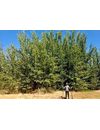
Working with NASA-Ames Environmental Remediation Group and the EPA, this site was our first field deployment of Endophyte Assisted Phytoremediation, at one of the region’s largest Superfund sites with TCE groundwater contamination. Intrinsyx planted 300 hybrid poplar trees as 12-inch cuttings. Within a year, the benefits of using our PDN3 bacterial endophyte to inoculate trees were visible, exhibiting a TCE tolerance phenotype. By using phyto-forensics sampling o
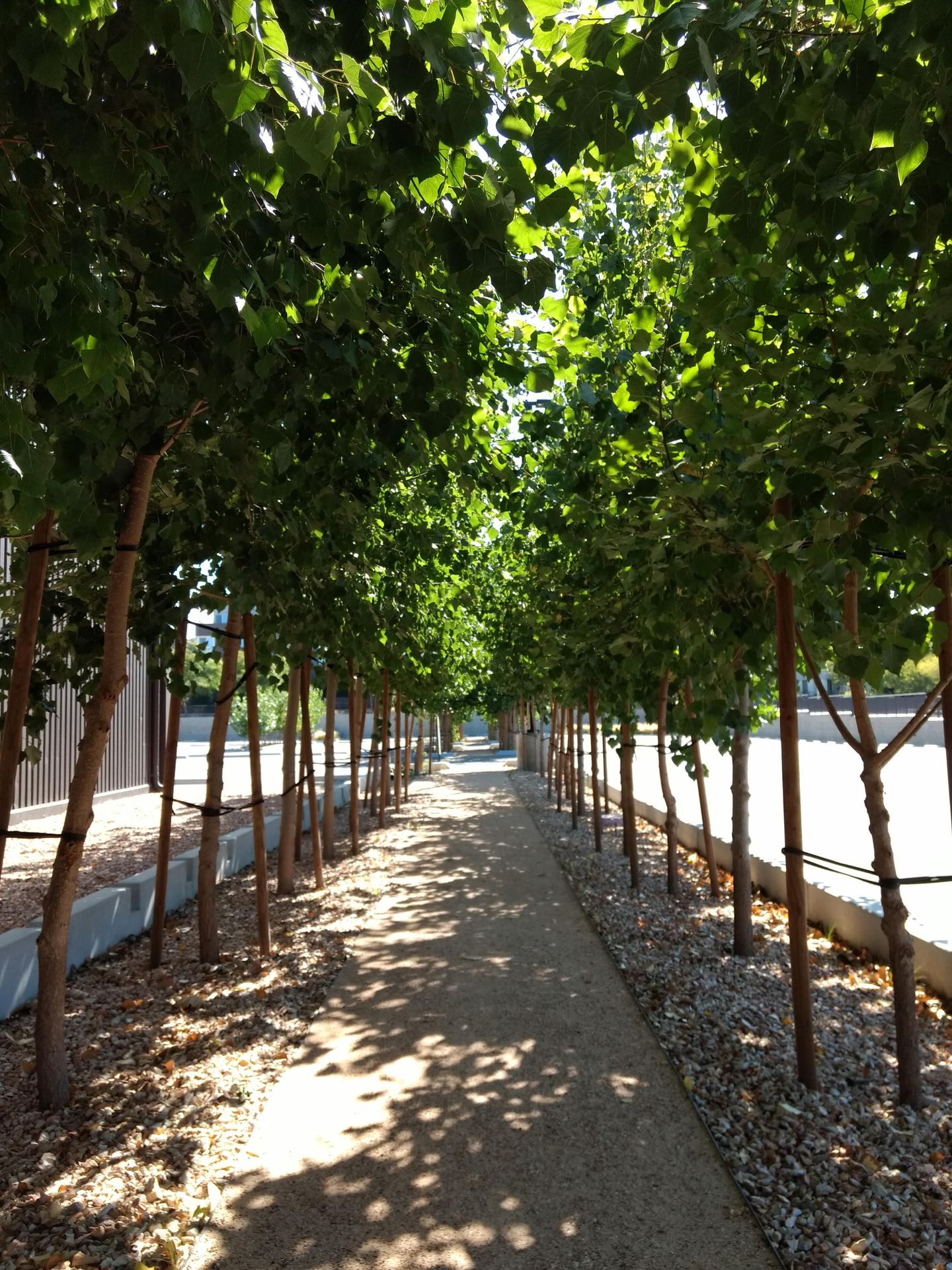
In 2015, Intrinsyx was retained by a Fortune 100 client with a campus being developed (late 2018 opening) at a highly contaminated former aerospace manufacturing facility. We worked with the client’s Environmental Health & Safety team, their architectural firm, their landscaping firm, as well as state and federal regulators. We developed a tailored planting scheme for their campus using our specialized trees inoculated with pollutant-degrading microbes that c
The site was a petroleum tank farm from the early half of the 20th century. Contaminants on-site include petroleum hydrocarbons, benzene and ethylbenzene, and PAHs naphthalene and 2-methylnapthalene. Most contaminants are in subsurface and groundwater, with the exception of PAHs that extend from the surface to groundwater.
Phase A: Engineering firm attempted phytoremediation using un-inoculated poplar trees. Tree survival rate ~30%. Intrinsyx was brought on 1 year into the project and performed an endophyte root drench on the poplars. Endophyte inoculated poplars had a 98% survival rate.
Trees that are used to clean contaminated soil often die from the toxins. Microbes could keep those trees healthy—offering a low-cost, low-energy way to clean hazardous sites across the U.S.
In 1980, a federal law identified the most hazardous sites around the United States, those that contained toxic contaminants in urgent need of cleanup. These “Superfund sites,” named for the
Talib Visram
The Arbor Day Foundation and Intrinsyx Environmental have announced a partnership to launch a phytoremediation program to use trees and plants to clean up contaminated land in cities and towns.
“We have always seen trees as a solution to the most pressing issues we face, and we’re excited to explore trees as a solution for industrial-scale contamination that can happen in our communities,” said Dan Lambe, president of the Arbor Day Foundation. “By partnering wi
Michelle M. Havich