


- Home
- Companies
- ION Science Ltd.
- Articles
ION Science Ltd. articles
When detecting benzene, Titan 2 has advantages over a

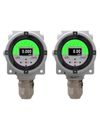
ION Science has launched a new, dramatically upgraded version of Titan, maintaining its position as the only fixed benzene-specific monitor in the world; Titan 2.
In accordance with recent legislation changes, Titan 2 offers enhanced stability and sensitivity, supporting ION’s continued mission of protecting lives and preserving the environment.
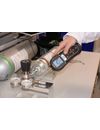
NEW Gas Leak Detector is Highly Sensitive
ION Science has announced the launch of the new Panther gas leak detector, featuring a host of new features and twice the sensitivity of its predecessor, the GasCheck G.
The first-ever ‘GasCheck’ was launched in 1990, offering industrial users the ability to detect leaks of gases such as hydrogen and helium. Later, more advanced versions were developed with new features such a

What is the Offer?
For a limited time, ION Science are offering a trade in offer for old PID instruments. Trade in your old PID instrument and receive a FREE PPB sensitivity on your next Tiger XT order!
The European Commission have announced a proposal to introduce their first-ever workplace exposure limit for Dissocyanates.
Diisocyanates describe various chemicals that are often grouped based on their common properties, and which can cause respiratory diseases like asthma. The Commission’s impact as

Health and Safety Executive release safety alert on exposure risks to diacetyl vapour (2,3 butanedione)
What is Diacetyl?
Diacetyl (IUPAC systematic name: 2,3 butanedione CAS: 431-03-8) is a by-product of coffee roasting that is often used as an additive in food products or a flavouring, due to its strong buttery taste. Heating diacetyl above certain temperatures significantly increases airbo
The ARA single gas detection series is a cost-effective, personal detector with 24 months of continuous operation. This wearable gas de

Exposure limits and worker safety: Choosing the right personal or portable gas detector
Worker health and safety laws have come a long way in recent years. Even in the last few decades introductions of PPE (personal protective equipment), safer working conditions, and limits on exposure to dangerous chemicals and gases have become commonplace. A key part of being able to ensure these safety regulations are being met is through accurate and regular gas monitoring. ION Sci