


- Home
- Companies
- ITEA S.p.A.
- Products
ITEA S.p.A. products
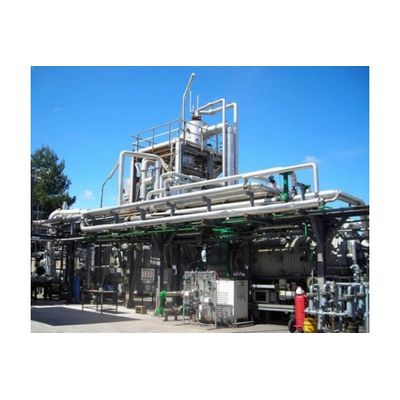
ITEA - Isotherm Plant
Normally when speaking of the capacity of a certain plant one speaks in terms of quantity treated or worked, because each plant has its own specific product whose characteristics change within well defined limits. One of the most significant advantages of the Isotherm plant lies in its capacity to treat, contemporaneously or at different times, different materials, also materials very different, one from the other, physically and chemically.
ITEA - Zero Emission Coal
Coal is one of the most used fuels in the world for the production of electricity, both for its low cost and for its wide distribution in the world. The coal usually used by plants is only a small part of the coal in the world (the most expensive fraction), since there are large quantities of low ranking coal, at lower cost, which cannot be exploited for its characteristics (high content of ash, high moisture, mercury and sulphur, etc).
ITEA - Oxygen Sources for Isotherm Process
Oxygen: the Isotherm process foresees the use of technical oxygen and it’s not necessarily high purity cryogenic oxygen; the oxygen can come from various sources, depending on plant size and location:
ITEA - Fumes and Heavy Metals Treatment Technology
The fumes produced in “flameless” combustion are very pure, and consist essentially of CO2 and water vapour; however if the treated material contains halogens, (Clorine, etc.) or sulphur, the fumes are acidic because of the sulphur hydride or hydrochloric acid; in this case treatment is carried out in accordance with simple traditional techniques. Once the acidic components have been eliminated the water is condensed and the fumes, at high CO2 concentration, are available for possible industrial use.
ITEA - Coalescence Technology for Waste Management
A great part of fuels contain non-combustible ashes, and for low ranking fuels and wastes this non-combustible fraction can become quite relevant; the traditional combustion of these fuels (in reality not all can be used in traditional processes) produces, in any case, slag that in small part accumulates at the bottom of the boiler (bottom ash) while almost all is carried away by the fumes (fly ash) from which it must later be separated out. The produced slag contains carbon, is not inert (if treated with an even slightly acidic solution it releases heavy metals) and must be treated as waste; the cost of its treatment and disposal is a function of its characteristics and of the regulations in force in a country, but in any case such slag cannot be recycled to productive uses unless further treatment processes are carried out.
ITEA - Model Pwr - Isotherm Solid Treatment Technology
The Isotherm Pwr process is able to treat any material (liquid, solid or gas), which is feed into the reactor maintained under pressure; for gases and/or liquids (also with an high concentrations of suspended solids) , the introduction into the reactor does not present any particular problems (normal pumps are sufficient). Solids are introduced into the reactor in an aqueous suspension, the size of the solid particles being in the order of millimetres, a condition that calls for pre-grinding (but micronization is not necessary).
ITEA - Slag Treatment Solutions for Ash Recycling
A great part of fuels contain non-combustible ashes, and for low ranking fuels and wastes this non-combustible fraction can become quite relevant; the traditional combustion of these fuels (in reality not all can be used in traditional processes) produces, in any case, slag that in small part accumulates at the bottom of the boiler (bottom ash) while almost all is carried away by the fumes (fly ash) from which it must later be separated out. The produced slag contains carbon, is not inert (if treated with an even slightly acidic solution it releases heavy metals) and must be treated as waste; the cost of its treatment and disposal is a function of its characteristics and of the regulations in force in a country, but in any case such slag cannot be recycled to productive uses unless further treatment processes are carried out.