


Item Software software
ITEM QT Software
The latest release from ITEM Software is an extraordinary collection of new capabilities that provides a customizable, cross-platform, multi-user, open frame-work. Built on proven and recognized analysis engines, ITEM QT® (iQT®) is a revolutionary approach to reliability, safety, and risk analysis software tools. With iQT, you are no longer limited by the technology choices of software vendors or chained to infrastructure requirements of their products. Continue reading to learn more about the iQT design that provides a framework to suit all of your needs.
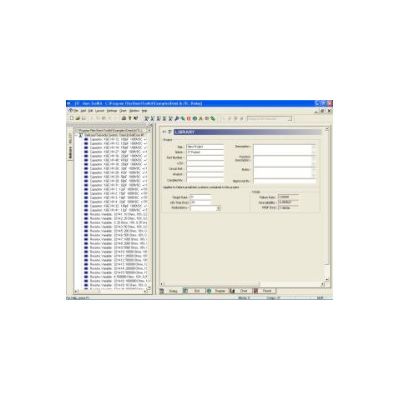
ITEM ToolKit - Component Libraries Software
ITEM ToolKit includes comprehensive libraries for specific applications as part of our standard features. They include thousands of parts, with associated data parameters that will save time and reduce costs. Library System files contain information regarding blocks, linked blocks and components, the same as regular System files. These system files are internal to ITEM ToolKit and are saved under the Library Project file of the same analysis type.
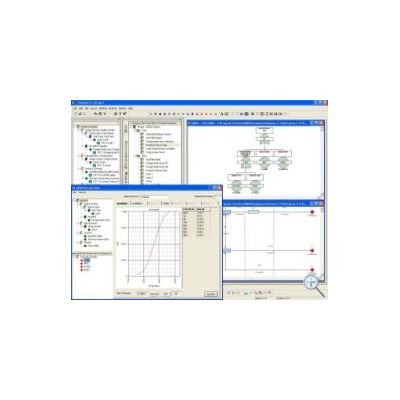
ITEM - Quantitative Risk Assessment System (QRAS)
Understanding risk and having the right strategies in place when an incident occurs is becoming more evident and essential. More and more, organizations are faced with the need to measure and reduce their risks. A successful and effective approach to risk management critically depends on the ability to answer key questions.
ITEM ToolKit
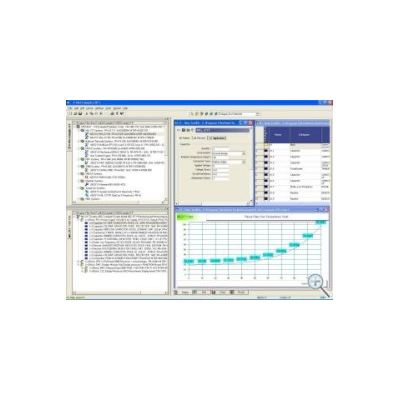
ITEM - Model MIL-HDBK-217F - Electronic Reliability Prediction Software
The MIL-HDBK-217 Module of ITEM ToolKit is a powerful reliability prediction program based on the internationally recognized method of calculating electronic equipment reliability defined in MIL-HDBK-217 (published by the US Department of Defense). This standard uses a series of models for various categories of electronic, electrical and electro-mechanical components to predict failure rates that are affected by environmental conditions, quality levels, stress conditions and various other parameters. These models are fully detailed within MIL-HDBK-217.
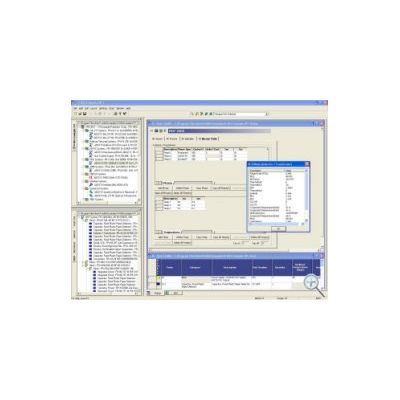
ITEM - Model IEC 62380 - Electronic Reliability Prediction
The IEC 62380 module supports reliability prediction methods based on the latest European Reliability Prediction Standard. Originally, a French Standard published by the Union Technique de L`Electricite (UTE, July 2000 - RDF). The standard has evolved and become the European Standard for Reliability Prediction (IEC 62380). Its unique approach and methodology has gained worldwide recognition. IEC 62380 is a significant step forward in reliability prediction when compared to older reliability standards.
ITEM - Telcordia Electronic Prediction
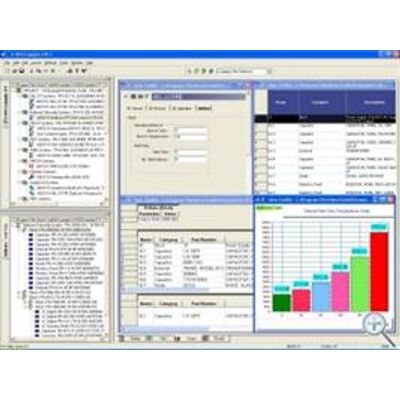
The Telcordia Software Module of ITEM ToolKit calculates the reliability prediction of electronic equipment based on the Telcordia (Bellcore) TR-332 and SR-332 standards. These standards use a series of models for various categories of electronic, electrical and electro-mechanical components to predict steady-state failure rates which environmental conditions, quality levels, electrical stress conditions and various other parameters affect. It provides predictions at the component level, system level or project level for COTS (Commercial Off-The-Shelf Parts).
ITEM - NSWC Mechanical Prediction
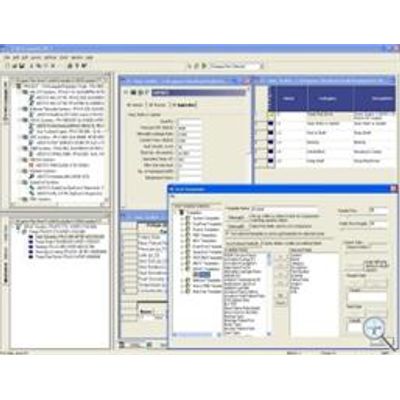
The NSWC module of ITEM ToolKit uses a series of models for various categories of mechanical components to predict failure rates based on temperature, stresses, flow rates and various other parameters. It provides models for various types of mechanical devices including actuators, springs, bearings, seals, electric motors, compressors, pumps, brakes and clutches and many more. NSWC is currently the only one of its kind. Due to the wide range of failure rates that occur in apparently similar components, the NSWC Mechanical Prediction module does not rely on failure rate data alone. It also accounts for material properties, operating environment, and critical failure modes at the component level.
ITEM - Model 299B - China Electronic Reliability Prediction
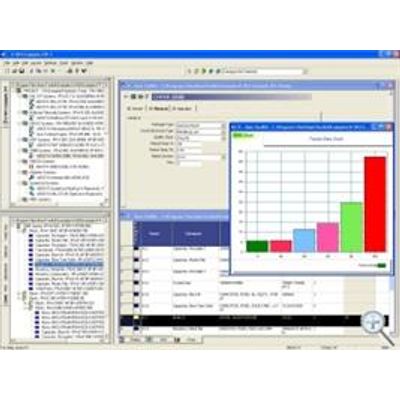
The China 299B Module of ITEM ToolKit is a powerful reliability prediction program based on the internationally recognized method of calculating electronic equipment reliability provided in the Chinese Military / Commercial Standard GJB/z 299B. This standard uses a series of models for various categories of electronic, electrical and electro-mechanical components to predict failure rates that are affected by environmental conditions, quality levels, stress conditions and various other parameters. The China 299B Module provides a user friendly interface which allows the user to construct, analyse and display system models using interactive facilities. Building a hierarchy and adding new components could not be any easier. The program calculates the failure rates associated with new components as they are added to the system, along with the overall system failure rate.
ITEM - Maintainability Software
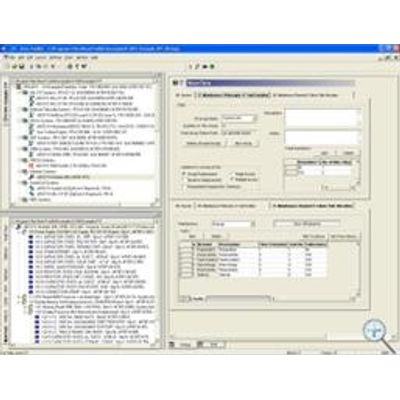
The Maintainability software module of ITEM ToolKit provides an integrated environment for predicting the expected number of hours that a system, or a device, will be inoperative, or "down", while it undergoes maintenance, based upon the tasks needed to repair the system. Conforms To Rigorous Standards A comprehensive design tool for calculating MTTR, MainTain conforms to maintenance standards established in MIL-HDBK-472, Procedure V, Method A. Built-in Maintenance Planning MainTain provides built-in elemental maintenance action, maintenance philosophy and fault isolation parameter groups to provide a foundation for the analysis. You can also save common maintenance tasks to a library for repetitive use.
ITEM - Markov Analysis Software
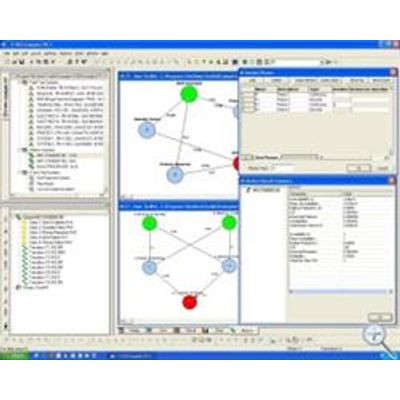
Markov analysis is a powerful modelling and analysis technique with strong applications in time-based reliability and availability analysis. The reliability behavior of a system is represented using a state-transition diagram, which consists of a set of discrete states that the system can be in, and defines the speed at which transitions between those states take place. Markov models consist of comprehensive representations of possible chains of events, i.e. transitions within systems which, in the case of reliability and availability analysis, correspond to sequences of failures and repair. The Markov model is analysed in order to determine such measures as the probability of being in a given state at a given point in time, the amount of time a system is expected to spend in a given state, as well as the expected number of transitions between states: for instance representing the number of failures and repairs.