


Jepson Commodities Pvt Ltd. products
Cane Molasses
Molasses is a thick gelatin residue in sugar processing which can not be further economically crystallized. It consists of solids, sucrose and reducing sugars. As per the amount of reducing sugars present molasses is graded as I, II, III and below Grade. Molasses having reducing sugar above 50% are taken as I grade, and below 40% are below grade. The commercial value of molasses is tested for the Brix (Total Dissolved solid) and TRS (Total reducing sugars) which represent its quality and grades for sale. Molasses are fermented in distilleries to produce alcohol commercially. India has been producing about 1.7 billion litres of liquor utilizing 75-80% molasses produced in the country. Though the free production of liquor using molasses is restricted for social reasons, its application in the preparation of alcohol based chemicals is also economically viable.
Ethyl Alcohol - ENA
Several grades of ethyl alcohol are available in the marketplace today. They differ primarily in the amount of impurities present. Generally, as you move down the chain to a lower quality ethanol, higher amounts of impurities are present.
Rectified Spirit
A Rectified Spirit or rectified alcohol is highly concentrated ethanol (drinking alcohol) which has been purified by means of repeated distillation, a process that is called rectification. Rectified spirits are used in mixed drinks, in the production of liqueurs, for medicinal purposes, and as a household solvent. Pure or highly rectified spirit (called also ethyl alcohol), the spirituous or intoxicating element of fermented or distilled liquors, or more loosely a liquid containing it in considerable quantity. It is extracted by simple distillation from Sugar cane Molasses and infusions of a saccharine nature, which have undergone vinous fermentation, As the radical ethyl forms common or ethyl alcohol (C2H5.OH). The mill has a 45 KLPD HiFerm GR–Fermentation and Multi-pressure Distillation Unit which commissioned in 2002. The Plant has a capacity to manufacture 135.0 lakh liters Rectified Spirit (R.S.) per annum and 54.0 lakh litres ENA per annum.

Grain - Ethyl Alcohol - Ena
Grain alcohol is a form of pure alcohol which has been produced by fermenting and distilling grain. It is also known as ethyl alcohol or ethanol. In addition to being used in the production of alcoholic beverages, grain alcohol is also used as a solvent and in a variety of other industrial applications. Because grain alcohol is extremely potent, it should not be consumed straight, and people should never consume other alcohols such as methyl alcohol, because these substances are very toxic. Grain Alcohol is a clear liquid, with no colour, no smell, and no taste. It has a very harsh, burning after taste, that makes most people cough. It is usually produced in a continuous still method, as that`s the cheapest way to produce it. Distillation alone, however, can only produce alcohol up to 96% pure. Even if you could make 100 proof alcohol through distillation.
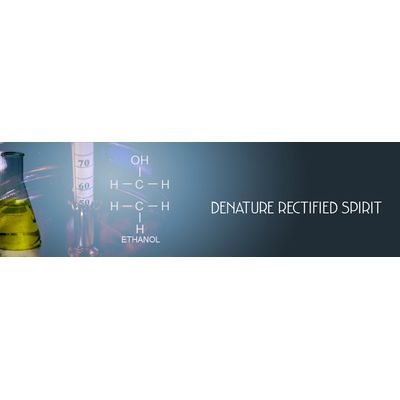
Denature Rectified Spirit
Industrial alcohol is distilled ethyl alcohol (C2H5OH), normally of high proof, produced and sold for other than beverage purposes. It is usually distributed in the form of pure ethyl alcohol, completely denatured alcohol, specially denatured alcohol and proprietary solvent blends. Pure ethyl alcohol is used in laboratories and in industry for its sanitizing, cleaning and solvent properties. Many medicines, food products, flavorings and cosmetics could not be produced without it. It is used to process vaccines, compound tonics, syrups, tinctures, liniments and antiseptics as well as being vital in the manufacture of pharmaceuticals such as chloroform, atabrine and barbiturates. It is used in the production of adhesives, cosmetics, detergents, explosives, inks, hand cream, plastics and textiles. There are literally hundreds of products and uses for this chemical.
Absolute (Anhydrous) Alcohol
As a good solvent, Absolute ethanol is used in the production of some paints, Industrial Chemicals`, Medicine and Food industry. It is an intermediate for the production of ethyl esters (like ethyl acetate),
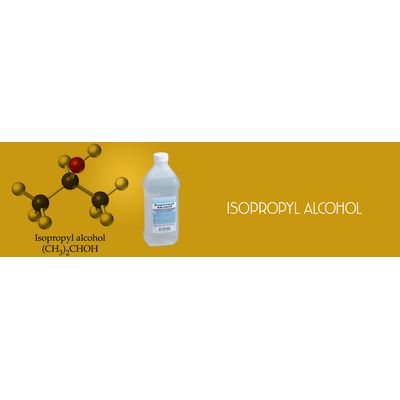
ISOPROPYL Alcohol
Isopropyl alcohol is classified as being a secondary alcohol, meaning that the carbon atom that makes up the alcohol component is bound to two other carbon atoms. As such, isopropyl alcohol can be reduced by oxidation, which, in this case, yields the solvent acetone. Although isopropyl alcohol is made from combining water with propylene, it can be easily separated from its water constituent though a process called salting out. This involves the addition of an organic salt, such as sodium chloride. Although isopropyl alcohol is commonly used in the home as an antiseptic for cuts and scrapes, it is not a harmless substance. For one thing, it is highly combustible in the presence of high heat or an open flame. It can even explode when exposed to air or light due to the formation of peroxides. It is also now recognized that isopropyl alcohol is readily absorbed through the skin and may have harmful systemic effects. Isopropyl alcohol is highly toxic and may even be fatal.