
Jim Myers & Sons, Inc. (JMS) products
Mega-Treatment
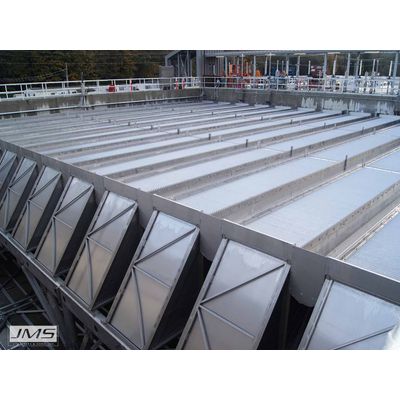
JMS - Model Mega-Settler - Plate Settler System
The plate settler’s roots date back to 1904, when sanitary engineering pioneer Allen Hazen introduced the concept that sedimentation is a function of basin surface area, independent of retention time. That development led engineers to add diagonal steel plates in the sedimentation basins to increase the effective projected horizontal surface area. That is where the JMS Mega-SETTLER (Plate Settler System) comes in. At JMS, we build upon that concept by utilizing our own Mega-PROGRAM (Plate Settler Design Program), developed over the last decade, to calculate the effective projected horizontal surface area required for a given design flow, while optimizing other design variables critical to the process. The result is the most efficient approach possible to maximizing the treatment capacity of the basin and improving effluent quality.
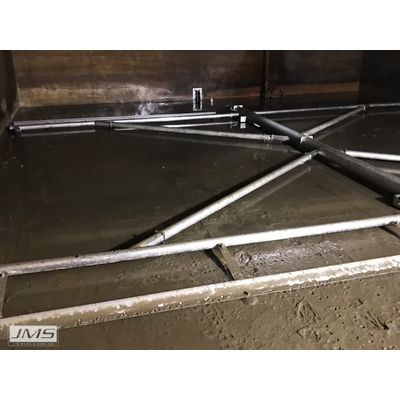
JMS - Model Mega-VAC - Sludge Removal System
Efficient removal of sludge from the bottom of sedimentation basins in water and wastewater treatment applications has long been an issue. Failure to address sludge removal can reduce the effective volume of the tank as well as the efficiency of the sedimentation process. Former sludge removal systems provided a solution to the problem, but came with issues related to handling of the sludge. The new hoseless Mega-VAC (Sludge Removal System) sludge removal system developed by JMS addresses these concerns by combining proven technology with knowledge from 50 years of outfitting sedimentation basins. The JMS Mega-VAC design uses the hydraulic head differential between the water surface and the sludge discharge elevation. Head pressure in the basin forces sludge into the dual header orifices, and on to the discharge point for collection. This hoseless design has resulted in a reliable low head-loss system, powered by gravity, effective for most water and wastewater applications.
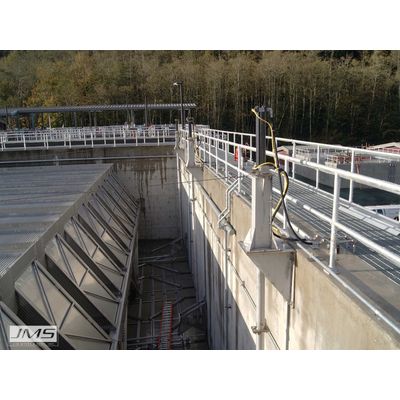
JMS - Model Mega-Scraper - Sludge Removal System
Sedimentation basins are a key part of the water treatment process as they prepare water for final filtration. Excessive buildup of sludge can lead to turbidity issues, loss of effective tank volume, and can negatively affect downstream membranes and/or filters. The Mega-SCRAPER (Sludge Removal System), a simple and reliable answer to sludge removal needs, was developed by JMS design engineers using proven design concepts developed over half a century of experience in outfitting sedimentation basins.
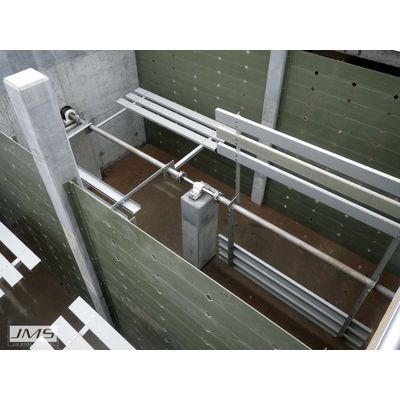
JMS - Model Mega-Floc - Horizontal Paddle Wheel Flocculator
One of the most economical options available for almost any flocculation need, Mega-FLOC (Horizontal Paddle Wheel Flocculator) have been utilized in thousands of plants across the country (a large majority of which have been provided by JMS). Ideally suited for large production plants, Horizontal Paddle Wheel Flocculators provide the best value per million gallons per day (MGD) of any comparable design available.
Bio-Handling

JMS - Model Bio-Hopper - Live Bottom Hoppers
The effective management of biosolids has become of great importance for wastewater utility organizations. Beneficial use of solids removed from the wastewater treatment process contributes positively to both plant costs and the environment. Treatment plant biosolids come with several negative characteristics. Biosolids are both high in moisture content and contaminants. The result is a heavy, sometimes wet, sticky, odor laden material that is often challenging to move and store.
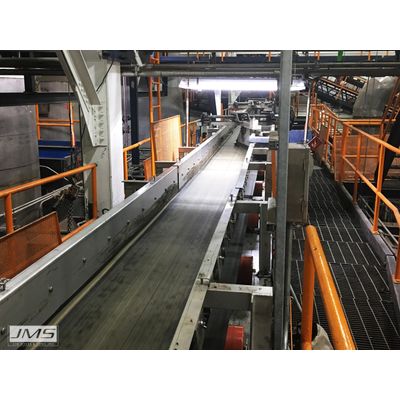
JMS - Model Bio-Belt - Belt Conveyor System
Since the nineteenth century belt conveyors have been used as an effective method for transporting bulk materials, and are now one of the most widely used and efficient means of transporting compactable and granular solids. Water and wastewater treatment facilities have made good use of this type of conveyor for transporting dewatered biosolids, sludge, screenings or grit. Dewatered sludge cake can consist of wastewater plant biological sludge from the treatment of municipal wastewater, or dewatered water treatment plant sludge. Dewatered sludge cake solids content ranges from 10% to 30% solids depending on the dewatering system used. A properly designed conveyance system with the ability to handle the special characteristics of sludge is critical to effective transport of material through the process.

JMS - Model Bio-Screw - Screw Conveyor Systems
Screw conveyor technology has a long history of usefulness. Screw conveyor systems are currently used in many industries as they represent one of the most flexible bulk material conveyance methods available. Simple in design, the conveyor screw initiates a smooth, continuous forward movement of material. Both shafted and shaftless screw conveyors are used in the municipal water and wastewater industries to convey dewatered biosolids, sludge, screenings or grit. JMS Bio-SCREW (Screw conveyor systems) are compact in design, and are easily adapted to congested locations for conveyance of materials in the horizontal, inclined, or vertical directions. They offer several advantages for environmental applications such as total enclosure of materials for odor and spillage control, and the ability to handle a wide variety of materials from wet to dry, and slow-moving to free-flowing.
Delta-Separation
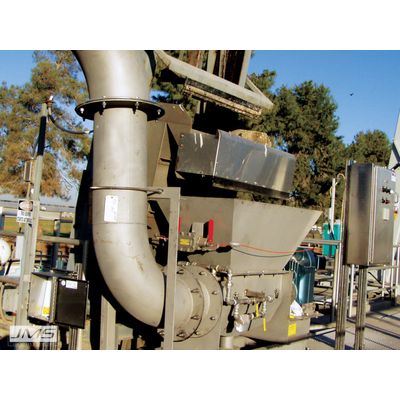
JMS - Model Delta-Compactor - Screening Compactor Process System
At wastewater treatment plants the need for the reduction of both the volume and weight of headworks screenings is a key design element, and a significant factor in plant operational costs. Screenings washer compactors are designed to meet this need under challenging conditions. The material characteristics of screenings from coarse or fine mechanical screens can vary significantly. This is where the JMS Delta-COMPACTOR (Screening Compactor) comes in. The loose material contains various solids, organics and substantial amounts of water. Screenings washer compactors are designed to receive screenings from primary screening equipment, a conveyor, or sluice trough. Varying in design, they all use a compacting screw mechanism to wash and dewater screenings. This results in reduced organics content, volume, and weight resulting in a substantial reduction in hauling and landfill costs.
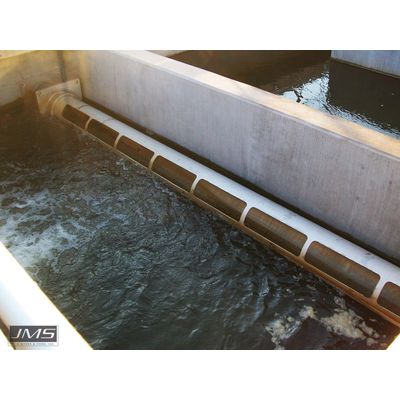
JMS - Model Delta-Skimmer - Scum Pipe System
For over a century, constant and/or intermittent skimming and removal of floating scum from the surface of process basins has been a necessity in municipal water and wastewater treatment processes. Historically, the most common method for accomplishing this has been the scum pipe system. Also called rotating scum pipes, scum skimmers, rotating pipes or rotating troughs, these systems are employed all over the world in circular and rectangular clarifiers, dissolved air flotation basins, settling basins, and other process basins where surface scum is an issue.
Eco-Air
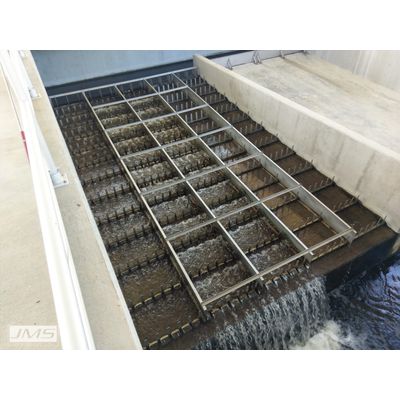
JMS - Model Eco-Air - Low Profile Cascade Aerator
In simpler days, most wastewater treatment facilities were not required to meet dissolved oxygen (DO) limits as criteria for discharge. Today, regulations imposed by federal and state agencies typically specify a minimum DO concentration of 6 milligrams per liter (MG/L), depending on the receiving stream requirements. Many wastewater treatment facilities have been forced to add post-aeration to achieve compliance. All aeration methods are designed to increase the DO level in the effluent by creating a greater amount of contact between air and water to enhance the transfer of oxygen. Traditional cascade aerators utilize great heights to allow the water to fall steeply from step to step into splash zones, with significant elevation changes needed to accommodate this process.