
JWC Environmental applications

Improve Airport Waste Management: Vacuum Toilet Waste and Contraband Destruction. Airports are dynamic hubs of transportation and commerce that serve their communities as well as visitors from afar. With that activity comes numerous waste streams airport waste management planners must account for, including vacuum toilet waste as well as destroying all those contraband items picked up from people passing through security lines. JWC Environmental can help improve the efficiency of your airport waste management systems!
Correctional facilities require specialized equipment due to heavy solids loading in their sewage waste streams. Proper measures must be taken to protect a facility’s pumps and piping systems against inmate sabotage. Prisoner attempts to disrupt operations or vandalize plumbing systems by flushing debris down toilets can cause sewage overflows and violations. Additionally, large numbers of inmates eating meals simultaneously leads to substantial kitchen waste in the waste stream.
Waste to Energy is a form of energy recovery through anaerobic digestion. Anaerobic digestion is a series of biological processes in which microorganisms break down biodegradable material (biomass or waste feedstock) in the absence of oxygen. One of the end products is biogas, which is combusted to generate electricity and heat, or can be processed into renewable natural gas and transportation fuels.

Facilities Management: Clogged Sewer Issues Are on the Rise. Facilities Management of a large private or public facility can present daily challenges. The last thing a facility manager wants to deal with is a clogged sewer or an ejector pump clog. Unfortunately sewage today is worse than ever – full of rags, disposable wipes, paper towels, sanitary napkins, mop heads and other material that pumping systems were never designed to handle. These conditions result in toilet backups, expensive ejector pump clogs, repairs, and even worse, raw sewage spills.
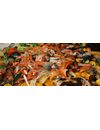
Government agencies around the world are enacting new restrictions on the disposal of food waste. Food and other organic waste disposed of in landfills produce methane, a greenhouse gas, as it decomposes. The amount of food waste has been increasing dramatically over the last several decades and some estimates indicate that as much as 40% of food in the U.S. is thrown away. Composting or using food and other organic waste as feedstock for an anaerobic digester are two of the common alternatives to landfill. Both methods require food waste grinders to precondition the organic waste materials to make the processes more efficient.
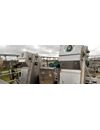
Primary Treatment - Wastewater Screens: The treatment of municipal sewage at any wastewater treatment plant all start at the same place – at the headworks screens. Initial wastewater screening is a crucial first step in primary treatment to insure that the complex series of physical, chemical and biological processes within the municipal wastewater treatment plant work effectively and efficiently. In recent years municipal sewage treatment processes have become increasingly more sophisticated. Regulations around effluent discharge as well as solid waste disposal have become more stringent. This has driven advances in primary treatment technologies in both headworks screening as well as the processing of the inorganic waste screened out by the headworks screens.
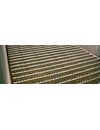
Membrane Bioreactors, or MBRs, are increasingly becoming the preferred technology for water and wastewater treatment where high quality treated water is required, or where space is limited. Pretreament screening is required for MBRs to protect them against mechanical damage from sharp or abrasive particles and to prevent clogging or fouling from hair and other fibrous materials. Pretreament screening is the the number one concern of facility managers and engineers responsible for the efficient operation of membrane bioreactors.
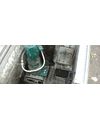
Sewage Pumping Station and Lift Station Solutions. A sewage pumping station, or lift station, from small to large will see everything that finds its way into the collection systems. Rags, plastics, wipes, rocks and wood are all common items encountered in today’s sewage that can cause lift station pump clogs resulting in alarms, overflows and even fines. First-flush loading of debris from storm flows or problem dischargers like hospitals, universities and prisons only make the problems worse for pumping station operators.
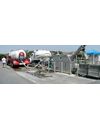
Septage Receiving, Grease Receiving and Grease Recycling Systems for Municipal and Commercial Use. Wastewater treatment facilities are increasingly adding septage receiving and grease receiving programs to the services they provide their communities. It is in the public’s best interest for the municipal wastewater operators to accept septage and FOG (Fats, Oils and Grease) from waste haulers as it has not only environmental benefits but can be a new revenue stream for the treatment plant. Additionally by implementing a comprehensive grease recycling program waste water operators can prevent the inevitable issues of FOG being discharged into the sewer collections networks.
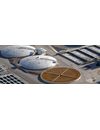
Sludge biosolids processing in a resource recovery facility is a critical operation for efficient running of any plant. For some facilities it is also the feed process into generating electricity, harvesting biogas, and producing reusable biosolids. There is no room for unplanned downtime or poorly operating equipment in the sludge biosolids systems. JWC Environmental offers a selection of products to keep sludge moving, protect critical processes as well as thicken sludge.