


- Home
- Companies
- Kinergy Corporation
- Products
Kinergy Corporation products
Vertical Flow - Discharging
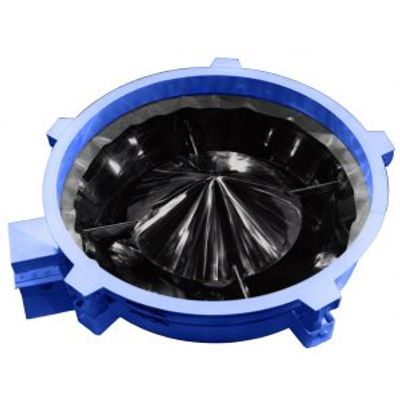
Bin Activators
The engineers of Kinergy have been intimately involved in the specialized field of Induced Vertical Flow since its inception. For this reason, no supplier has more experience in this unique endeavor of discharging bulk solids from storage! Kinergy’s design, application, and operation of the Bin Activator induces even the most obstinate bulk solids to vertically flow from Bins and Silos. Our symmetrical, concentric, uniform 45 degree sloped conical shape is the most effective design for keeping the stored material discharging in the least amount of height. These Induced Vertical Flow machines are typically suspended from Bins and Silos, although they can be supported from underneath.
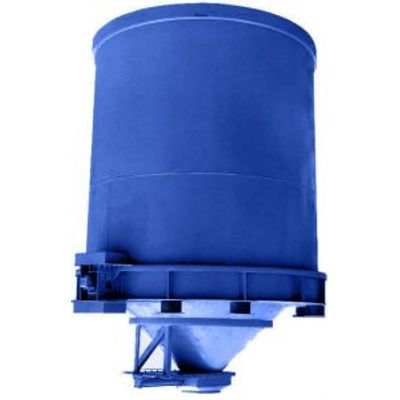
Kinergy Activated Bins
Activated Bins are Induced Vertical Flow machines that either discharge or densify bulk solids stored in Bins or Containers. Kinergy’s engineers have been intimately involved with the design, application, and operation of the Induced Vertical Flow theory and its machines since their inception. Our 40-year continuous improvement to this product line makes Kinergy the optimal choice for Activated Bins. Similar in design and concept to its predecessor the Bin Activator, Activated Bins vibrate as one integral unit. With Conventional and Low-Profile options available, these Bins are useful for many different applications, such as for discharging Flake, Floodable, or General type of materials. This also includes those that take strong set (solidification) or are thixotropic.
Conveying - Kinergy Vibratory Drive
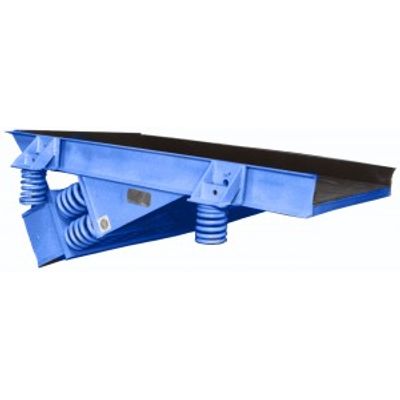
Vibrating Feeders
Beginning around 1960, the quest to equal or exceed the performance of an Electro-Magnetic Feeder prompted the inception of the most modern version of the Electrically Controlled, Electro-Mechanical type of Vibrating Feeder. At that time, many unsolved field problems with the newly conceived “Induced Vertical Flow” kind of Vibratory Machines caused their basic mathematics to be changed to vector equations in hopes of pinpointing the difficulties. This precipitated the formulation of the vectorial “Drive vs. Load” analysis for a vibratory machine in 1964. Eventually, from this different analytical approach came the discovery of an A.C. Squirrel Cage motor rotating relatively small eccentric weights, combined with “sub-resonant” tuned “stiff” drive springs to possess a full range of adjustable output by simply varying the voltage of its power supply.
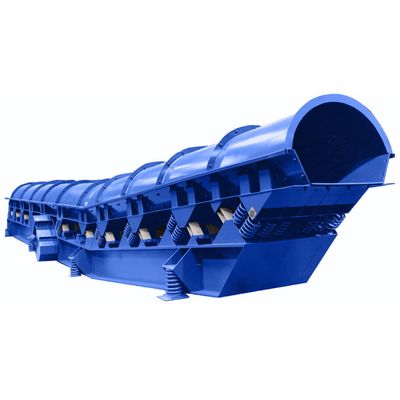
Vibrating Conveyors
Adapting the patented Kinergy Drive System to Vibrating Conveyors innately brings many benefits that were not previously available. This includes “Energy Efficiency” and added operating versatility. The Vibratory Drive. The electrically adjustable conveying speed is beneficial for picking, inspecting, cleaning, or similar purposes while being conveyed. So is the automatic, repetitive “pulsing” to a more vigorous vibratory action when sticky (adhesive) bulk solids are being transported. Others include repeated starts with full loads being tolerated. So are other types of abusive loading. Installation under the outlet of a Bin or Silo, or being supplied by loader dumps or other large batch loads such as those from casting cleaners in a Foundry, is permissible. Of course, for these applications the Conveyor’s trough has needed structural integrity.
Conveying - Foundry
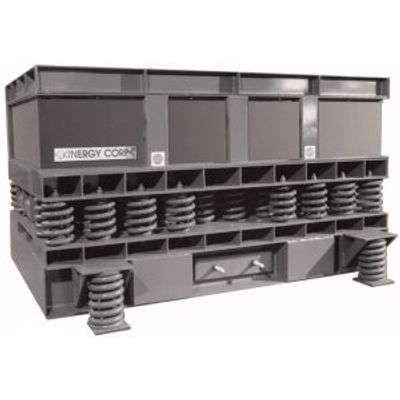
Mold Compactors
Mold Compactors are essentially “Vibrating Tables” of a much more rugged design. The “pattern” which shapes the casting is already inserted in the mold. Sometimes it is made of wax so it will melt and evaporate when the hot molten metal is poured into it. The need for compaction is to ensure the mold sand fills every nook and crook around the surfaces of the installed pattern. The prepared mold is set down on the top of the vibratory machine. The entire mold is then vibrated as necessary for it to achieve the wanted degree of densification. The primary benefit of mold compaction is to permit a casting to be made with finely detailed surface projections, such as grooves or fittings. After it is removed, the amount of time required for “cleaning” the casting is markedly reduced.