

Logisticon Water Treatment B.V. products
Aerating & Stripping
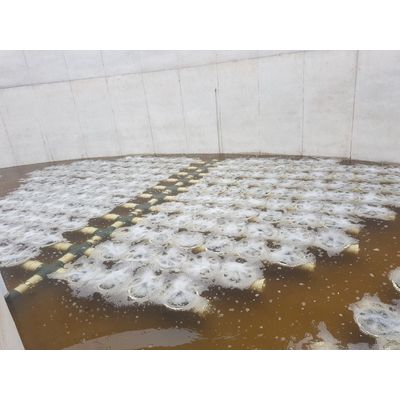
Logisticon - Aeration / Degassing System
During aeration, air is added from water. The addition to air is applied using differing methods and for different purposes. Oxygen (air) is added to water for the purpose of: Oxidation: in a number of cases the oxidation of dissolved substances is necessary in order to purify water. This includes the oxidation of dissolved iron during the treatment of groundwater. Aerobic biological processes that require a higher oxygen content (destruction of organics). Logisticon is experienced in aerating reservoirs, surface water and groundwater purification. Logisticon also has extensive experience in biological wastewater treatment, of which aeration is a part.
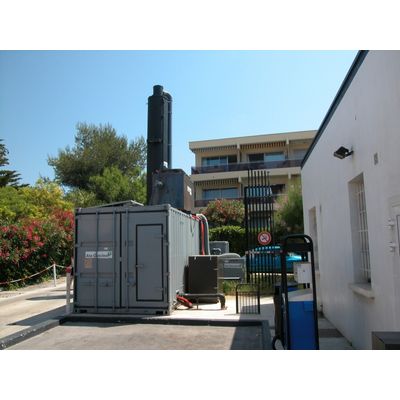
Logisticon - Stripping Towers
Stripping towers are used to remove volatile aromatic hydrocarbons (such as benzene, toluene and xylene) or volatile chlorinated hydrocarbons (such as Per and Tri) from water flows. Logisticon`s stripping towers are of the ‘counter-current’ type. This means that the water is pumped to the top of the column of the stripping tower. Air is blown into the bottom of the column. The volatile components move from the water phase to the air phase. When stripping towers are dimensioned properly, efficiency levels of more than 99% can be achieved. Post-treatment of the released air is often necessary. In practice, air-side active carbon filters (GAC) or biological air filters are used to do this.
Membrane Filtration
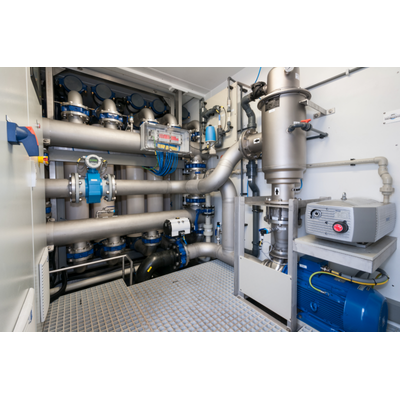
Logisticon - Ultrafiltration for Membrane Filtration Technique
Ultrafiltration, also referred to as UF, is a membrane filtration technique in which a liquid is forced through a semi-permeable membrane under pressure. In ultrafiltration, this membrane has a pore size that varies roughly from 0.1-0.01 μm (10-100 nm). Ultrafiltration membranes are mainly used for the removal of suspended and colloidal substances, bacteria and viruses. Ultrafiltration membranes are supplied in a range of configurations.
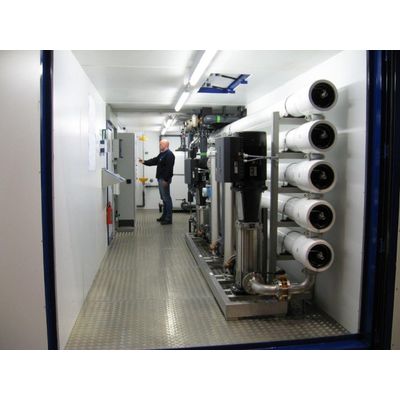
Logisticon - Reverse Osmosis System
Reverse osmosis, also called hyperfiltration, is mainly used to remove salts and minerals and therefore to reduce the conductivity. Another effect is that reverse osmosis partly blocks other substances, such as pesticides, heavy metals, medicine residues and more. Osmosis is a natural process involvingflow through a semi-permeable membrane. When pure water of the same temperature is present on both sides of a membrane and the pressure on both sides is the same, no water will flow through the membrane.
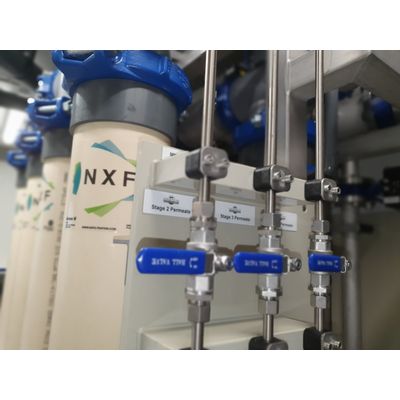
Logisticon - Direct Nanofiltration System
Logisticon uses capillary nanofiltration or CapNF membranes. These inside-out hollow fibre membranes are made of polyethersulfone (PES), which, unlike normal spiral wound membranes, can also be backwashed. The advantage of using PES is that it is more resistant to oxidative substances such as active chlorine.
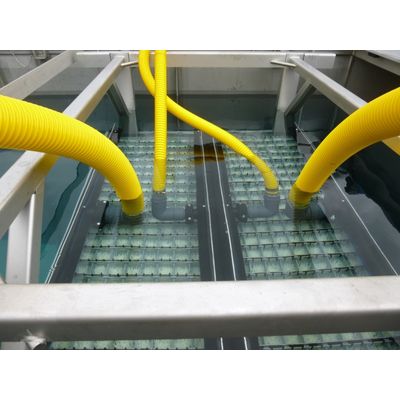
Logisticon - Membrane Bioreactor System
A MBR consists of two parts: a bioreactor and a membrane installation. The biological processes that break down the pollution take place in the bioreactor (activated sludge). The membrane installation separates the water from the active sludge, after which it can be discharged or reused. The biological processes in a membrane bioreactor (MBR) are almost identical to an active sludge system with the difference that the separation between active sludge and the purified water is achieved by means of membranes rather than settling and extraction with the conventional biological treatments.
Filtration
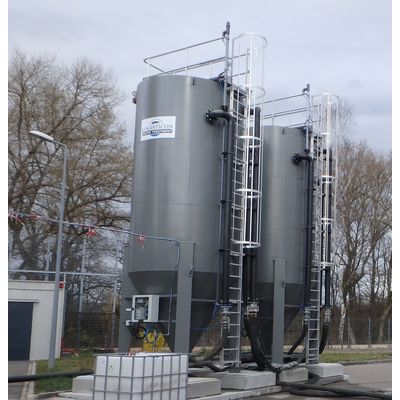
Logisticon - Continuous Filtration
Pilot - mobile - skid-mounted. Continuous filtration means that particles are removed without interruption. In other words, the process is not interrupted by a backwash, regeneration or change of medium. In most cases, at Logisticon this involves a continuous sand filter. The filter sand is circulated and rinsed continuously. The rinsing water (approximately 10%) carries off the removed parts.
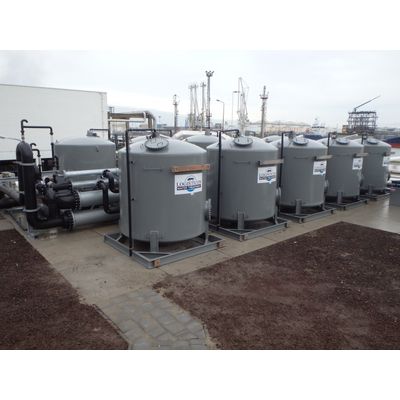
Logisticon - Discontinue Filtration System
Pilot - Containerised - mobile - skid-mounted. In discontinuous filtration, the filtration is periodically interrupted by a backwash or by regeneration. These are necessary in order to rinse the dirt off the medium; a waste water flow is therefore created periodically. Different media are required for different contaminants.
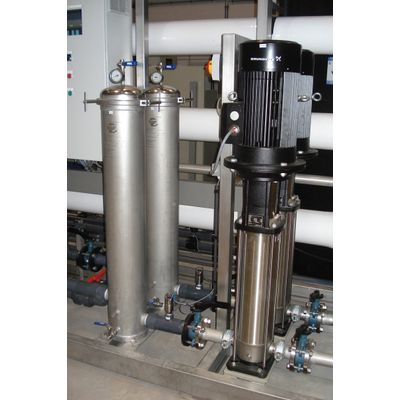
Logisticon - Bag & Candle Filters System
Pilot - mobile - skid-mounted. For the nominal removal of suspended particles from a liquid, it is possible to use media with and without a depth effect. With surface filtration, this might include filtration with a gauze or a cloth. Here, the dirt accumulates on the surface like a cake. On the other hand, a medium with depth can be used. In this case, the dirt is captured in the medium itself. Logisticon has a number of different surface and depth filters available as bag and candle filters. Bag and candle filters are often used as pre-filtration (protection) for another purification system, such as membrane filtration.
Floatation & Sedimentation
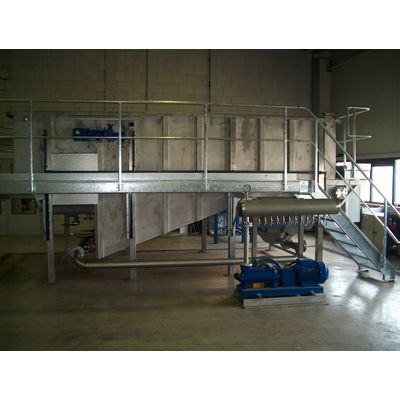
Logisticon - Dissolved Air Flotation (DAF) System
Flotation techniques are used to remove insoluble contaminants, fats and oils from a liquid. In addition, flotation is the technique for removing (light) particles formed from an effluent stream eg following coagulation. Micro air bubbles are introduced into a flotation unit to remove substances from the water by means of flotation (uplift). This takes place by allowing the small air bubbles to adhere to the dirt, after which it floats to the top. The dirt floating on top of the liquid is then removed with a scraper. Logisticon has extensive experience in supplying DAF installations in a wide range of sectors such as the food, oil and gas and chemical industries. This is done in combination with buffers, pumps and chemical dosing of coagulant/flocculant.